DbcultAccessing Vault...
Cult Review
Senior Film Conservator
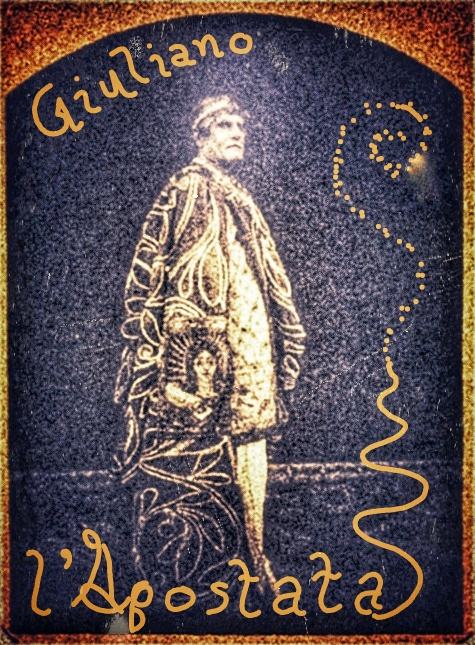
From the moment the opening credits unfurl, Giuliano l'apostata asserts itself not merely as a historical drama, but as a visually arresting, emotionally charged epic that prioritizes the tumultuous landscape of the human heart over the cold calculations of imperial politics. This is a film that understands the power of spectacle, not as a mere backdrop, but as an integral component of its narrative fabric. It plunges us into the twilight of classical antiquity, a period of profound transition where the vestiges of pagan philosophy clashed with the surging tide of Christianity, personified in the tragic figure of Julian, the last Roman Emperor to champion the old gods. Yet, the film masterfully reframes this monumental struggle through the intimate lens of love, betrayal, and unrequited desires, rendering it an intensely personal tragedy rather than a dry historical account.
Ignazio Mascalchi delivers a compelling, nuanced performance as Julian. His portrayal captures the intellectual intensity and inherent melancholy of a man thrust into a world he did not choose, bearing the weight of a lineage marred by violence. We witness his transformation from a studious, introspective youth, shaped by the Hellenic ideals imparted by his devoted tutor Mardonius, to a reluctant but formidable Caesar, and finally, a vengeful emperor. Mascalchi imbues Julian with an earnestness that makes his eventual 'apostasy'—his return to the ancient Hellenic pantheon—feel less like a political maneuver and more like a profound, spiritual conviction, a desperate grasp for a fading golden age. This personal conviction, however, is constantly interwoven with the complex interpersonal relationships that define his existence.
The film's true genius, and perhaps its most daring narrative choice, lies in its intricate romantic entanglements, which often overshadow the broader geopolitical currents. Julian's world is populated by women of formidable will and tragic destinies. There is Eusebia, portrayed with captivating allure by Rina Calabria, the seductive wife of Julian's cousin, Emperor Constantius. Calabria’s Eusebia is a woman of dangerous beauty and subtle manipulation, her designs on Julian adding a layer of treacherous intrigue to the imperial court. Her presence is a constant, simmering threat, a testament to the fact that power struggles are rarely confined to battlefields and senatorial chambers, but often play out in the intimate spaces of desire and ambition.
Then there is Elena, Julian's Christian bride, exquisitely rendered by Marion May. May's performance is a study in quiet dignity and profound sorrow. Elena is a woman caught between worlds: her faith, her duty as empress, and the unspoken yearning of her heart. Her tragic arc is deepened by the presence of her young page, played with poignant innocence by Filippo Ricci, whose unrequited affection for Elena forms a heartbreaking counterpoint to the grander imperial dramas. Ricci’s portrayal of the page is a subtle masterstroke, his silent devotion speaking volumes about the collateral damage of high-stakes power plays and misaligned affections. This love triangle, far from being a mere subplot, becomes the emotional core of the film, driving much of Julian's personal growth and ultimate motivations. The tension between Julian's burgeoning feelings for Elena and her own hidden affections adds a layer of Shakespearean tragedy, particularly as the narrative progresses towards its inevitable, sorrowful climax.
Vincenzo D'Amore’s Constantius is a portrait of paranoid authority, a ruler whose grip on power is as tenuous as it is ruthless. His initial orchestration of Julian's early life, marked by the brutal purge that orphaned Julian, casts a long shadow over their relationship. D'Amore conveys a sense of a man constantly looking over his shoulder, his actions driven by a desperate need to maintain control, even at the cost of familial bonds. This creates a compelling dynamic between the two cousins, a simmering resentment that eventually boils over, defining the political landscape of the empire. The performances of supporting cast members like Silvia Malinverni, Eduardo Scarpetta, Pietro Pezzullo, Guido Graziosi, Ileana Leonidoff, Mila Bernard, and Claudio Caparelli, while perhaps less prominent, contribute significantly to the film's rich tapestry, each adding a brushstroke to the vibrant, complex world of the Byzantine court and its environs.
However, what truly elevates Giuliano l'apostata into the pantheon of cinematic art is its breathtaking visual aesthetic. Duilio Cambellotti's costumes and production design are nothing short of revolutionary for their time. He eschews mere historical recreation in favor of a bold, imaginative fusion of Byzantine opulence and Art Nouveau elegance. The result is a visual feast: flowing, sinuous lines intertwine with geometric patterns, rich, jewel-toned fabrics drape and swirl, and every garment feels like a wearable piece of art. The costumes are not simply clothes; they are expressions of character, status, and the very spirit of the era, reimagined through a uniquely artistic lens. Elena’s gowns, for instance, often reflect her piety and grace with their modest yet intricate designs, while Eusebia’s attire exudes a more daring, seductive grandeur, hinting at her manipulative nature. The sets, too, echo this stylistic choice, blending classical Roman architectural elements with decorative flourishes that speak to an imaginative, almost dreamlike interpretation of the past. This deliberate aesthetic choice creates a film world that is both historically resonant and timelessly beautiful, a visual language that communicates as much as the dialogue itself. It’s a design philosophy that distinguishes it from more straightforward historical epics, asserting its artistic independence with every frame.
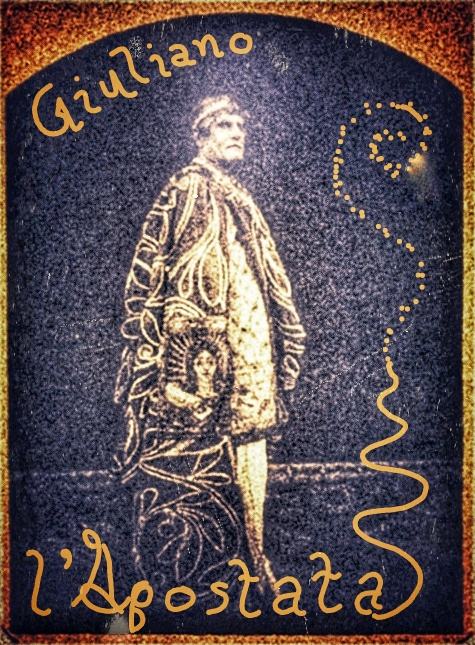
The visual splendor is complemented by Luigi Mancinelli's magnificent score. His compositions are grand, sweeping, and intensely emotional, perfectly underscoring the film's dramatic highs and tragic lows. The music swells with the imperial ambition, laments with the heartbreak, and pulsates with the undercurrents of political intrigue. It provides an auditory landscape that is as rich and evocative as Cambellotti's visual one, ensuring that the audience is fully immersed in Julian's world. The interplay between the visual and auditory elements is seamless, creating a truly synesthetic experience that few films achieve. The score, in its own right, tells a story, guiding the audience through the emotional labyrinth of Julian's life and reign.
While the film takes considerable liberties with historical accuracy, particularly in its emphasis on the fictionalized romantic entanglements over the intricate political maneuvering of the era, this is precisely where its strength lies. It is not a documentary, but a grand romantic tragedy, a "what if" scenario that uses history as a canvas for exploring universal themes of love, loss, duty, and vengeance. The narrative arc, which sees Julian dispatched to Gaul as Caesar to combat barbarian incursions, allows for a period of both military triumph and personal introspection, setting the stage for the romantic rivalries to reach their tragic culmination. His eventual ascension to Emperor, following the demise of Constantius, is less about political machination and more about a fated destiny intertwined with personal vendettas, particularly his belated realization of love for Elena and his drive to avenge her.
The film’s focus on the personal drama allows for a more accessible and emotionally resonant experience than a strictly academic historical account might offer. It examines the human cost of power, the sacrifices made in the name of empire, and the profound impact of individual choices on the course of destiny. Julian's fatal campaign against the Persians, for instance, is framed not just as a strategic military endeavor, but as the culmination of his personal journey, a final, defiant act of a man attempting to reclaim a lost world, even as he walks towards his own demise. This blend of the epic and the intimate is a delicate balance, and Giuliano l'apostata navigates it with remarkable grace and confidence.
Comparing Giuliano l'apostata to other films of its era, one might find parallels in the grand romantic sweep of a picture like Lydia Gilmore, which also delved into intense personal dramas amidst societal expectations. Or perhaps the intricate web of deceit and passion that could be found in a film like The Misleading Lady, though Julian’s tale is imbued with a far greater sense of historical weight and visual grandeur. Yet, Giuliano l'apostata distinguishes itself through its unique aesthetic vision, its willingness to blend historical epic with a deeply personal, almost operatic melodrama. It stands apart in its courageous reimagining of an ancient world, not as a dusty relic, but as a vibrant, living canvas for human emotion. The film’s approach to character development, particularly Julian’s internal struggles with his pagan beliefs in a Christianizing empire, offers a refreshing perspective. It avoids simplistic good-versus-evil dichotomies, instead presenting a complex portrait of a ruler driven by conviction and a desire to honor a heritage he believes is being unjustly erased.
The tragedy of Julian, the philosopher-emperor, is not just his untimely death on the battlefield, but the profound loneliness of his vision. He sought to rekindle the flame of classical learning and religious pluralism in an age increasingly dominated by a singular faith. The film captures this isolation poignantly, making his journey feel both heroic and heartbreaking. His attempts to restore the old ways, to revive the ancient temples and philosophies, are depicted not as tyrannical decrees but as a genuine, almost desperate, intellectual and spiritual quest. This adds a layer of pathos to his character, transforming him from a historical footnote into a figure of profound human struggle.
In an era where many historical films leaned heavily on didacticism or overly simplistic narratives, Giuliano l'apostata dares to be different. It understands that the greatest stories are often those where personal passions intersect with grand historical movements. The film's enduring appeal lies in its ability to transport the viewer to a distant past, not through sterile accuracy, but through a vibrant, imaginative recreation that engages both the intellect and the emotions. It is a testament to the power of artistic vision, a film that, despite its age, feels remarkably fresh and vital, a true gem of early cinema that deserves to be rediscovered and celebrated for its audacious aesthetics and its deeply felt human drama. The legacy of Julian, the Apostate, is here re-examined, not through the condemnations of his Christian detractors, but through a sympathetic lens that reveals the man behind the myth, a man driven by love, loss, and an unwavering, if ultimately doomed, commitment to his ideals. This is a film that lingers long after the final frame, a poignant reminder of empires and hearts broken, and the enduring power of art to reinterpret history.
IMDb 6.4
1929
Community
Log in to comment.