DbcultAccessing Vault...
Cult Review
Senior Film Conservator
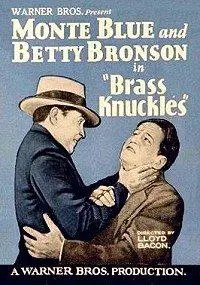
Is Brass Knuckles worth watching today? Short answer: Yes, but primarily as a character study rather than the crime thriller its title suggests. This film is for those who appreciate the nuanced physical acting of the late silent era; it is not for audiences seeking high-octane action or a fast-paced heist narrative.
This film works because of Monte Blue’s ability to project internal conflict through subtle shifts in posture. It fails because the transition from guardian to husband feels rushed by modern standards. You should watch it if you want to see how 1920s cinema navigated the difficult waters of social rehabilitation and moral reform.
The film opens with a starkness that rivals the social realism found in Ingeborg Holm. Zac Harrison, played with a heavy-shouldered weariness by Monte Blue, isn't introduced as a hero. He is a product of his environment—hardened, cynical, and ready to return to the only life he knows. The cinematography in these early scenes utilizes harsh shadows, emphasizing the claustrophobia of Zac's world.
When Zac receives the charge to look after June Curry (Betty Bronson), the film shifts gears. It moves away from the gritty aesthetics of a prison drama and enters the realm of domestic melodrama. This shift is jarring, but it serves a purpose. It highlights the total disconnect between Zac's past and the 'innocence' represented by June. Unlike the more whimsical Paradise Garden, Brass Knuckles keeps one foot firmly in the dirt.
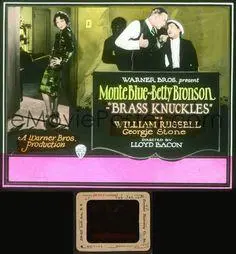
Monte Blue is the anchor here. His performance is a masterclass in restraint. In one specific scene, where he first enters June’s meager living quarters, you can see the visible discomfort in his hands. He doesn't know what to do with them. He is used to clenching them into fists, not using them to provide comfort. It’s a small, humanizing touch that elevates the film above standard genre fare.
Betty Bronson, on the other hand, plays June with a level of wide-eyed purity that was common for the era but can feel saccharine today. However, her chemistry with Blue is undeniable. She represents a 'tabula rasa' for Zac. In many ways, her character is less a person and more a mirror reflecting Zac’s potential for goodness. This dynamic is far more interesting than the romantic subplot that eventually develops.
No, it does not function as a traditional crime film. While the title and Zac's background suggest a hard-boiled narrative, the movie is actually a domestic drama. The 'brass knuckles' of the title are more symbolic of the defense mechanisms Zac must shed to find happiness. It is a story about the softness required to survive in a civilized society, rather than the hardness required to survive in prison.
Lloyd Bacon’s direction is functional but effective. He understands how to use the camera to tell a story of internal change. There is a notable sequence mid-film where Zac is tempted to return to his old gang. The way Bacon frames Zac between the light of his new home and the darkness of the alleyway is a classic, albeit literal, visual metaphor for his soul’s tug-of-war.
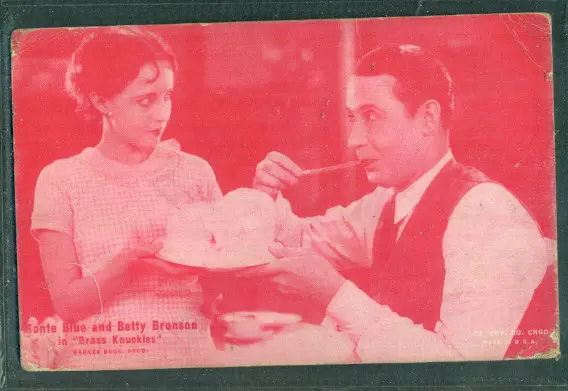
The pacing, however, is where the film stumbles. The middle act drags as Zac and June establish their household. Compared to the tight narrative of The Bolted Door, Brass Knuckles takes its time—perhaps too much time—exploring the mundane aspects of Zac's reformation. Yet, this slowness contributes to the feeling of a life being rebuilt brick by brick. It isn't flashy. It's work.
If you are a student of silent cinema, the answer is a resounding yes. It provides a fascinating look at the 'reformed criminal' trope before it became a Hollywood cliché. The film takes a stance that people are not inherently broken, but rather shaped by their responsibilities. It’s a hopeful, if somewhat naive, perspective that feels refreshing compared to the cynicism of later noir films.
However, if you struggle with the slower tempo of 1920s storytelling, this might be a difficult sit. The emotional payoff is earned, but the journey there is paved with a lot of silent-era theatricality. It’s a sturdy film. But it’s flawed by its own sentimentality.
Pros:
- Strong, grounded lead performance by Monte Blue.
- Interesting exploration of post-prison social stigma.
- Effective use of light and shadow to denote moral states.
- A surprisingly tender heart for a film with such a tough title.
Cons:
- Betty Bronson’s character lacks agency and depth.
- The romantic conclusion feels slightly unearned and dated.
- Some of the supporting characters, like Paul Panzer’s villain, are one-dimensional.
- The middle section loses the tension established in the opening.
When placed alongside other films of the era like The Handsome Brute or His Own Law, Brass Knuckles stands out for its focus on the 'after' of a criminal life. Most films of this period were preoccupied with the crime itself or the capture. This movie is preoccupied with the breakfast table and the quiet dignity of a job well done. It shares some DNA with El zarco in its themes of redemption, but it feels more urban and immediate.
The film’s portrayal of June is perhaps its most dated element. While Bronson is charming, she is essentially a prize for Zac’s good behavior. This was a standard trope in films like The Marriage Speculation, but here it carries more weight because of the life Zac is leaving behind. It’s a debatable point: is their marriage a beautiful conclusion or a problematic power dynamic? I lean toward it being a product of its time that doesn't detract from the central theme of Zac's personal growth.
The set design for the tenement housing is surprisingly detailed. You can almost smell the stale air and cheap tobacco. This realism helps ground the more melodramatic elements of the plot. The intertitles are kept to a minimum, allowing the actors' faces to carry the narrative weight—a hallmark of late silent cinema that shows a maturing medium. It’s a far cry from the more primitive staging of Bican Efendi vekilharç.
"Brass Knuckles is a film that trades in the currency of hope, even when its characters are surrounded by the poverty of circumstance."
The lighting in the final scene is particularly noteworthy. As Zac and June look toward their future, the high-contrast shadows of the prison are replaced by a soft, diffused glow. It’s a simple technique, but it works. It signals to the audience that the 'brass knuckles' have been put away for good. The film doesn't need a massive shootout to resolve its conflict; it needs a moment of peace.
Brass Knuckles is a sturdy, well-acted piece of silent cinema that deserves more attention than it currently receives. While it may not have the experimental flair of the era’s avant-garde works, it possesses a human core that remains relatable. Monte Blue delivers a performance of surprising depth, and the film’s message about the possibility of change is timeless. It isn't a masterpiece, but it is a very good movie. It’s a relic, yes, but one that still has a pulse.
IMDb —
1915
Community
Log in to comment.