DbcultAccessing Vault...
Cult Review
Senior Film Conservator
From the moment the credits unfurl, 'The Phantom Butler' ushers its audience into a world steeped in gothic grandeur and psychological unease. This isn't merely a film; it's an immersive experience, a meticulously crafted descent into the murky waters of family secrets, class resentment, and the insidious nature of revenge. William J. Flynn, with a narrative precision that belies the era, constructs a labyrinthine tale that is as intellectually stimulating as it is viscerally unsettling. The film's brilliance lies not just in its intricate plot, but in its audacious exploration of identity, memory, and the ghostly echoes of past injustices that haunt the present.
At its core, 'The Phantom Butler' is a masterclass in atmospheric tension. The sprawling, decaying mansion, a character in itself, serves as the primary stage for this familial drama, its opulent yet oppressive architecture mirroring the psychological state of its inhabitants. Every shadow seems to conceal a secret, every creaking floorboard a whisper from the past. The visual storytelling is paramount here; the camera often lingers on ornate details, dusty portraits, or vast, empty corridors, building a pervasive sense of isolation and dread. This aesthetic choice is reminiscent of the brooding intensity found in films like The Sealed Envelope, where the setting itself becomes an active participant in the unfolding mystery, rather than a mere backdrop. However, 'The Phantom Butler' elevates this concept by making the very air of the house feel charged with unspoken resentments and the weight of history.
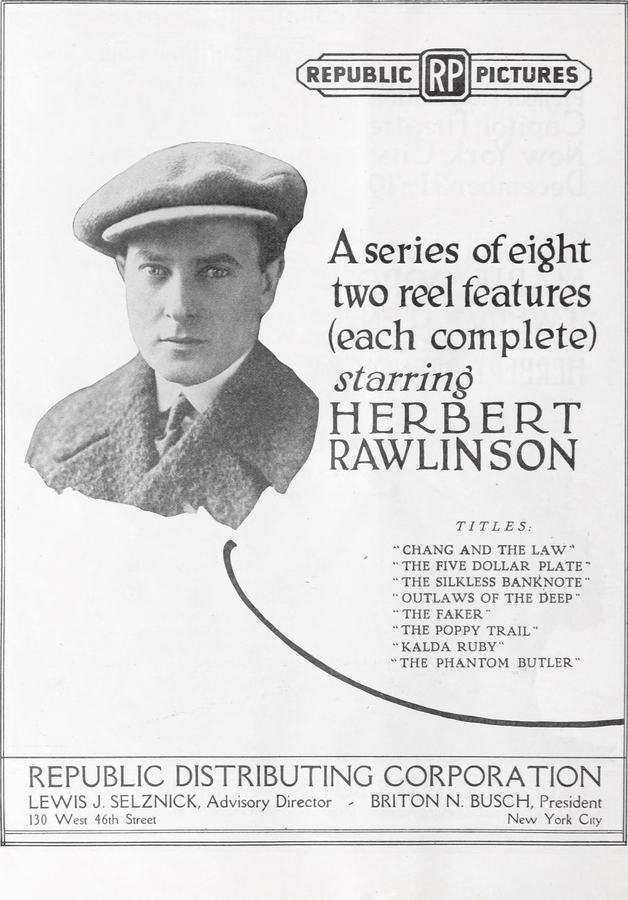
Central to this unsettling tableau is Herbert Rawlinson's utterly captivating portrayal of Mr. Silas Blackwood, the titular butler. Rawlinson, an actor known for his nuanced performances, transcends the conventional servant archetype, crafting a character of chilling composure and profound ambiguity. His Silas is a figure of impeccable decorum, his movements precise, his gaze unwavering, yet beneath this veneer of professionalism, one senses a seething undercurrent, a calculation that keeps the audience perpetually on edge. He is not merely observing; he is orchestrating. Rawlinson communicates volumes with the slightest shift in expression, the subtle arch of an eyebrow, or a prolonged, unsettling stillness. His presence is so commanding, so subtly menacing, that he becomes the true focal point of the film, eclipsing even the narrative's ostensible protagonist, Julian Vance.
The brilliance of Rawlinson's performance lies in his ability to embody the 'phantom' aspect of his character long before the truth is revealed. He glides through the mansion like a specter, appearing and disappearing with unnerving efficiency, his every action designed to heighten Julian’s paranoia. This isn't a villain who revels in overt cruelty; rather, his torment is psychological, a slow, deliberate erosion of sanity that is far more terrifying. His performance brings to mind the quiet, unsettling intensity seen in psychological dramas like Spiritisten, where the line between the tangible and the illusory is constantly blurred, leaving the audience to question not just the characters' perceptions, but their own. Rawlinson’s Silas is a master manipulator, a puppeteer pulling invisible strings, making his eventual reveal all the more impactful.
Beyond its thrilling mystery, 'The Phantom Butler' offers a scathing critique of aristocratic decay and the rigid class structures of its time. The character of Elias Thorne, the reclusive industrialist, represents a dying breed of wealth and power, his will a final, desperate attempt to exert control from beyond the grave, a macabre social experiment. Julian Vance, the bohemian nephew, is a reluctant inheritor, his artistic sensibilities clashing with the oppressive weight of old money and inherited trauma. The film deftly uses the master-servant dynamic as a crucible for exploring power, identity, and the masks people wear to navigate societal expectations.
William J. Flynn’s writing is particularly incisive in depicting how Silas, by assuming the role of a servant, subverts the very hierarchy meant to contain him. He is the ultimate insider, privy to all secrets, yet simultaneously an outsider, denied his rightful place. This duality fuels his intricate plan, transforming a position of servitude into one of ultimate control. The film suggests that true power often lies not in overt displays of authority, but in the subtle manipulations from within, a theme that resonates with the social commentary found in films such as The Talk of the Town, which often explored the hidden machinations beneath the surface of polite society. 'The Phantom Butler' takes this a step further, making the subversion personal and deeply psychological.
The narrative carefully builds towards the revelation of Silas's true identity, transforming the seemingly straightforward master-servant dynamic into a complex interplay of familial betrayal and a long-simmering desire for retribution. The 'phantom' isn't a supernatural entity, but rather the spectral presence of a disinherited heir, haunting his own legacy from the shadows. This clever twist elevates the film beyond a simple mystery, embedding it with profound questions about justice, entitlement, and the corrosive effects of unresolved grievances. It’s a narrative that understands the power of a slow burn, allowing the psychological dread to fester before unleashing its devastating truth.
The direction, while perhaps constrained by the technological limitations of its era, demonstrates an astute understanding of visual storytelling. The use of deep focus, chiaroscuro lighting, and meticulously framed shots amplifies the film's sense of claustrophobia and foreboding. The mansion itself, with its grand staircases, hidden passages, and dusty, opulent rooms, becomes a character, its architecture reflecting the labyrinthine nature of the Thorne family's secrets. The camera often adopts a voyeuristic perspective, making the audience feel like unseen observers, much like Silas himself, lurking in the periphery. This stylistic choice is remarkably effective in drawing the viewer into Julian’s escalating paranoia.
There's a deliberate pacing to 'The Phantom Butler,' a refusal to rush towards its climactic reveals. Instead, the film savors the unfolding dread, allowing the psychological tension to build organically. This measured approach allows for a deeper immersion into the characters' internal states, particularly Julian's descent into suspicion and self-doubt. The film’s ability to sustain this high level of suspense without relying on cheap jump scares is a testament to its sophisticated craftsmanship. It’s a slow-burn thriller that pays off handsomely, much like the intricate plotting of a classic literary mystery, where every detail, every lingering glance, holds significant meaning.
The central theme of 'The Phantom Butler' is undoubtedly identity – its construction, its subversion, and its ultimate revelation. Silas’s assumption of a servant’s identity is a profound act of deception, a deliberate erasure of his true self to facilitate a meticulously planned revenge. This theme resonates with other films exploring mistaken identities and hidden pasts, such as The Dead Alive, but 'The Phantom Butler' imbues it with a deeper psychological resonance, making the assumed identity not just a plot device, but a weapon.
Julian, too, grapples with his identity, forced into a role he never desired, burdened by an inheritance that feels more like a curse. His journey is one of self-discovery, peeling back the layers of his uncle's life to understand his own place within the family's convoluted history. The film masterfully blurs the lines between protagonist and antagonist, victim and perpetrator, creating a moral ambiguity that challenges easy categorization. The audience is left to ponder who truly deserves sympathy, and whether justice, when delivered by the wronged, can ever truly be pure.
The climax, where Silas’s true identity is unveiled, is a tour de force. It’s a moment of profound shock and intellectual satisfaction, where all the scattered pieces of the puzzle fall into place, revealing a narrative tapestry far richer and more tragic than initially perceived. The film transcends mere genre conventions, delving into the raw emotions of abandonment, betrayal, and the relentless pursuit of what one believes is rightfully theirs. The final scenes, with Silas inheriting the estate, his spectral presence now fully corporeal, offer a haunting resolution, leaving Julian disinherited but perhaps finding a different kind of freedom—an escape from the very prison Silas has now claimed.
'The Phantom Butler' is a testament to the power of well-crafted storytelling and exceptional acting. William J. Flynn's intricate narrative, combined with Herbert Rawlinson's mesmerizing performance, creates a cinematic experience that lingers long after the final frame. It’s a film that demands re-watching, each viewing revealing new nuances, deeper layers of meaning, and further appreciation for its subtle complexities. Its exploration of psychological manipulation and class dynamics feels remarkably prescient, resonating even with contemporary audiences accustomed to more overt thrills.
For enthusiasts of classic mystery and psychological drama, 'The Phantom Butler' is an essential viewing. It’s a film that not only entertains but provokes thought, challenging perceptions of good and evil, justice and revenge. It stands as a significant example of how early cinema, through masterful writing and powerful performances, could delve into the darkest corners of the human psyche, leaving an indelible mark. Its influence can be seen in countless subsequent thrillers that explore similar themes of hidden identities and familial retribution. The film, much like its eponymous character, becomes a phantom that haunts the viewer, a truly unforgettable experience.
The enduring appeal of 'The Phantom Butler' lies in its timeless themes. The struggle for identity, the corrosive nature of secrets, and the relentless pursuit of justice (or vengeance) are universal human experiences. While the setting and societal norms may be of a bygone era, the emotional core of the film remains strikingly relevant. It reminds us that sometimes, the most terrifying monsters are not supernatural entities, but the very real specters of our past, brought to life by human ambition and despair. A truly masterful piece of cinema, it deserves its place among the classics that dared to explore the darker side of human nature with such elegant precision.
IMDb —
1922
Community
Log in to comment.