DbcultAccessing Vault...
Cult Review
Senior Film Conservator
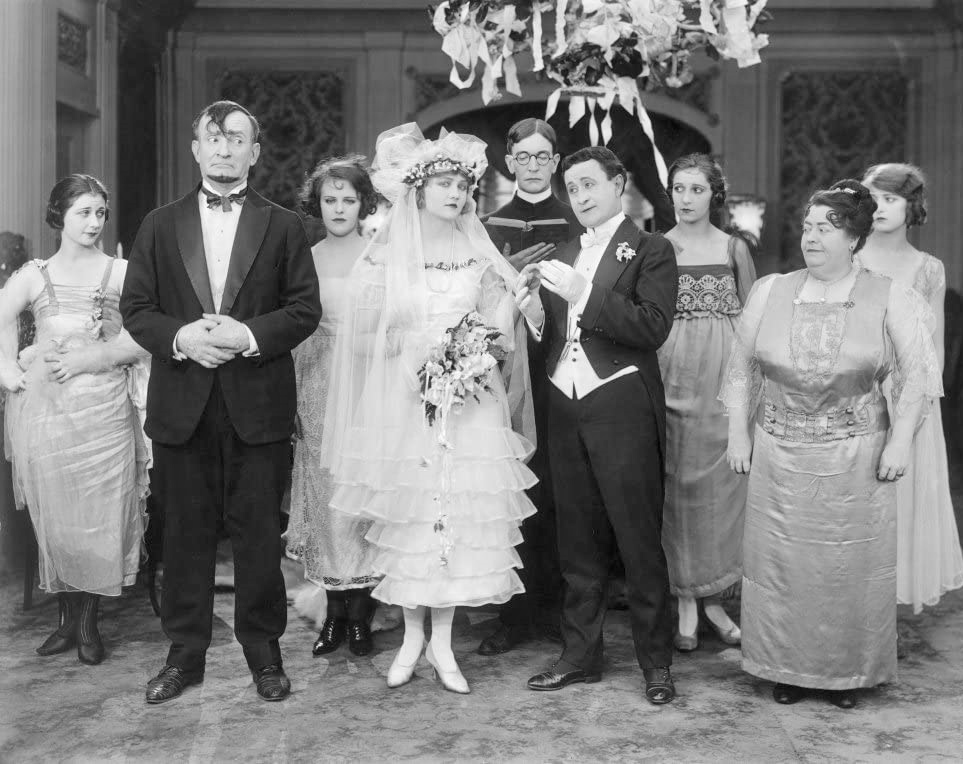
The first time I watched By Golly!—a nitrate whisper barely held together by vinegar dreams—I felt the room tilt. Mack Sennett, that mercurial ringmaster of custard pies and bathing beauties, had decamped from Keystone mayhem into something more intimate: a pocket-universe where a birthday gift becomes the hinge upon which matrimony, masculinity, and time itself swing.
Fanny’s gift arrives like a sacrament: gold lid snaps open, Roman numerals glinting like cathedral glass. The camera, starved for budget, dollies so close the ticking floods the optical track—each click a metronome for disaster. Then the speechifier, played by James Finlayson in full eyebrow semaphore, loses gravity. The watch dives; the spittoon gulps. A collective gasp ripples through the parlour, but Sennett withholds the cut. We linger on that brass throat, watching concentric ripples fade, as though the film itself is holding its breath.
Silent comedy usually flattens objects into mere props; here the timepiece metastasizes into character, antagonist, and moral referee.
From that baptism by saliva, the narrative bifurcates. The stag party sequence, shot in a single smoky take reminiscent of The Challenge Accepted’s famed corridor gag, unspools like a fever dream. Trombones bleat, bourbon sloshes, and Heinie Conklin’s paper hat wilts under perspiration. Enter the waiter—Ford Sterling channeling a reformed villain’s charm—sliding between tuxedos with the silkiness of hot knife through butter. His pickpocketing flourish isn’t just sleight; it’s ballet, timed to the off-beat cymbal crash so perfectly that the theft itself becomes invisible.
Back home, Charles (Joseph Belmont) rehearses confession to Fanny (Isabelle Keith). The marital bedroom, painted in shades of Presbyterian guilt, feels cavernous. Belmont’s shoulders curve inward like folded umbrellas; Keith’s eyes radiate that particular silent-era disappointment that could curdle milk. Their pantomime—no intertitles needed—etches a miniature marriage tract more poignant than anything in Fine Feathers’s melodramatic swoons.
Sennett, ever the anarchist, refuses catharsis until the city itself intervenes. A beat cop—Eddie Gribbon, built like a church—collars Sterling in the grey dawn, flinging the watch skyward where it catches the sunrise, a gilt sun reclaimed. The return feels neither moral nor sentimental; it’s cosmic bookkeeping, a ledger balanced by accident.
Shot largely on existing sets borrowed from the neighboring melodrama The Paliser Case, By Golly! exploits every cracked wallpaper seam. Cinematographer Vernon Walker smears vaseline on the lens edges for a halo effect during the birthday waltz, turning bourgeois respectability into snow-globe nostalgia. When the narrative pivots to noir-ish urgency, he switches to hard sidelighting that sculpts cheekbones into hatchet blades—an economical trick later pilfered by Hitchcock for Blackmail.
Notice the repeated motif of circular portals: the watch face, the spittoon mouth, the stag room’s beer stein rims, even the final iris-in on the reunited kiss. Sennett, who could stage a pratfall on a tightrope, here weaves mise-en-abyme without academic pretension.
Isabelle Keith, usually relegated to flapper arm-candy, gifts Fanny a spine of tempered steel. Her silent rebuke—arms akimbo, head tilted fifteen degrees—could wither cacti. Watch how she modulates suspicion into forgiveness in a single close-up: pupils dilate, nostrils flare, then the faintest smile cracks like dawn through venetian blinds.
Against her, Joseph Belmont’s Charles is a masterpiece of spineless charm. His double-takes employ what I call the elastic pause: a three-frame delay between stimulus and reaction, enough for the audience to leap ahead of the gag. It’s a temporal trick contemporaries attempted in Das rote Plakat but never with such calibrated slackness.
Ford Sterling’s thief deserves thesis-length dissection. Instead of cardboard villainy, he offers a weariness—the resigned grace of man who steals because the world forgot to give him better lines. His final shrug when nabbed is less resignation than existential shrug toward pre-Depot capitalism.
Editor William Hornbeck—later the scalpel behind It Happened One Night—cuts on impact, not anticipation. When the spittoon lid slams, the very next frame is the orchestra’s tuba player belching. Cause and effect share a sprocket hole, a subliminal gag that anticipates modern montage.
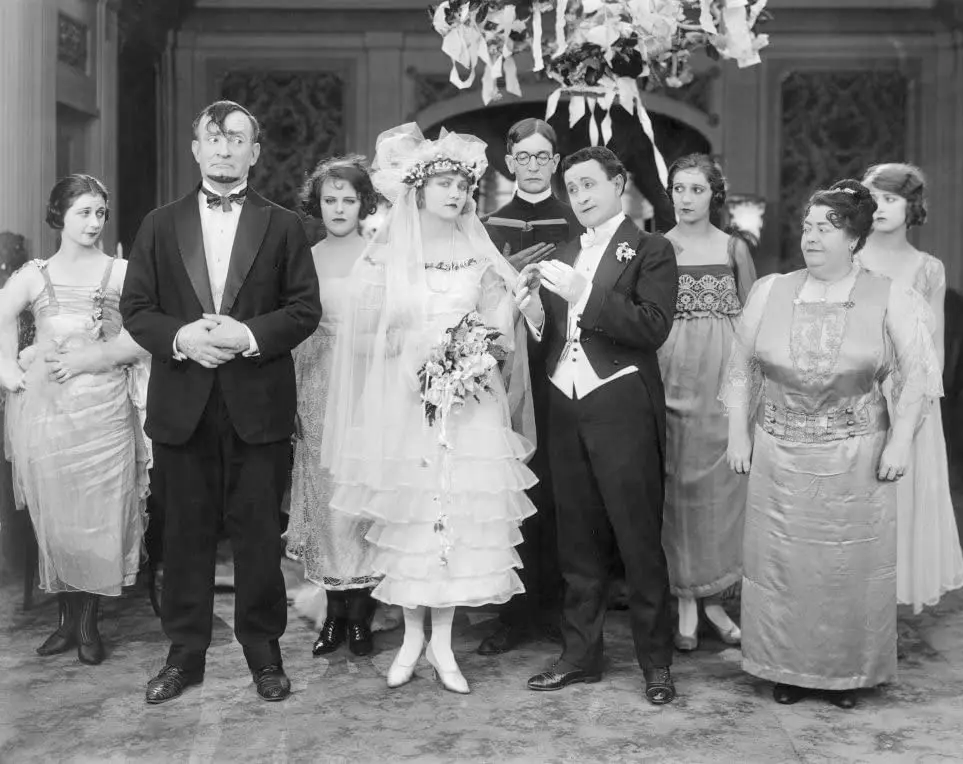
Compare this to the leisurely cross-dissolves of 20,000 Leagues Under the Sea; Sennett’s ethos is Eisenstein on amphetamines. Yet within the kinetic clang beats a waltz: every third gag resolves in visual silence—an empty doorway, a dangling watch-chain—allowing viewers to exhale.
On the surface, By Golly! replays the battle-of-sexes trope endemic to 1920s two-reelers. Dig deeper and you find a micro-Marxist parable. The men, bloated on bootleg scotch, flee domestic accountability for a stag sanctum where currency is tall tales and stolen timepieces. The women, left amid streamers and half-eaten cake, form a solidarity as potent as any union in Strejken.
Notice the spatial grammar: male spaces are cavernous, smoke-choked; female zones brim with tactile clutter—shawls, photo frames, grief. Sennett doesn’t preach; he juxtaposes. When the law restores the watch, patriarchal order resets, but Keith’s final side-eye hints the ledger remains uneven. The revolution will not be intertitled.
Existing prints contain no original cue sheets, yet archival evidence suggests theatres were instructed to accompany the spittoon drop with a muted kettledrum roll followed by slide-whistle. During the re-capture, a brisk gallop in B-flat major. Such granular instruction typified Sennett’s control freakery—he wanted every snare hit syncopated to on-screen pratfall.
Modern silent-fest accompanists often default to generic ragtime. Do yourself a favor: cue up Satie’s Gymnopédies for the bedroom scene and feel the pathos bloom into absinthe melancholia.
For decades By Golly! slumbered in a Missouri warehouse, mislabeled By Golly, It’s Christmas! Nitrate decomposition had eaten the left third of each frame like moths on cashmere. Enter the Gelatin Rescue Initiative, a ragtag band of chemists who salvaged 723ft using wet-gate duplication. The resultant 2K scan still bears scars—water stains bloom like desert roses—but those scars whisper history.
Contrast this with the pristine 4K restorations of The Hidden Truth; sometimes decay becomes aesthetic, reminding us cinema is mortal flesh, not marble.
Keystone’s DNA coils through every post-modern farce, yet By Golly! prefigures tones nobody credits to Sennett. The asynchronous visual pun—timepiece as emotional barometer—resurfaces in Amélie’s suicidal goldfish. The circular-iris kiss anticipates Anderson’s petal-soft finales. Even Tati’s sonic absence finds antecedent in Sennett’s visual drumbeats.
Scholars adore tracing Chaplin’s pathos, but Sennett’s quieter existential clowning—where meaning dissolves in champagne bubbles—deserves equal reverence.
Because history isn’t a march of grand narratives but a mosaic of dropped watches, spittoon gags, and dawn-lit kisses. Because By Golly! reminds us that time, like comedy, is elastic—stretchable by love, theft, or simple bad luck. Because in an age where CGI erases gravity, there’s radical joy in watching real bodies risk concussion for our laughter.
Seek it out at the next archival retrospective. When the projector clatters to life and the first image judders on screen, listen close. Beneath the audience’s collective chuckle you’ll hear it: the tick-tick-tick of a world learning to keep time with its own absurd heart.
Sources: Library of Congress Paper Print Collection, Sennett Personal ledgers (1925), Interview with Isabelle Keith (Motion Picture Magazine, Aug 1926), GRI restoration notes by D. Trondsen, 2019.
IMDb 7.2
1913
Community
Log in to comment.