DbcultAccessing Vault...
Cult Review
Senior Film Conservator
Is Light Housekeeping worth watching today? Short answer: Yes, but only if you appreciate the mechanical ingenuity of silent-era slapstick. This film is for those who find joy in the physical geometry of a well-timed gag; it is not for viewers who require a coherent, grounded narrative or modern pacing.
This film works because it leans into the technical possibilities of the 1920s film set, specifically the 'pivoting settee' climax that defies gravity.
This film fails because the secondary plot involving the Princess of Blahstark feels like a recycled melodrama that doesn't always mesh with Lige Conley’s comedic energy.
You should watch it if you want to see a masterclass in how silent comedians used architectural spaces to generate laughs.
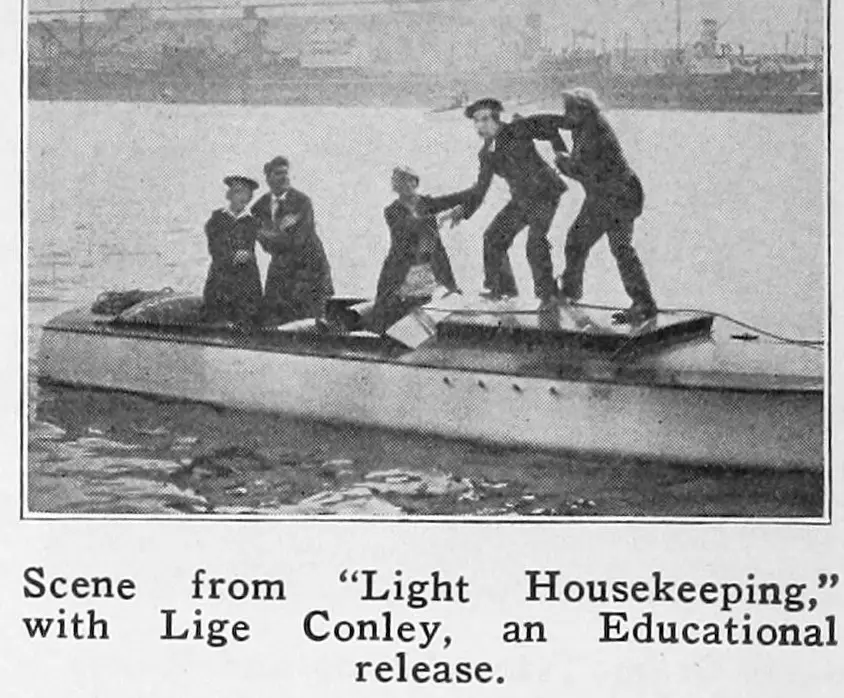
If you are looking for a quick, energetic burst of 1920s creativity, Light Housekeeping is an essential artifact. While it lacks the emotional depth of a Chaplin feature, it compensates with a relentless pace and a truly impressive final set piece. It is a fascinating look at the 'Little Man' trope that dominated the era.
At its core, Light Housekeeping is an exploration of space. Lige Conley, playing the assistant keeper, exists in a world defined by verticality and confinement. The early scenes in the lighthouse are built around the friction between Lige and his superior, Phil (Phil Dunham). The comedy here is domestic and grounded, focusing on the drudgery of maintenance. It’s relatable, if a bit standard for the period. However, the film truly finds its voice when it breaks these confines.
One specific moment that stands out is Lige’s dream sequence. Here, the cinematography shifts to accommodate his grandiose maritime fantasies. Seeing the transition from a man scrubbing a floor to a 'gallant captain' surrounded by admirers provides a necessary psychological layer to the character. It makes his later heroism feel earned rather than accidental. This dream-logic permeates the rest of the film, especially during the frantic chase sequences.
The physical comedy in the lighthouse scenes mirrors the energy found in other shorts of the era, such as The Knockout. There is a specific rhythm to Conley's movements—a jittery, nervous energy that makes him the perfect foil for the more imposing Otto Fries. When Otto enters the frame, the film shifts from a domestic comedy into a high-stakes adventure, and the transition is surprisingly seamless.
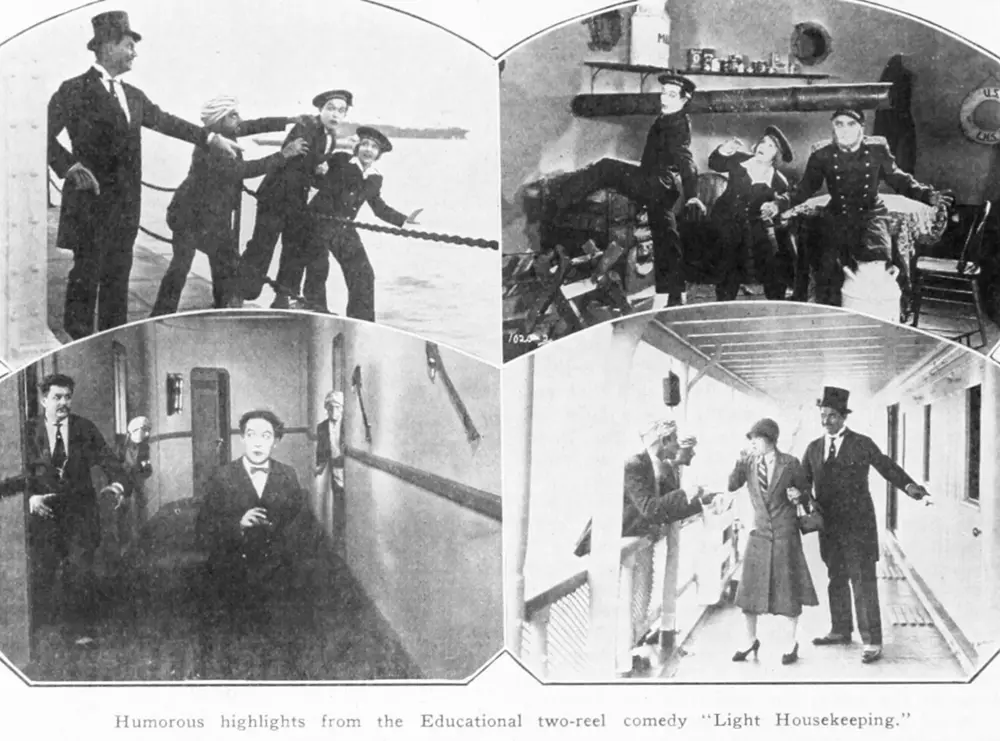
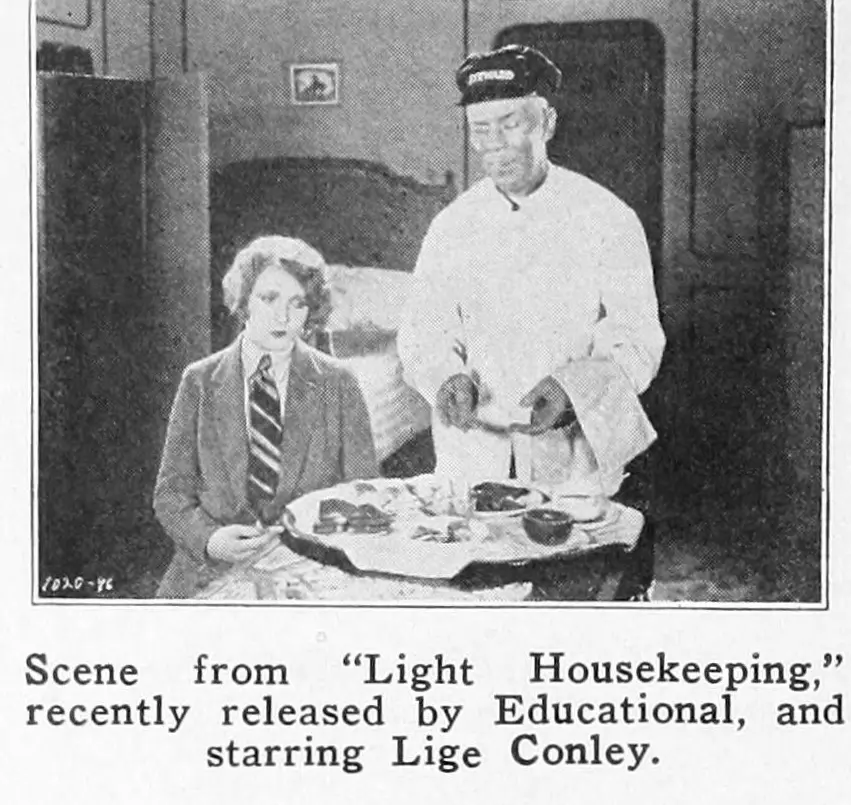
The introduction of Princess Estelle (Estelle Bradley) brings a touch of Ruritanian romance to the proceedings. The plot involving the 'Princess of Blahstark' is undeniably thin, serving primarily as a catalyst for the action. The costume swap with the Chinese steward is a dated trope, and while it was a staple of silent comedy confusion, it feels particularly clunky here. However, Estelle Bradley plays the role with more agency than many silent-era damsels, especially during the swimming sequence.
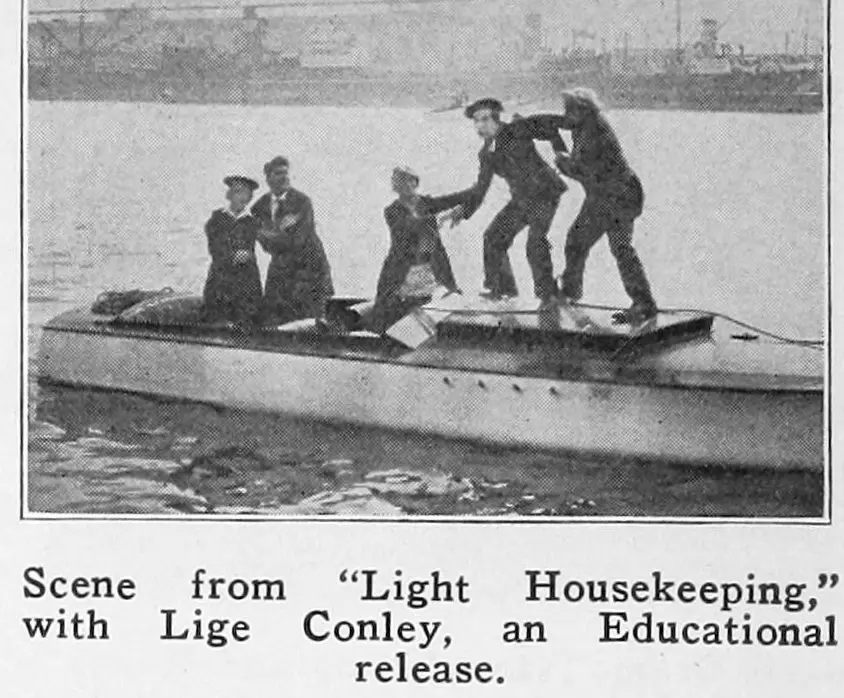
The villainy of Otto is broad and unsubtle. Otto Fries plays the 'pretender to the throne' with a sneering physicality that makes him easy to root against. When he throws Estelle overboard, thinking she is the steward, it sets up a rescue sequence that showcases the film’s location shooting. The contrast between the rocky, unforgiving coast and the cramped, mechanical interior of the lighthouse creates a visual tension that keeps the middle act moving.
Compare this to the more stationary drama found in The Forbidden City, and you see how Light Housekeeping prioritizes motion over atmosphere. It’s a film that refuses to sit still. Every scene is designed to lead into a chase, a fall, or a narrow escape. This kineticism is its greatest strength, even when the logic of the princess’s escape plan begins to crumble under scrutiny.
The final third of the film is where Light Housekeeping earns its place in the annals of silent comedy. The shipboard chase is a masterclass in prop-based humor. Lige hiding in a sack only to be hoisted to the masthead is a classic 'out of the frying pan' scenario. It’s simple, effective, and executed with a sense of genuine danger. Conley’s performance on the spar is particularly nerve-wracking, highlighting the physical risks these actors took for a laugh.
But the real showstopper is the wedding. As the ship encounters a 'terrible storm,' the filmmakers utilized a pivoting set to simulate the rolling of the vessel. Watching the captain attempt to marry Lige and Estelle while the entire room rotates is a visual marvel. It’s a literalization of the chaotic world Lige has been thrust into. The settee pivoting to the wall isn't just a gag; it’s a solution to an impossible situation. It works. But it’s flawed in its absurdity.
This sequence reminds me of the mechanical ingenuity seen in Um Chá nas Nuvens, where the environment itself becomes the primary antagonist. In Light Housekeeping, the storm is the final boss. The way the characters navigate the shifting gravity of the cabin is both hilarious and technically impressive for 1920. It requires a level of choreography that modern CGI-heavy films often lack.
Pros: The film features incredible physical stunts by Lige Conley. The pacing is relentless, never allowing the viewer to get bored. The practical effects during the storm sequence are ahead of their time. It successfully blends domestic comedy with high-seas adventure.
Cons: The plot is highly derivative of other royal-in-hiding stories. Some of the character motivations, particularly Otto's, are cartoonishly thin. The use of the 'Chinese steward' disguise is a low point that hasn't aged well.
Light Housekeeping is a dizzying, often brilliant example of the silent era's obsession with mechanical comedy. While it doesn't have the narrative polish of a Keaton or Lloyd masterpiece, Lige Conley proves himself to be a formidable physical talent. The film is a chaotic joyride that culminates in one of the most inventive wedding scenes in cinematic history. It is a testament to the era's 'do-it-yourself' spirit. Despite its narrative weaknesses, the technical execution remains impressive over a century later. It’s a wild, spinning ride that deserves a look from any serious cinephile.

IMDb 7.6
1930
Community
Log in to comment.