DbcultAccessing Vault...
7.2/10
Senior Film Conservator
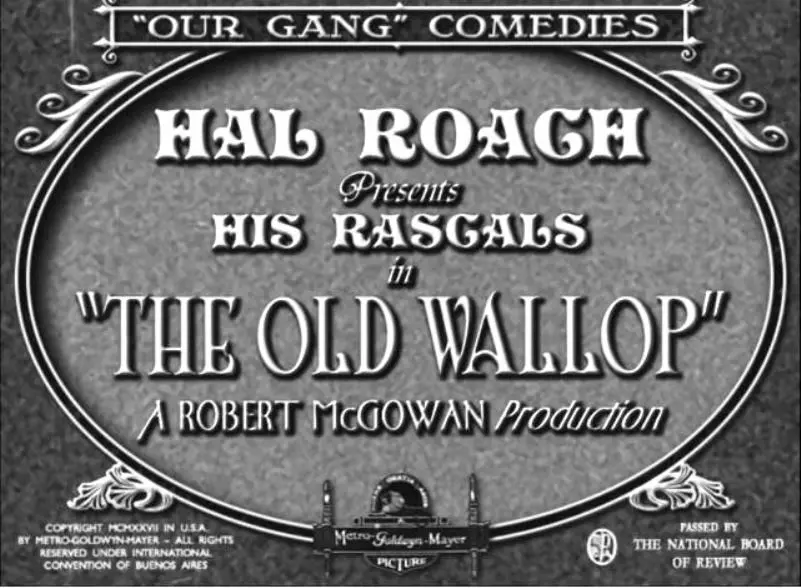
A definitive 7.2/10 rating for a film that redefined the boundaries of cult cinema. The Old Wallop remains a cornerstone of transgressive art.
Is 'The Old Wallop' worth watching today? Short answer: absolutely, if you appreciate the foundational chaos of silent-era comedy shorts. This film is a delightful, if fleeting, glimpse into a bygone era of slapstick, perfectly suited for film historians, silent film aficionados, and those curious about the roots of physical comedy.
However, it's decidedly not for viewers seeking modern narrative complexity, nuanced character development, or high production values. Its charm lies in its simplicity and raw, unadulterated silliness, making it a niche pleasure rather than a universally accessible one. Expect pure, unvarnished vintage.
This film works because its unpretentious, energetic physical comedy captures the authentic, often-unfiltered antics of children, delivering genuine, if dated, laughs.
This film fails because its narrative is barely a sketch, relying almost entirely on a single, repetitive gag and a rather abrupt, improbable climax, offering little in the way of structured storytelling.
You should watch it if you're a devoted fan of early cinema, particularly the "Our Gang" shorts, or if you have a keen interest in the evolution of slapstick and the raw, unpolished charm of pre-code children's entertainment.
"The Old Wallop" is a quintessential example of the Hal Roach studio's "Our Gang" shorts, capturing the unbridled, often mischievous, spirit of childhood with a refreshing lack of adult supervision. At its core, the film revolves around a specific, rather brutal, form of social interaction: Wheezer's signature "wallop in the nose." This isn't just a random act of aggression; it's a meticulously choreographed, if simplistic, power dynamic within the group, an initiation rite and a form of playful dominance that the other children, including Jay R. Smith and Joe Cobb, seem to accept, even anticipate.
The genius, such as it is, lies in the sheer audacity of this central gag. It's repetitive, yes, but each "wallop" is delivered with a fresh burst of energy, a testament to the children's commitment to the bit. This recurring motif quickly establishes the pecking order and the boisterous tone, setting the stage for the escalating chaos that follows. It's a crude, effective way to anchor the short's comedic rhythm.
The narrative, thin as it may be, then pivots to a classic "Our Gang" trope: the children venturing into an adult world ripe for disruption. In this case, it’s a bustling construction site. The juxtaposition of their innocent, albeit destructive, play against the backdrop of heavy machinery and precarious building materials is where the film finds its most fertile ground for gags. It’s a playground of danger, a testament to an era less burdened by safety regulations.
The pivotal moment, of course, involves Allen 'Farina' Hoskins, whose wide-eyed innocence makes him the perfect unwitting victim. As the gang explores the site, Farina becomes entangled in the building materials. The scene where he is inadvertently hoisted aloft by a crane, dangling precariously high above the ground, is the film's comedic zenith. It's a moment of genuine peril, played for maximum slapstick effect, embodying the unpredictable consequences of childhood curiosity in a dangerous environment.
The film, in its unvarnished portrayal of unsupervised play amidst a hazardous construction site, inadvertently functions as a historical document of early 20th-century childhood, revealing a stark contrast to contemporary safety standards and parental oversight. It's a fascinating, if unsettling, peek into a bygone era.
The strength of "The Old Wallop," like many "Our Gang" comedies, lies squarely in the natural, unforced performances of its child actors. There’s a raw authenticity here that professional adult actors often struggle to replicate. Bobby 'Wheezer' Hutchins, with his distinctive bowl cut and mischievous grin, is the undisputed ringleader. His delivery of the titular "wallop" is executed with a confident, almost professional, theatricality that belies his tender age.
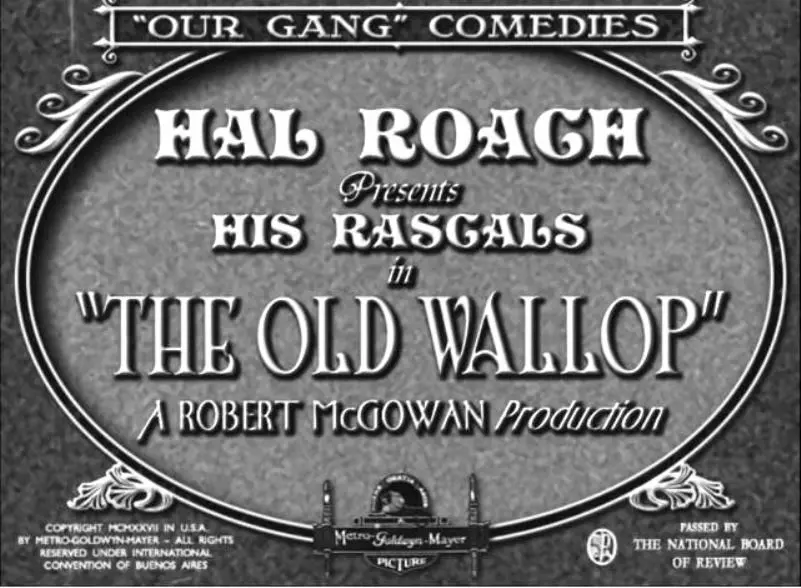
Wheezer's leadership, though expressed through a rather aggressive form of play, feels entirely organic to the world these children inhabit. He’s not just performing; he’s embodying a specific type of childhood bravado. His reactions, from triumphant grins to mock-serious expressions, drive much of the early comedy.
Allen 'Farina' Hoskins, a true icon of early cinema, brings his signature blend of innocence and bewildered charm to the role. Farina’s wide-eyed expressions and slightly hesitant demeanor make his predicament at the construction site all the more humorous and, surprisingly, sympathetic. His ascent into the sky, suspended by a crane, elicits both laughter and a genuine concern for his safety, a testament to his ability to draw viewers into his plight.
The ensemble cast, including Jean Darling, Jackie Condon, and Anita Garvin, provides crucial background energy. Their collective reactions to Wheezer’s antics and Farina’s aerial adventure amplify the comedic impact. They are not merely extras; they are a cohesive unit, a gang whose collective energy fuels the film’s chaotic spirit. Even The Wonder Dog Pal, a consistent presence in these shorts, adds a layer of animalistic charm and occasional, well-timed, distraction.
The adult actors, such as Edgar Dearing and John M. O'Brien, primarily serve as foils or catalysts for the children's antics, their reactions often mirroring the audience's bemusement or exasperation. Their roles are less about character development and more about providing a realistic, if exaggerated, adult presence for the children to interact with or, more often, to evade.
The direction in "The Old Wallop," while not groundbreaking, is remarkably effective for its time and genre. H.M. Walker, as one of the writers for the short, likely contributed significantly to the comedic staging. The film relies heavily on wide shots and static frames, allowing the audience to take in the full scope of the children’s actions and the environment. This is a common technique in silent comedy, emphasizing physical humor over intricate close-ups or rapid editing.
The use of the construction site is particularly inspired. It provides a dynamic, almost dangerous, backdrop that inherently creates opportunities for physical gags. The simple yet effective staging of Farina's entanglement and subsequent lift is a prime example. The camera holds on Farina as he ascends, allowing the physical comedy of his predicament to play out fully without unnecessary cuts or angles.
Cinematography, typical of the era, is functional rather than artistic. The black and white photography captures the details of the children's costumes and expressions, as well as the industrial grit of the construction site. There's a raw, documentary-like quality to some of the shots, particularly when the children are simply running around or reacting to the "walloping" game. This unpolished aesthetic actually enhances the film's charm, making it feel more like a candid capture of real children at play.
Editing is straightforward, serving the gag. Scenes transition cleanly, moving the narrative from the initial "walloping" to the construction site, and then to the climax with Farina. There’s no attempt at complex montage or stylistic flourishes; the focus is squarely on presenting the comedic situations in a clear and understandable manner. This simplicity is, in itself, a strength, allowing the humor to land without distraction.
The pacing of "The Old Wallop" is brisk and unrelenting, a hallmark of silent comedy shorts. From the very first scene, the film establishes a high-energy tone that rarely lets up. The rapid-fire succession of "wallops" quickly sets the stage, ensuring the audience is immediately immersed in the gang's boisterous world. There's little time for exposition or character development; the film trusts its audience to understand the dynamics through action alone.
The transition to the construction site maintains this energetic pace. The children's exploration is a series of quick discoveries and minor mishaps, each building towards the larger comedic set piece involving Farina. The film understands that in slapstick, momentum is key. It constantly pushes forward, escalating the absurdity with each new development.
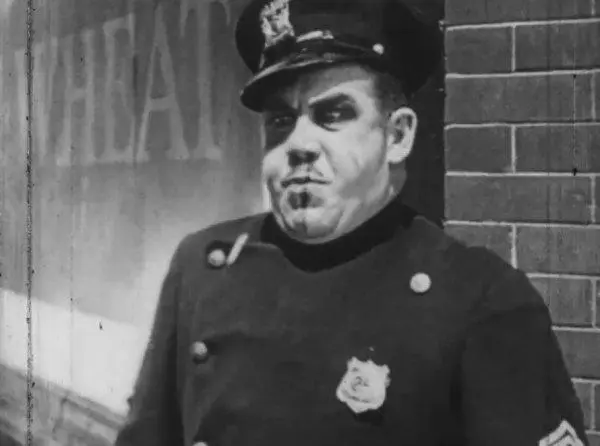
The tone is overwhelmingly lighthearted and mischievous. Despite the occasional roughhousing and the inherent danger of the construction site, there’s never a sense of genuine malice or lasting harm. Even Farina’s predicament is framed entirely for comedic effect; the audience is meant to laugh at his situation, not fear for his life. This light touch is crucial to the film's enduring appeal, creating a world where even peril can be a source of innocent amusement.
One could argue that the film’s central "walloping" gag, viewed through a modern lens, walks a fine line between innocent childhood roughhousing and outright bullying, reflecting a different era’s comedic sensibilities that might not entirely resonate today. This is a debatable point, as many would contend it’s simply a product of its time, intended to be seen as boisterous play rather than malicious intent. The film never judges the children's actions, presenting them as natural extensions of their energetic world.
Yes, "The Old Wallop" is absolutely worth watching today for specific audiences. It offers a valuable window into the foundational elements of silent slapstick comedy and the unique charm of the "Our Gang" series.
It provides a direct link to the early days of physical humor, showcasing how simple gags and the natural appeal of child actors could create genuine laughter. For film students, historians, or anyone curious about the evolution of comedy, it's an essential watch.
However, if your preference leans towards modern, dialogue-driven comedies, or films with intricate plots and deep character arcs, this short might feel simplistic and dated. Its appeal is niche, but profound for those who appreciate its historical and comedic context.
While "The Old Wallop" might seem like a relic from a bygone era, its DNA is surprisingly evident in much of modern comedy. The raw physical humor, the escalating chaos, and the innocent subversion of adult environments are tropes that continue to resurface. Think of the elaborate pranks in contemporary sketch comedy or the physical calamities in animated features – the seeds were often sown in shorts like this.
The film's focus on the unadulterated, sometimes dangerous, energy of children also resonates. It taps into a universal truth about childhood: a period of boundless energy, curiosity, and a certain disregard for rules. This theme, while presented through silent-era slapstick, finds echoes in everything from cartoons like Tom and Jerry to the chaotic family dynamics in films like Chickens or even the early days of The Little Boy Scout.
It works. But it’s flawed. Its historical significance often outweighs its artistic complexity. Yet, to dismiss it entirely would be to overlook a crucial piece of comedy's lineage. The sheer joy of watching children be children, even if it involves a "wallop" or a ride on a crane, has an undeniable, timeless appeal. It’s a testament to the enduring power of simple, visual storytelling.
One surprising observation is how the film, despite its comedic intentions, offers a stark, almost anthropological, glimpse into the social dynamics of children in an era without constant adult intervention. The "wallop" isn't just a gag; it's a primitive form of social bonding and hierarchy establishment, a microcosm of playground politics captured on celluloid. This layer of unintentional sociological insight adds unexpected depth to what is otherwise a straightforward slapstick short.
"The Old Wallop" is not a cinematic masterpiece by any stretch of the imagination, nor does it attempt to be. It is, however, a vibrant, if rough-around-the-edges, slice of silent film history that perfectly encapsulates the chaotic charm of the "Our Gang" shorts. Its humor is direct, its energy infectious, and its portrayal of childhood mischief feels remarkably authentic, even today.
While its plot is minimal and some gags may have aged less gracefully than others, the film’s sheer exuberance and the effortless performances of its young stars make it a worthwhile watch for those with an appreciation for early cinema. It’s a film that reminds us of the raw, unpolished beginnings of screen comedy, a delightful snapshot of a time when laughter was found in the simplest, often most perilous, of situations. It’s a foundational text for anyone interested in comedy’s roots, a spirited, if slightly brutal, romp worth rediscovering.
IMDb 6.1
1937
Community
Log in to comment.