DbcultAccessing Vault...
5.6/10
Senior Film Conservator
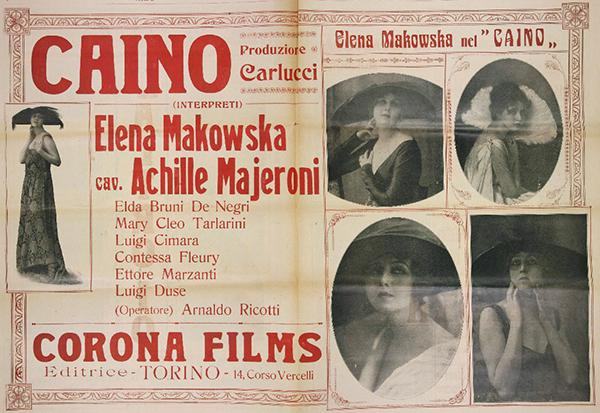
A definitive 5.6/10 rating for a film that redefined the boundaries of cult cinema. Caino remains a cornerstone of transgressive art.
The silent era frequently offered a canvas for the most primal of human emotions, and Caino is no exception. It is a work that breathes the heavy, humid air of turn-of-the-century melodrama while simultaneously anticipating the psychological depth of modern tragedy. To watch this film is to witness a slow-motion car crash of the soul, where the wreckage is not of steel and iron, but of trust and biological imperative. The direction leans heavily into the chiaroscuro of the human spirit, painting the screen with shadows that feel as though they are physically pressing in on our protagonist.
At the heart of Caino lies the terrifyingly efficient erasure of a woman. The trope of the 'madwoman' is one deeply rooted in the literature of the 19th century, yet here it is utilized with a surgical precision that feels uncomfortably contemporary. When the sister—played with a chilling, understated venom by Mary Cleo Tarlarini—decides to strip the mother of her agency, the film shifts from a domestic drama into something far more claustrophobic. Unlike the grand historical sweeps seen in The Battles of a Nation, Caino finds its battlefield within the four walls of a home, where the casualties are measured in stolen years and broken bonds.
The performance of Elda Bruni as the victimized mother is a masterclass in silent pathos. Every tremor of her hands, every desperate glance toward her child, communicates a language of loss that transcends the need for intertitles. We see her sanity not as a fixed state, but as a fragile glass ornament being shattered by the very people sworn to protect her. This theme of systemic gaslighting is handled with a gravity that reminds one of the social critiques found in Op hoop van zegen, though Caino swaps the maritime setting for the suffocating intimacy of the familial hearth.
The film’s title, an obvious nod to the biblical Cain, sets a heavy expectation of brotherly discord. Achille Majeroni and Luigi Cimara portray the two brothers with a contrasting energy that fuels the second half of the film. While the first act is a slow burn of psychological manipulation, the second act explodes into a physical and moral confrontation. The father’s attempt to reclaim his child is not just a quest for justice; it is a desperate attempt to reset a moral compass that has been wildly spun by his brother’s interference.
"In the silent flicker of the frame, Caino captures the moment when the sanctity of the bloodline is sacrificed on the altar of greed and ego."
The intervention of the brother, which leads to the tragic conclusion, is a sequence that rivals the tension found in contemporary thrillers like The Lost Express. However, where that film relies on the kinetic energy of a locomotive, Caino relies on the crushing weight of inevitability. The tragedy isn't that the brother *can't* help; it's that he chooses to *hinder*, driven by a complex web of jealousy and misguided loyalty to the false narrative created by the sister. It is a darker, more nihilistic take on the human condition than what is often found in films like The Lonesome Chap.
Technically, Caino utilizes the limitations of its era to its advantage. The use of deep staging creates a sense of layers within the family—secrets hidden in the background while the foreground actors project a veneer of normalcy. The cinematography by the uncredited masters of the time (likely under the influence of the Italian school of 'verismo') captures the grit of the situation without losing the poetic quality of the image. The lighting, specifically in the scenes involving the 'madwoman's' confinement, uses high-contrast shadows to mirror her fractured psyche. This visual storytelling is far more sophisticated than the straightforward adventure aesthetic of The Secret of the Submarine.
We must also consider the contribution of Helena Makowska and Luigi Duse. While their roles may seem secondary to the central trio, they provide the necessary social context that makes the central betrayal possible. They represent the world that watches, the world that accepts the sister’s lies because it is easier to believe a woman is mad than to confront the evil of a sibling. This collective failure of the community is a theme also explored in Niños en la alameda, though here it is sharpened by the specific cruelty of the upper-middle-class setting.
What remains most striking about Caino is its refusal to offer a tidy resolution. In many films of this period, like The Revolutionist, there is a sense of ideological triumph or at least a moral clarity by the final reel. Caino offers no such comfort. It leaves us in the wreckage. The child, the innocent catalyst for this entire disaster, is left as a pawn in a game played by adults who have lost their humanity. This bleakness puts it in conversation with The Curse of Greed, though the currency here is not gold, but flesh and blood.
The film also serves as a fascinating comparison to A Modern Monte Cristo. Both films deal with the fallout of betrayal and the long shadow of the past, but while Monte Cristo focuses on the cold satisfaction of revenge, Caino focuses on the hot, messy reality of the moment when blood is spilled. It is a more intimate, and therefore more disturbing, portrayal of how the people who know us best are the ones most capable of destroying us.
The pacing of the film is deliberate, almost agonizingly so. It forces the audience to sit with the mother in her isolation, to feel the ticking of the clock as her life is stolen. This is a far cry from the rugged, outdoor energy of Three Mounted Men or the desolate landscapes of The Boundary Rider. In Caino, the landscape is the human face, and the terrain is treacherous. The use of close-ups—still a developing language at the time—is remarkably effective here, capturing the micro-expressions of guilt and glee that pass across the sister’s face.
To ignore Caino is to ignore a vital piece of the cinematic puzzle that led to the psychological dramas of the mid-20th century. It bridges the gap between the theatricality of the 19th century and the internal focus of the 20th. It asks difficult questions about the nature of motherhood: Is it a biological right or a social privilege that can be revoked by the powerful? It asks about the nature of brotherhood: Is it a bond of protection or a bond of ownership? These are questions that remain as sharp as a razor today.
While some might find the melodrama 'over the top' by modern standards, such a critique misses the point of the genre. The heightened emotion is a tool used to expose truths that are often buried under the polite conventions of society. Much like Man's Woman or The Crab, Caino uses its specific characters to comment on the broader power dynamics between men and women, and between the sane and the 'insane.' It is a film that demands your attention and rewards it with a lingering sense of unease.
In the end, the tragedy of Caino is not just in the death or the separation, but in the silence. The silence of the mother who cannot speak for herself, the silence of the brother who will not speak for the truth, and the silence of the child who will grow up in a house built on lies. It is a powerful, haunting piece of cinema that deserves a place in the pantheon of great silent tragedies, standing tall alongside international peers like East Is East or the melancholic Vyryta zastupom yama glubokaya.... Through the lens of this expert critic, Caino is a must-watch for anyone who wishes to understand the origins of the psychological thriller and the enduring power of the domestic tragedy.
IMDb —
1923
Community
Log in to comment.