DbcultAccessing Vault...
6.1/10
Senior Film Conservator
A definitive 6.1/10 rating for a film that redefined the boundaries of cult cinema. Caro Nome remains a cornerstone of transgressive art.
Is 'Caro Nome' worth watching today? Short answer: yes, absolutely, but not for the reasons you might typically watch a movie. This isn't a film in the conventional sense; it's a historical document, a crucial timestamp in the evolution of cinema.
It's for anyone fascinated by the origins of sound film, early opera, or the sheer audacity of technological pioneers. It is decidedly not for viewers seeking a narrative, intricate character development, or modern cinematic spectacle.
In 1926, the motion picture industry stood on the precipice of its most significant revolution since its inception. Silent films, with their live orchestral accompaniments and intertitles, ruled the silver screen. Yet, behind the scenes, studios like Warner Bros. were pouring resources into a gamble: synchronized sound. The Vitaphone process, which married film with separately recorded audio on large phonograph discs, was their champion. 'Caro Nome', a short featuring Metropolitan Opera star Marion Talley, was one of the inaugural Vitaphone shorts, presented to an astonished audience before the grand premiere of Don Juan. It was an event, a demonstration, a proof-of-concept – and in that context, it delivered.
This film works because it’s a living testament to a pivotal technological shift, preserving a moment of performance and innovation. This film fails because, as a standalone piece of entertainment for a modern audience, it offers minimal narrative or visual dynamism. You should watch it if you are a film historian, a student of early sound technology, or an opera enthusiast interested in Marion Talley's legacy.
To appreciate 'Caro Nome', one must first understand the monumental context of the Vitaphone system. Before this, sound in cinema was either live (orchestras, foley artists) or rudimentary (sound-on-film experiments that hadn't yet perfected amplification and synchronization). Vitaphone offered a solution: a large 16-inch disc, synchronized with the film projector, capable of delivering high-fidelity audio. The audience in 1926 wasn't just watching Marion Talley; they were experiencing a miracle.
The technical achievement, spearheaded by Edwin B. DuPar's cinematography and likely directorial oversight, was not in artistic interpretation but in flawless execution. The goal was simple: record a performance and play it back perfectly in sync. When Talley's voice soared, precisely matching her on-screen movements, it must have been nothing short of breathtaking. This wasn't merely an accompaniment; it was the voice of the performer, resonating from the screen itself.
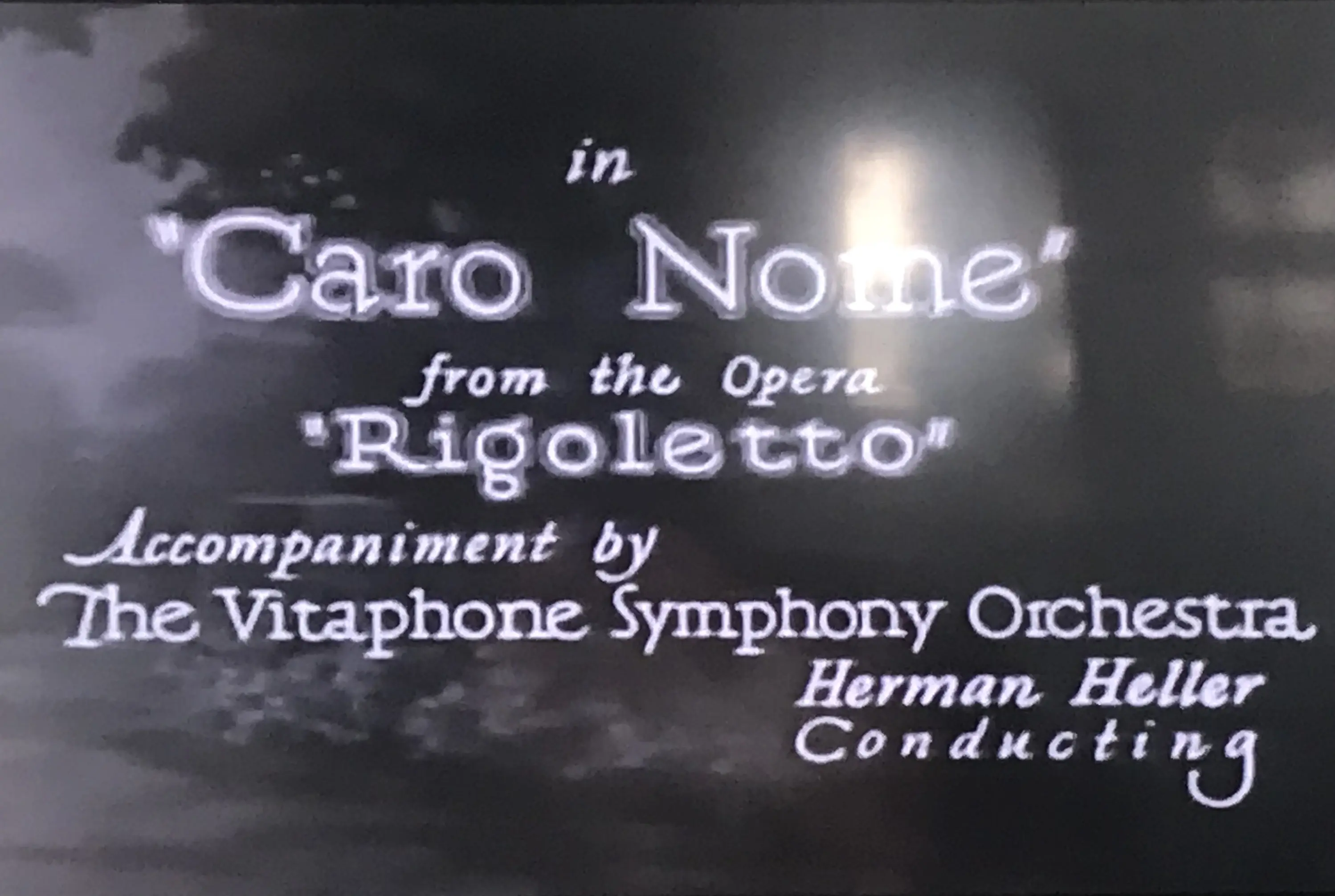
Compared to the more narrative-driven The Jazz Singer a year later, 'Caro Nome' highlights Vitaphone's initial purpose: to bring live theatrical and musical performances to a wider audience, bypassing the logistical challenges of touring. It was a digital concert before digital existed. The sheer novelty of hearing a human voice, perfectly in time with the moving image, was the film's entire raison d'être. Any modern critique of its lack of cinematic flair misses the point entirely; its 'flair' was auditory, its 'art' was engineering.
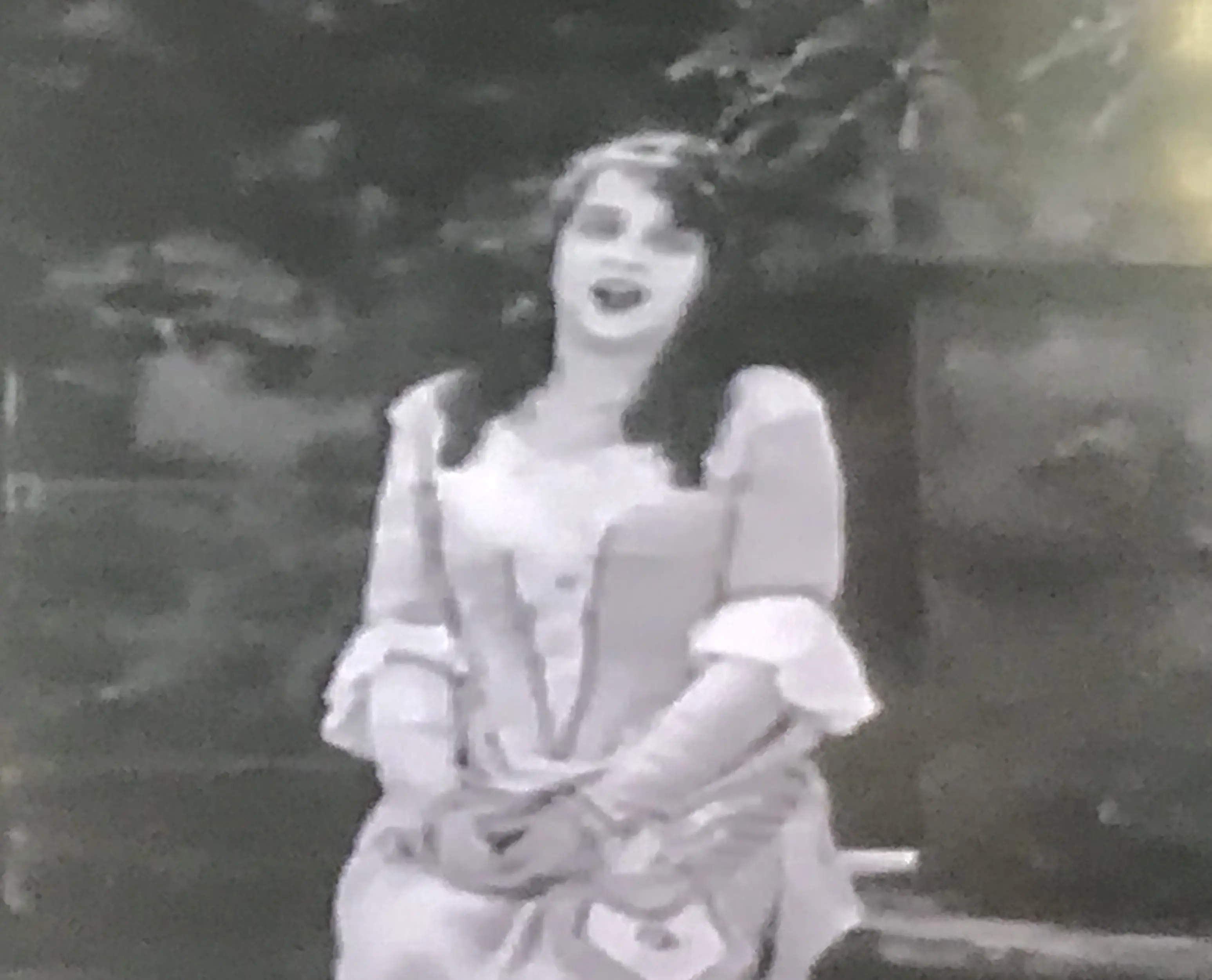
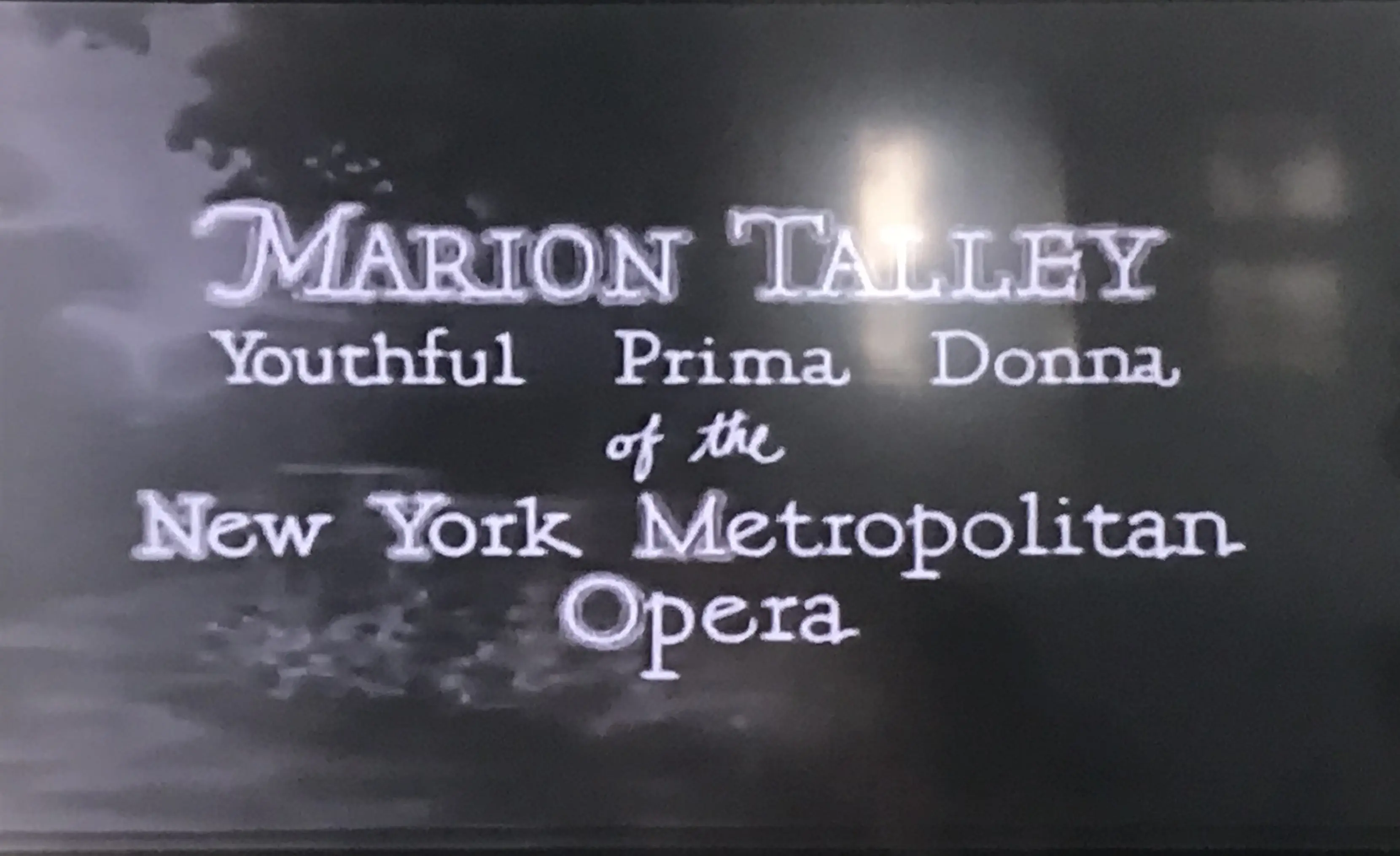
Marion Talley, at just 19 years old, was a phenomenon. Her debut at the Metropolitan Opera had been a sensation, a testament to her prodigious talent. Her selection for a Vitaphone short was strategic; she was a recognizable, celebrated figure whose voice would lend instant credibility and prestige to the nascent technology. In 'Caro Nome', she stands before a simple, almost austere backdrop, her presence commanding despite the static camera.
Her performance, while constrained by the technical limitations of early sound recording (requiring performers to remain relatively still near microphones), is vocally superb. The aria itself is a challenging piece, demanding agility and precision, and Talley delivers it with an ease that belies her youth. We see her facial expressions, the subtle shifts in her posture, all synchronized with her magnificent voice. It's a testament to her stage presence, even when translated to a two-dimensional medium.
The film's true star isn't just Talley's voice, but the idea of it being heard on film. It's a historical record of a specific talent at a specific time, and in that, it holds immense value. While the visual experience might feel rudimentary today, the auditory preservation of such a voice, especially one belonging to a performer who would later retire from opera relatively early, is priceless. It's a window into the vocal artistry of the 1920s, unfiltered by modern recording techniques, and that alone makes it compelling.
To speak of 'directing' and 'cinematography' in 'Caro Nome' requires a re-evaluation of these terms within the context of 1926 Vitaphone shorts. Edwin B. DuPar, credited for the camera work, was not aiming for innovative camera angles or dynamic editing. His directive, undoubtedly, was to capture Talley as clearly and cleanly as possible, ensuring the synchronization process was not complicated by unnecessary movement.
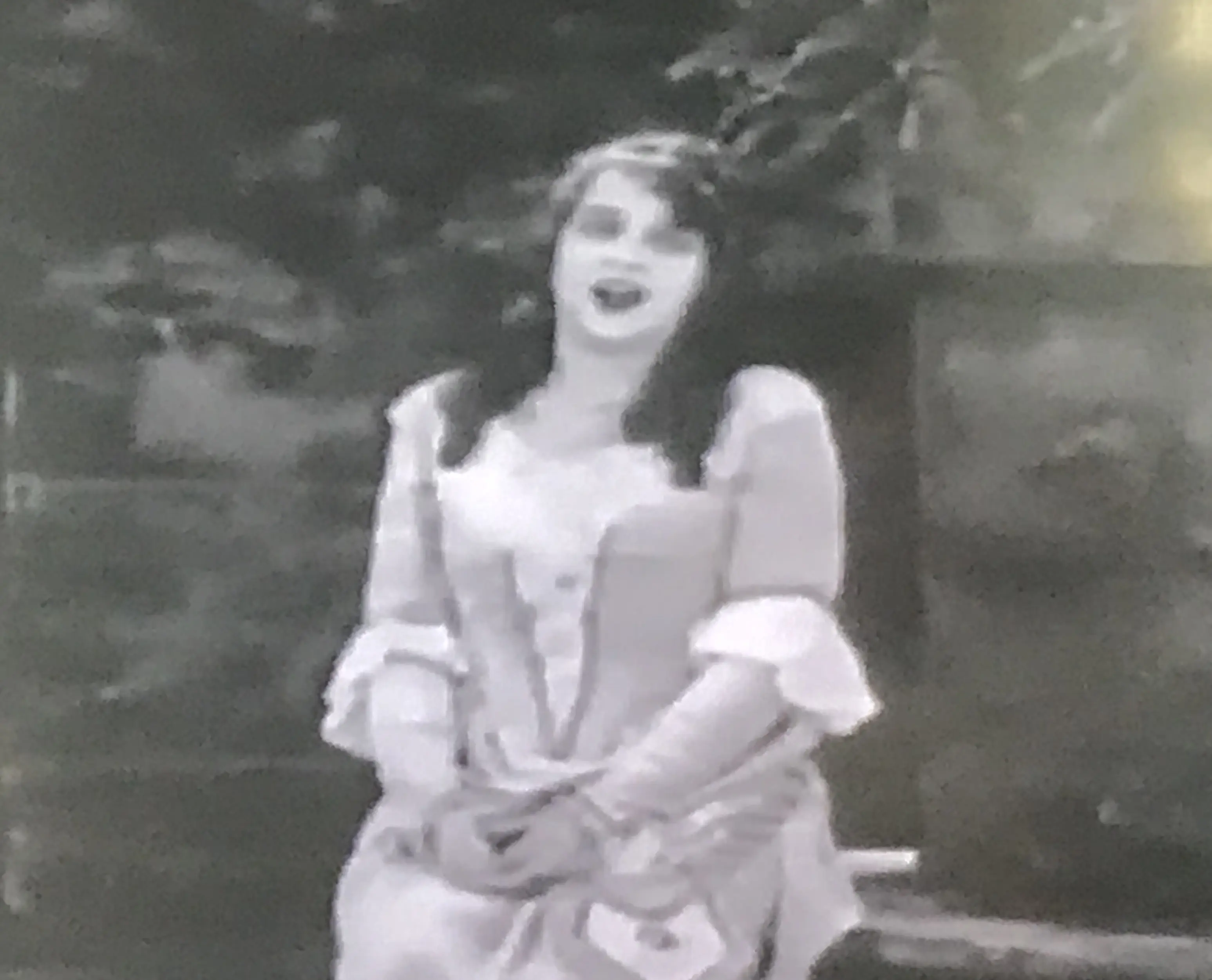
The film is essentially a single, static shot. The camera is positioned front and center, framing Talley from the waist up. There are no cuts, no pans, no zooms. This deliberate lack of visual dynamism was a necessity. Early sound recording equipment was cumbersome, sensitive, and required performers to hit precise marks. Any camera movement would have risked breaking the delicate synchronization or introducing unwanted noise.
Therefore, DuPar's 'cinematography' is defined by its clarity, its steady hand, and its ability to simply document the event. The lighting is functional, illuminating Talley without artistry, ensuring her image is bright and sharp. It works. But it’s flawed by modern standards of visual storytelling. Yet, to criticize it for this would be like criticizing a photograph for not being a movie. It was designed to be a direct, unadorned visual complement to the sound, and in that, it succeeded admirably. The focus was entirely on the performance, unmediated by directorial flourish.
The pacing of 'Caro Nome' is entirely dictated by the aria itself. It runs for the duration of the song, a little over three minutes. There is no narrative arc, no dramatic tension beyond the inherent emotionality of Verdi's composition. The film doesn't attempt to manipulate time or build suspense; it simply presents the performance in real-time, as it would have been experienced on a stage.
The tone is one of formal reverence. It treats the opera performance with the seriousness it deserves, positioning it as high culture presented through a new, astonishing medium. There's a certain solemnity to the presentation, an understanding that something significant is happening, both artistically and technologically. It’s an overture, not just to Don Juan, but to a new era of cinema.
For a contemporary audience, this measured pace can feel slow, almost excruciatingly so, if approached with expectations of modern film. But within its historical context, it was a deliberate choice to highlight the clarity of the sound and the artistry of the performer. It prioritizes the auditory experience, allowing the viewer to absorb every note without distraction from visual theatrics. This stark contrast to the action-packed features of the silent era underlines its experimental nature.
Yes, 'Caro Nome' is worth watching, but primarily as a historical artifact. It offers a direct window into the birth of synchronized sound in cinema. For entertainment, it's a niche experience. For understanding film history, it's essential.
It is an invaluable resource for film historians, opera aficionados interested in Marion Talley's career, and anyone fascinated by the technological leaps that shaped modern media. However, casual viewers seeking a compelling narrative, dynamic visuals, or modern production values will find little to engage them here. It serves a very specific educational and historical purpose, rather than broad entertainment.
While often overshadowed by the later, narrative-driven success of The Jazz Singer, 'Caro Nome' and its fellow Vitaphone shorts arguably represent a more significant technical leap in terms of pure synchronized sound. These shorts proved the viability of the technology, paving the way for the talkie revolution that would fundamentally reshape Hollywood. Without these early, often overlooked, experiments, the transition to sound film might have taken a very different, slower path.
Modern viewers often dismiss these early sound experiments, missing their profound impact on the industry's trajectory. It’s easy to look at 'Caro Nome' and see only a rudimentary film, but that perspective ignores the wonder it elicited from its original audience. It was a marvel, a promise of what cinema could become. Its legacy isn't in its artistic merit as a film, but in its audacious demonstration of possibility. It is a cornerstone, not a pinnacle.
The film also serves as a poignant reminder of the ephemeral nature of live performance. Through the Vitaphone process, a moment in time, a specific voice, and a particular interpretation of a classic aria are preserved indefinitely. It’s a bridge between the grand stages of opera and the nascent technology of cinema, forever linking two distinct art forms at a crucial juncture in their histories. This preservation aspect alone elevates it beyond mere curiosity.
While 'Caro Nome' may not captivate with its storytelling or visual flair, its historical weight is undeniable. It's a short, but mighty, testament to human ingenuity and the relentless push to merge sound with sight. For those who appreciate the foundational moments of cinema, it is an essential viewing experience, offering a direct portal to the very beginning of the talkie era. Approach it not as a film to be entertained by, but as a document to be studied and admired for its pivotal role in history. A necessary viewing for anyone tracing the lineage of cinematic innovation.
IMDb 4.8
1934
Community
Log in to comment.