DbcultAccessing Vault...
Cult Review
Senior Film Conservator
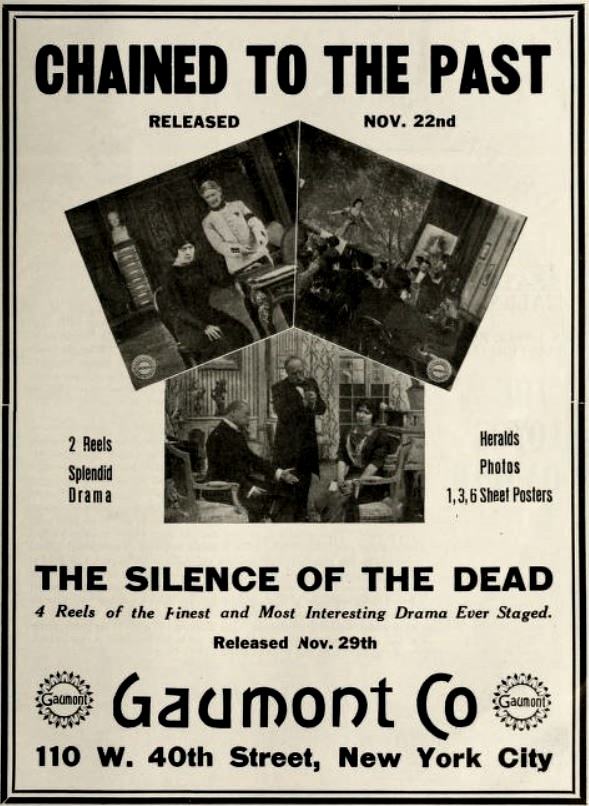
Guilt hangs heavier than iron shackles in Chained to the Past, a 1912 one-reeler that feels like finding a bruised love-letter pressed inside a military hymnal.
Picture the opening tableau: a garrison ballroom lit by guttering tallow, chandeliers trembling to the thud of boots. Colonel Vernon—played with ramrod melancholy by an unnamed lead whose cheekbones could slice calico—cuts through the schottische as though marching to execution. Across the floor glides Madame Rosa Alba, her gown the color of old Burgundy, eyes luminous with the knowledge of second chances. Their handshake lasts four seconds yet contains twenty years; the camera, stationary but emotionally claustrophobic, refuses to close-up, forcing us to squint through swirling waltzers as if eavesdropping on a state secret. The resulting marriage feels less like romance than battlefield triage.
Silent-era convention usually telegraphs fate with a mustache-twirling villain; here the antagonist is absence itself—the empty chair where a dying mother waits.
Enter the honeymoon montage: tinted amber for nostalgia, azure for hope, both hues smeared like bruises across the celluloid. A train tunnel swallows their carriage; dissolves reveal postcard vistas—Alps, vineyards, a Venetian moon that already looks posthumous. Intertitles arrive sparingly, white letters on black velvet, each a whispered mortuary announcement. The Colonel’s batman delivers the fatal telegram aboard the train; the camera stays inside the compartment, framing Rosa’s reflection in the window glass so that her face and the speeding landscape blur into one guilty smear. No over-acting, no theatrical hand-to-forehead: just a subtle widening of her eyes, a contraction of the pupils that betrays ancestral dread.
Back home, the ancestral manse is shuttered, mirrors veiled like widows. The coffin lid has already been screwed down; the mother’s curse, uttered off-screen, resonates only through the servants’ gossip caught in iris-in vignettes. Rosa’s guilt metastasizes into spectral visions: door hinges shriek like the damned; a curtain cord resembles a hangman’s noose. The film’s most electric moment arrives when she opens the Colonel’s dispatch box: inside lies a child’s woolen mitten, pressed flowers from a long-forgotten May Day, and a daguerreotype of the mother whose eyes follow Rosa across the room. Close-up—cut to Rosa’s trembling glove—cut back to the photo. No intertitle needed; the montage screams usurper.
Meanwhile, the subplot of Sergeant Michael and Mignon plays like a chamber opera trapped inside a mausoleum.
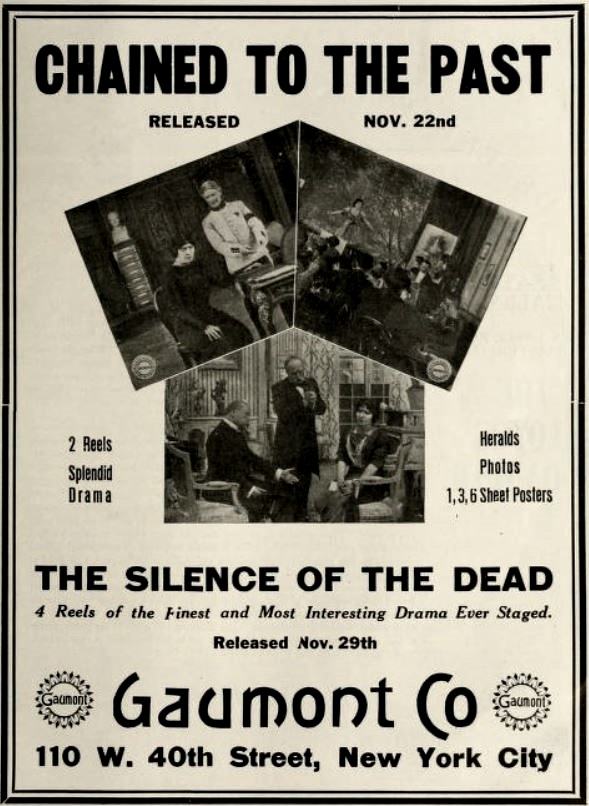
Mignon, portrayed by a flamelike actress who seems to have stepped out of Toulouse-Lautrec’s absinthe palette, sings café ballads whose lyrics we never hear yet whose ache transcends language. When the Colonel denies Michael’s request to wed, the camera adopts the soldier’s low angle so that the commanding officer looms like a marble monument of patrician disdain. Note the blocking: Rosa stands two paces behind her husband, half-shadowed, as though already a ghost negotiating purgatorial bureaucracy. Mignon’s final plea—filmed in a single take—ends with her veil snagging on the door handle, ripping away to reveal a tear that gleams like shrapnel. The veil remains tangled, a white flag refused by fate.
Rosa’s flight to Venice unfolds through a sequence of superimpositions: gondola prow cutting black water, church bells vibrating into skull-shapes, a handkerchief drifting downward like a dying dove. The film stock itself seems consumptive, speckled with mildew that might be Venetian damp or moral rot. In her rented palazzo she drafts a letter—never finished—while a mirror reflects only the room’s emptiness. The camera tracks backward, revealing both Rosa and her absence, a visual palindrome worthy of later European art-cinema.
Death arrives off-screen, announced by a gondolier’s cry muffled in fog. The final shot—an iris-out on the handkerchief floating toward the Adriatic—feels like eyelids closing on a century already exhausted by war, tuberculosis, and the first tremors of modernity.
Director Harold M. Shaw (his name survives only on the edge of a brittle negative) composes each frame like a carte-de-visite photograph: foreground objects obtrude to create depth, while background actors hold poses as if terrified to breathe. Compare this to the open-air athleticism of contemporaneous westerns like Glacier National Park; Shaw prefers parlors, corridors, antechambers—spaces where souls suffocate.
Tinting follows emotional thermography: amber for nostalgic recall, cerulean for the honeymoon’s false promise, sickly green for Rosa’s Venetian fever. The transition is achieved not through chemical bath alone but by hand-cranking the projector slower, so colors seem to seep like bruises spreading under skin. Modern restorations often misread these fluctuations as print decay; in truth they constitute an early form of chromatic narration.
Shot in December 1911, released January 1912, the film straddles the death of Queen Victoria and the tremors of Balkan saber-rattling. The Colonel’s obsolete code—honor, filial duty, regimental hierarchy—already smells of mothballs; Rosa’s cosmopolitan past (hinted at through her Parisian wardrobe) aligns her with the coming century’s displaced women. Thus their marriage is not merely personal but epochal: the 19th century bedding the 20th, then rolling over to crush it.
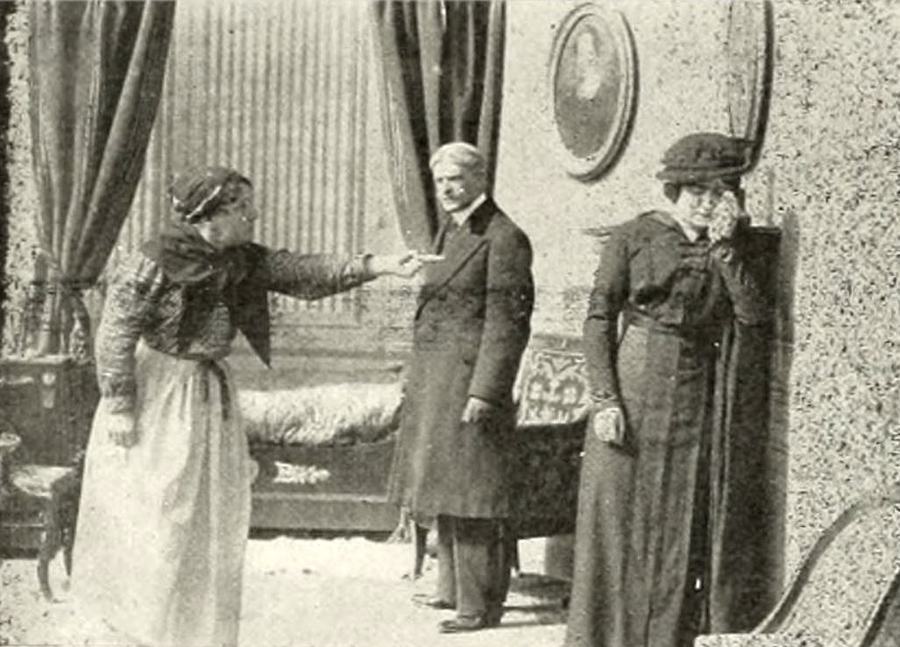
Notice the absence of divine solace. Where From the Manger to the Cross soaks its melodrama in sacramental glow, Chained to the Past offers no crucifix, no priestly absolution. Guilt is secular, psycho-social, a precursor to the moral exhaustion found in later Scandinavian masterpieces like Ingeborg Holm.
The Colonel’s stiffness is not bad acting but a portrait of masculine rigor mortis; watch how his gloved fingers drum a regimental tattoo on the chair-back when Rosa pleads for Michael—a metronome of denial. Rosa, alternately, speaks through shoulders: they ascend toward her ears under maternal condemnation, then slope like broken wings in Venice. Such gestural minimalism predates the feverish calisthenics of later silent divas like Anna Held, locating the film in a liminal zone between Victorian tableau and modern interiority.
Place this one-reeler beside the epic pageantry of Quo Vadis? or the muscular piety of The Life and Passion of Jesus Christ, and it seems almost claustrophobically modest. Yet its compression is its power—like a death-mask pressed against the face of an era. The maternal curse anticipates the dynastic doom in Hamlet, Prince of Denmark, while Rosa’s Venetian demise echoes the watery fatalism of La dame aux camélias.
No complete print survives; the Museum of Modern Park holds a 423-foot fragment, its sprocket holes warped like gutted piano keys. Yet even in shards the film exudes a perfume of dread. Scholars once misattributed it to early British producer James Williamson until a faded company ledger surfaced in 1987, listing Shaw’s name beside the working title Because I Loved You. Such textual instability only amplifies the film’s theme of erasure—Rosa’s life story literally fading from history the way her handkerchief dissolves into lagoon water.
Trade papers of 1912 praised its “refined restraint” while audiences complained it lacked “horse chases and pie fights.” Critics today recognize it as a missing link between Victorian stage histrionics and the psychosocial realism that would flower in post-war European art cinema. The maternal curse prefigures the suffocating parent of The Student of Prague; Rosa’s self-exile anticipates the masochistic heroines of Tess of the D’Urbervilles.
Because every viewer carries their own unburied mother, their own honeymoon cut short by telegram. Because guilt is the one empire that never collapses. Because the film’s silence amplifies our interior screams, turning the projector’s rattle into a heartbeat we cannot hush.
Verdict: Seek the fragments, project them at 16 fps in a black-box theatre, and let the guttering light remind you that some chains are forged not of iron but of memory.
IMDb 6.4
1921
Community
Log in to comment.