DbcultAccessing Vault...
Cult Review
Senior Film Conservator
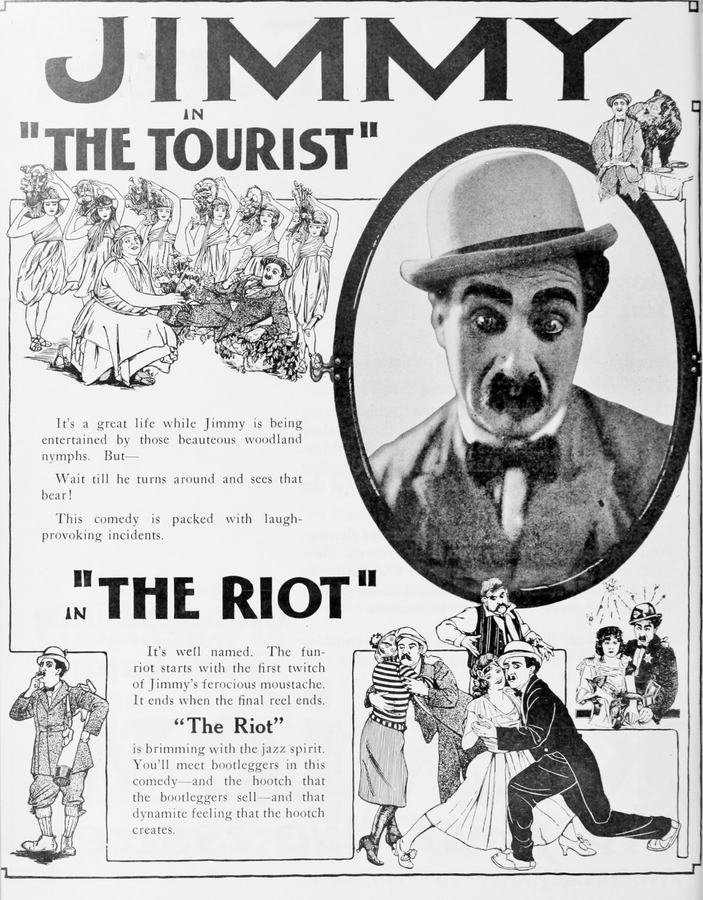
The year 1919 stands as a pivotal junction in cinematic history, a period of transition where the raw energy of early nickelodeons began to coalesce into more sophisticated narrative structures. Amidst this backdrop, The Riot, featuring the irrepressible Jimmy Aubrey, serves as a fascinating case study in the mechanics of silent-era farce. Unlike the grittier realism found in contemporary war dramas like The Lost Battalion, Aubrey’s vehicle operates within a realm of pure physical hyperbole, where the stakes are measured in pratfalls rather than casualties.
The narrative premise is deceptively simple: an amateur golfer, Jimmy, discovers a detective’s badge and, in a moment of whimsical vanity, adopts the persona it implies. This device—the 'talisman of authority'—is a recurring trope in comedy, yet James B. Ross’s direction imbues it with a sense of frantic urgency. The golf course, typically a site of leisure and aristocratic poise, is transformed into a staging ground for chaos. This juxtaposition of high-society sport and low-brow slapstick mirrors the societal shifts of the post-WWI era, where traditional boundaries were being systematically dismantled.
Jimmy Aubrey, often overshadowed in historical retrospectives by the likes of Chaplin or Keaton, displays a unique comedic vocabulary here. His physicality is less balletic than Chaplin’s and less stoic than Keaton’s; instead, it is characterized by a vibrating, nervous energy. When he interacts with Fred Spencer, the comedic timing achieves a level of mathematical precision. Their movements are a choreographed dance of near-misses and high-impact collisions that would influence generations of physical performers. In contrast to the sentimental melodrama of May Blossom, 'The Riot' rejects pathos in favor of pure, unadulterated momentum.
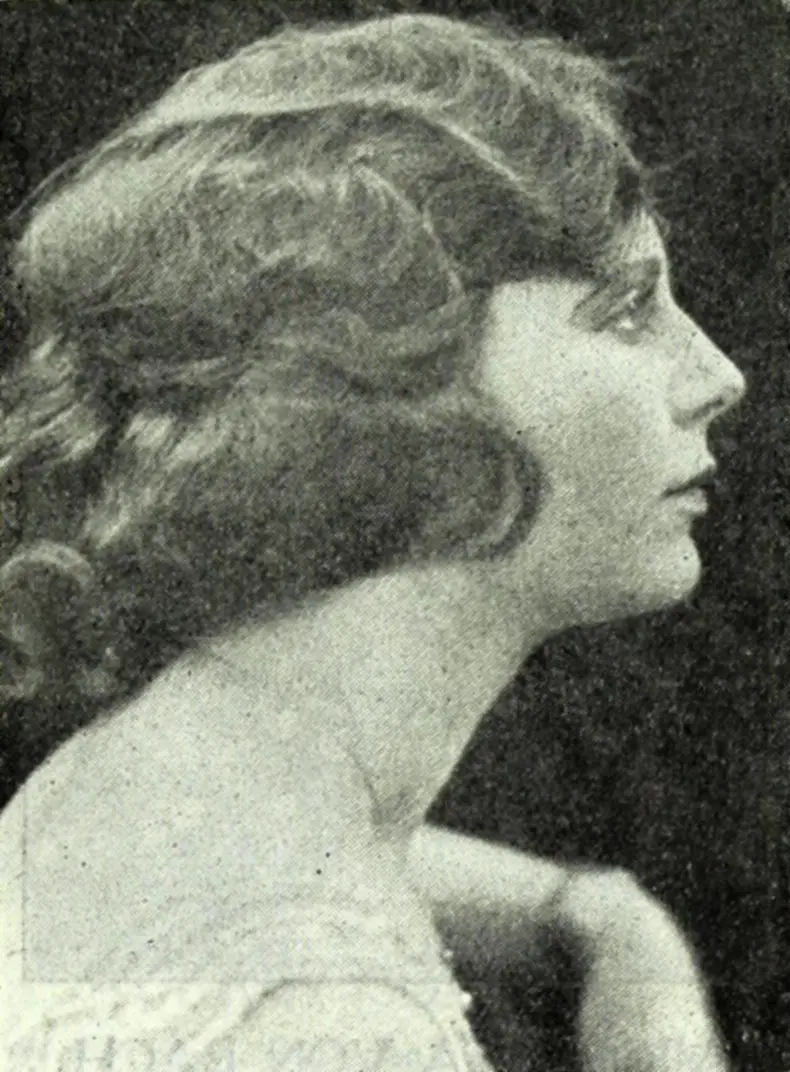
Helen Kassler provides a necessary grounding presence amidst the whirlwind. In many shorts of this vintage, the female lead is relegated to a passive observer, but Kassler’s reactions are integral to the film’s rhythmic structure. Her performance reminds us that the success of a riot—on screen or off—depends heavily on the witnesses to the carnage. The film’s internal logic dictates that once the badge is pinned, the reality of the character is subsumed by the symbol. It is a proto-existentialist crisis played for laughs, a theme explored with far more gravity in works like Maria Rosa.
James B. Ross, working within the constraints of 1919 technology, utilizes the frame with surprising sophistication. The exterior shots possess a depth of field that suggests a world existing beyond the immediate action—a stark contrast to the more claustrophobic, stage-bound productions of the early decade. While it lacks the documentary grandeur of Panama and the Canal from an Aeroplane, 'The Riot' captures a distinct urban texture. The streets are not merely settings; they are obstacles. The cinematography catches the glint of the badge with a clarity that ensures the audience never loses sight of the catalyst for the ensuing madness.
The editing, likely handled by Ross or a close collaborator, favors rapid-fire succession during the titular riot. The pacing is relentless, mirroring the industrial speed of the early 20th century. We see echoes of this mechanical fascination in international thrillers like Die Flammenfahrt des Pacific-Express, where the machine dictates the human tempo. In 'The Riot', however, the 'machine' is the social engine of law and order, which Jimmy inadvertently throws into reverse.
While 'The Riot' is ostensibly a lighthearted romp, it is impossible to ignore the subtext of institutional fragility. The ease with which a civilian can usurp the mantle of the law speaks to a deep-seated anxiety about the stability of social structures. Films like The Heart of Rachael dealt with the breakdown of the domestic sphere, but Aubrey’s film tackles the breakdown of the public sphere. When Jimmy pins that badge, he isn't just playing dress-up; he is exposing the thin veneer of authority that keeps the 'riot' at bay.
This theme of masquerade and the fluid nature of identity is a hallmark of the era. Consider Behind Masks or the aptly titled When Love Was Blind; both explore the disconnect between appearance and reality. Jimmy Aubrey’s golfer-turned-detective is the comedic sibling to the more dramatic protagonists of The Midnight Man or the deceptive Jim the Penman. In all these instances, the costume—be it a badge, a pen, or a mask—dictates the destiny of the wearer.
The brevity of 'The Riot' is its greatest strength. It does not overstay its welcome, nor does it attempt to inject unearned emotional weight. It is a distilled shot of cinematic adrenaline. In the same way that A Wee Bit o' Scotch relied on cultural shorthand to deliver its charm, 'The Riot' relies on the universal language of the chase. There is a purity in this form of storytelling that was often lost as the industry moved toward feature-length epics.
Even when compared to other 1919 comedies like Billy's Fortune or the Will Rogers vehicle Almost a Husband, 'The Riot' feels more aggressive, more willing to lean into the absurdity of its premise. It lacks the pastoral gentility of Fresh from the City, opting instead for a gritty, soot-stained urbanity that feels remarkably modern. Even the international offerings of the year, such as the Danish Den Æreløse, though differing in genre, share this fascination with the consequences of one's public reputation.
The concluding sequences of the film, which justify the title, are a masterclass in ensemble movement. The screen becomes a tapestry of flailing limbs and flying props. It is here that Ross’s vision truly takes flight, managing the logistical nightmare of a dozen actors in a confined space without losing the central narrative thread of Jimmy’s desperation. The badge, once a source of pride, becomes a mark of Cain, drawing the ire of everyone in his orbit. The resolution is swift and satisfyingly ironic, leaving the audience with a profound sense of the fragility of social standing.
In summation, 'The Riot' is far more than a mere curiosity of the silent era. It is a vibrant, breathing document of a world in motion. Jimmy Aubrey delivers a performance of startling physical intelligence, supported by a cast that understands the delicate balance between character and caricature. While it may not possess the philosophical depth of the decade's later masterpieces, its sheer exuberance and technical competence make it an essential watch for anyone interested in the evolution of visual comedy. It is a reminder that sometimes, the greatest disturbances are caused by the smallest objects—and the biggest fools.
A seminal piece of 1919 slapstick that remains as volatile and entertaining today as it was a century ago.
IMDb —
1917
Community
Log in to comment.