DbcultAccessing Vault...
Cult Review
Senior Film Conservator
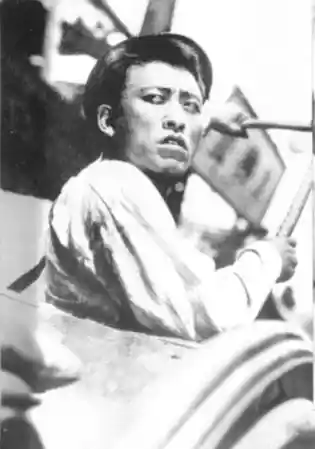
Okay, so, Cheolindo isn't going to blow up your screen with special effects or lightning-fast plot twists. If you're looking for an adrenaline rush, probably skip this one. But if you're in the mood for something that sits with you, a quiet little gem 💎 about human stubbornness and the slow grind of reconciliation, then pull up a chair. It’s for folks who appreciate films that don't shout.
Those who need constant action or neat, tidy resolutions might find it a bit frustrating. It moves at its own pace, a really human pace, I think.
The core of it is simple: two villages, right next to each other, but they act like they're on different planets. Old grudges, you know? The kind that just settle into the dust and become part of the air. You can almost feel that history weighing down every interaction.
Then there’s the pastor’s daughter, played by Shin-bang Yu. She’s not some grand orator or a warrior. She just… is. Her approach isn’t about big speeches, it’s about persistence, about just *being there* in the spaces between the villages, where everyone else avoids.
The visual of the place really sticks with you. So much dust. It’s everywhere, coating the roads, the houses, probably even the people’s tempers. It makes everything feel ancient and worn, like these feuds have been going on forever and just caked onto the landscape.
The way the villagers move, too. There’s this heavy, deliberate walk, especially the men. They carry their resentments not like burdens, but like something *ingrained* in their posture.
One scene, early on, where a group from one village has to pass through a field bordering the other, and the way they visibly tense up? You can feel the decades of tension in that simple walk. No words, just stiff shoulders and averted gazes.
What I found really interesting is how small the daughter's actions often are. She’s not trying to solve everything with one grand gesture.
There's a moment when she just leaves a bucket of fresh water near the shared well, knowing people from both sides use it. It’s not revolutionary, but it's a quiet offering in a place full of taking. Another time, she tries to help an elder from the 'other' village with a fallen cart. He grumbles, _really_ grumbles, but he doesn't actually stop her. You can almost see the gears turning in his head.
Yeon-sil Kim, as one of the village matriarchs, has this incredible glare. It’s not an angry glare, not exactly, more like a deeply ingrained suspicion. When the daughter tries to talk to her, Kim’s eyes just narrow slightly. It’s powerful, without a single word being spoken. You know exactly what that look means: 'I’ve seen it all, kid, and nothing changes.'
The film isn't afraid to let scenes breathe, sometimes almost too much. The silence in some of the outdoor shots, just the wind and maybe some distant birds, it starts to feel awkward rather than emotional for a bit. Then you settle into it. It kinda forces you to pay attention to the little things.
You can almost feel the movie trying to convince you this moment matters. And often, it does.
The male characters, especially the village leaders, are particularly entrenched. Woon-hak Yim plays one of the headstrong elders, and his performance is all in the set of his jaw. He doesn't need to yell. His refusal is palpable.
There's a sequence where the daughter brings a small gift – some freshly baked bread, maybe? – to one of the elder's houses, and he just stares at it on the table. He doesn’t touch it. His wife, though, glances at it, and you catch a flicker of something in her eyes. It's those tiny, almost imperceptible shifts that make this film work.
One reaction shot lingers so long it becomes almost funny, as one of the younger men, Je-haeng Park, just watches the daughter walk away after trying to talk to him. He doesn't move. Doesn't say anything. Just watches. What's going on in his head? We don't really know, and that's okay.
It’s not a perfect movie, not by a long shot. The plot can feel a bit thin in places, and some of the supporting characters aren’t given much to do besides glower. But the central idea, the stubborn hope that one person can plant in a barren landscape of old hatreds, that’s what makes it worth watching.
The ending isn’t some grand celebration, either. It’s quieter. More like a truce than a full-blown peace treaty. A step forward, maybe. But that feels right for a story like this. It’s not about magic, it’s about effort, and time.
IMDb 7
1929
Community
Log in to comment.