DbcultAccessing Vault...
Cult Review
Senior Film Conservator
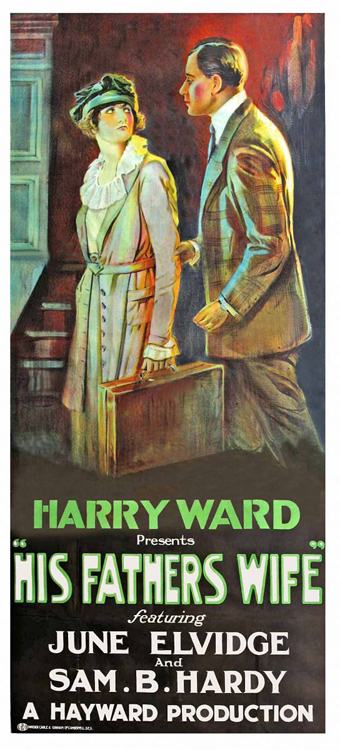
In the annals of early cinema, certain films, even those less frequently revisited today, offer a poignant window into the social mores, anxieties, and dramatic sensibilities of their time. His Father's Wife, a 1921 production, stands as a compelling exemplar of this phenomenon. Crafted from the pens of Helen Christine Hoerle and Philip Lonergan, this picture delves into a narrative rich with intrigue, familial avarice, and the unyielding power of reputation. It’s a story that, despite its century-old vintage, still resonates with fundamental human conflicts: the pursuit of wealth, the fragility of honor, and the unexpected places where true virtue can be found.
Our story introduces us to Patricia "Patty" Hudson, portrayed with a delicate yet resolute grace by June Elvidge. Patty is a writer, a profession often romanticized but here depicted with its more arduous realities – the struggle, the solitude, and the toll it can take on one's health. When illness forces her hand, her physician, recognizing the need for both rest and a gentle occupation, orchestrates her entry into the world of the venerable James Winthrop, Sr. (Lou Gorey). Winthrop, an aging patriarch of considerable means, requires a private secretary, and Patty, with her quiet competence and empathetic demeanor, proves an ideal fit. What begins as a professional arrangement soon blossoms into a relationship of genuine affection and companionship, a bond that transcends the conventional employer-employee dynamic. Gorey imbues Winthrop with a benevolent gravitas, making his character both sympathetic and somewhat tragic in his naiveté regarding the machinations of those around him.
It is this very closeness between Patty and Winthrop that ignites the simmering resentment of his relatives, Mrs. Harrison Tyler (Julie Dempsey) and her daughter, Sally (Virginia Valli). Dempsey, as Mrs. Tyler, delivers a wonderfully sneering performance, embodying the archetype of the calculating, aristocratic villainess. Her eyes, perpetually narrowed, betray a singular focus: the Winthrop fortune. Sally, played by Valli, is initially presented as a malleable extension of her mother's will, a character whose moral compass is still largely unformed. The Tylers view Patty not as a caregiver or companion, but as an interloper, a commoner threatening their rightful inheritance. Their fear metastasizes into malice, culminating in Mrs. Tyler's insidious campaign of character assassination. She dispatches venomous letters to Winthrop's son, Jim (William T. Carleton), then serving in the aviation corps in France, painting Patty as a gold-digging opportunist, a schemer preying on an old man's vulnerability. Carleton, as Jim, is given the unenviable task of portraying a character initially blinded by prejudice, a common trope in melodramas but one that requires careful navigation to maintain audience empathy.
The power of gossip and the devastating impact of a tarnished reputation are central themes here, echoing the concerns of other films of the era, such as The Tongues of Men, which similarly explored how easily a person's standing could be undermined by rumor. Patty, a woman of inherent dignity, finds herself caught in a maelstrom of societal judgment. The whispers, though unfounded, become unbearable, leading her to the decision to leave the Winthrop household, sacrificing her comfort for the sake of her peace and Winthrop's tranquility. However, Winthrop, a man of profound affection and perhaps a touch of old-world stubbornness, will not hear of it. In a move that is both protective and dramatically audacious, he proposes marriage. His motivation is clear: to quell the scandalous talk, to legitimize Patty's presence, and to secure her place by his side. Patty, ever selfless, agrees, but with a crucial stipulation – she renounces all claims to his inheritance, a testament to her pure intentions and a stark contrast to the Tylers' avarice. This act of self-denial is pivotal, establishing her moral superiority and setting the stage for the narrative's subsequent twists.
The marriage, intended as a shield, quickly becomes a catalyst for further tragedy. Winthrop, upon hearing a false report of his son Jim's death in France, succumbs to the shock. It's a cruel twist of fate, amplifying the pathos of the situation and leaving Patty in an even more precarious position. When Jim eventually returns, alive and well, he arrives armed with his mother's poisonous narratives and the fresh grief of his father's death, which he implicitly blames on Patty. Carleton's portrayal of Jim's initial insolence and coldness towards Patty is effective, establishing him as a man deeply wounded and misguided. This dynamic creates a palpable tension, as the audience, privy to Patty's true character, yearns for Jim to see beyond the fabricated facade.
The narrative then pivots towards a moment of profound sacrifice. Sally, caught in a predicament of her own making, finds her reputation on the brink of ruin. In a move that defies all expectation, especially given Sally's prior antagonism, Patty steps in, sacrificing her own already fragile standing to protect the younger woman. This act of altruism is the turning point, a powerful demonstration of Patty's unwavering moral compass. It's a thematic thread that resonates with other stories of selfless heroism, where personal cost is outweighed by ethical imperative. The film, like The Fool's Revenge, understands the dramatic weight of a protagonist choosing the path of integrity even when it means personal suffering.
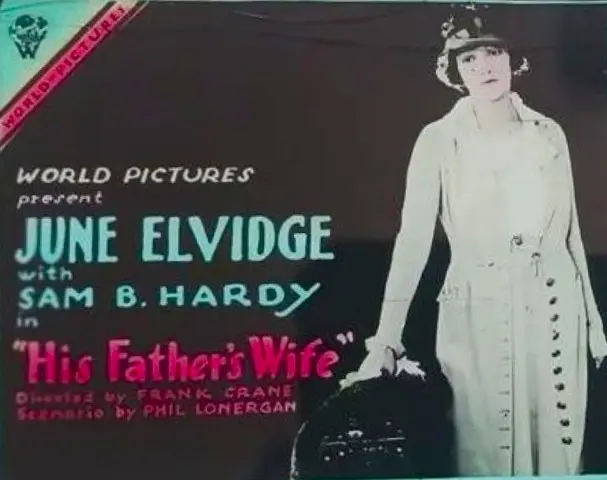
It is here that the supporting characters, often the quiet observers, step into the limelight. The butler (Sam Hardy) and his wife (Marion Barney), who have borne witness to the unfolding drama from the periphery, finally intervene. Their loyalty to the Winthrop household and their deep understanding of Patty's true nature compel them to reveal the truth to Jim. Hardy and Barney, though with limited screen time, convey a sense of steadfast decency, their characters serving as moral anchors in a turbulent sea of deceit. Their testimony is the crucial turning point, the moment when the scales fall from Jim's eyes. The realization of his grave error, of his father's true intentions, and of Patty's magnanimity, hits him with the force of a revelation. This scene, while perhaps a touch convenient in its dramatic resolution, is nonetheless effective in its emotional impact, particularly given the build-up of Jim's prior animosity.
The film's conclusion is both satisfying in its restoration of truth and somewhat unconventional in its romantic resolution. Jim, now enlightened and humbled, proposes to Sally. This might initially strike a modern audience as perplexing, given the emotional journey and the implied connection between Jim and Patty. However, within the context of early 20th-century melodrama, it serves a specific purpose. It highlights Patty's selfless nature, positioning her as a figure whose virtue is its own reward, rather than a means to romantic fulfillment. Her renunciation of the inheritance, coupled with her sacrifice for Sally, underscores a character arc defined by integrity rather than personal gain. The acceptance of Jim's proposal by Sally signals a new chapter, one built on a foundation of honesty, thanks to Patty's unwavering moral stand. It’s a resolution that values familial peace and the rectification of past wrongs, even if it leaves the audience pondering Patty's future beyond the frame.
June Elvidge, as Patty, delivers a performance that is both understated and powerful. Her ability to convey inner turmoil, quiet dignity, and profound selflessness through subtle gestures and expressive eyes is commendable, a testament to the art of silent acting. Lou Gorey's portrayal of Winthrop Sr. is equally compelling, capturing the essence of a benevolent patriarch caught between family expectations and genuine affection. Julie Dempsey's Mrs. Tyler is a deliciously wicked antagonist, her every glance dripping with disdain and calculation. The supporting cast, including William Parke, Jack McLean, Malcolm Fassatt, Wes Jenkins, and Ann Eggleston, contribute to the vibrant tapestry of the Winthrop household, each playing their part in the intricate social drama.
The pacing of His Father's Wife is characteristic of its era, building tension through slow reveals and dramatic confrontations rather than rapid-fire action. The screenplay by Hoerle and Lonergan is adept at constructing a labyrinthine plot, where misdirection and malicious gossip drive much of the initial conflict. While some plot points might feel a tad contrived to a contemporary viewer, they were well within the conventions of early 20th-century melodrama, designed to elicit strong emotional responses. The narrative effectively uses dramatic irony, allowing the audience to be privy to truths that the characters are not, thereby heightening the sense of injustice and anticipation for the eventual revelation.
Viewing His Father's Wife through a historical lens, one can appreciate its commentary on societal anxieties surrounding class, gender roles, and the distribution of wealth in post-World War I America. The film subtly explores the vulnerability of women, particularly those without significant independent means, to the whims and judgments of the elite. Patty's struggle for respect and her ultimate triumph through moral fortitude, rather than social climbing, offers a subtle critique of the prevailing social structures. The film also touches upon the lingering impact of war, with Jim's service in France serving as a backdrop to the domestic drama, a common element in films of the period as societies grappled with the aftermath of global conflict. It shares thematic DNA with films like Each to His Kind, which often explored the rigid social stratification and the challenges faced by individuals attempting to navigate or transcend these boundaries.
The film's exploration of deception and the eventual triumph of truth is a timeless motif, one that continues to captivate audiences. The characters of the butler and his wife are crucial in this regard, representing the voice of conscience and the ultimate arbiter of justice within the domestic sphere. Their unwavering belief in Patty, despite the overwhelming evidence stacked against her by the Tylers, underscores the idea that truth, however suppressed, will eventually find its way to the surface. This theme is a cornerstone of many classic narratives, from ancient myths to contemporary dramas, and His Father's Wife handles it with a sincerity that resonates.
In conclusion, His Father's Wife, while not as widely celebrated as some of its contemporaries, remains a significant piece of cinematic history. It offers a rich tapestry of human emotion, societal critique, and dramatic intrigue. The performances, particularly Elvidge's nuanced portrayal of Patty Hudson, elevate the material beyond mere melodrama. The film serves as a reminder of the enduring power of a well-told story, one that grapples with universal themes of love, loss, betrayal, and the ultimate vindication of integrity. For those interested in the evolution of narrative cinema and the social landscape of the early 20th century, this film is more than just a historical artifact; it is a compelling drama that continues to speak to the complexities of the human condition, inviting viewers to reflect on the true meaning of wealth, honor, and sacrifice. Its intricate plot, driven by the timeless conflict between greed and virtue, ensures its continued relevance for film enthusiasts and historians alike. The legacy of His Father's Wife lies not just in its dramatic twists, but in its unwavering faith in the power of a good heart to overcome even the most malicious of machinations.
IMDb 7
1919
Community
Log in to comment.