DbcultAccessing Vault...
Cult Review
Senior Film Conservator
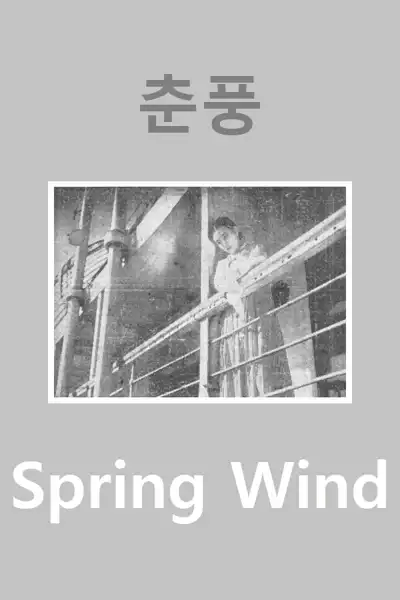
So, you’re thinking about watching Chunpung? Well, it’s not for everyone, for sure. If you crave explosions or twisty plots, skip it. But if you’re someone who appreciates a quiet, old-school romance – the kind where longing glances do more work than dialogue – then yeah, give it a shot. It might surprise you with its earnestness. Anyone expecting a big, dramatic spectacle will probably find it a bit slow, maybe even *too* simple.
The premise is pretty straightforward: boarding house daughter meets guest, they fall in love, parents disapprove. Classic stuff. But it's in the *way* this story unfolds that Chunpung finds its footing, even if it sometimes stumbles.
The film excels in showing, not telling, the parental resistance. There's this one dinner scene. No yelling, no big confrontation. Just the father, Il-hae Kim, slowly setting down his spoon, not looking at his daughter, Ye-bong Mun, just… staring at his rice bowl. The silence in that moment is *heavy* 😔. You feel the unspoken judgment, the entire weight of tradition pressing down.
Ye-bong Mun, as the daughter, carries a lot of the film's emotion in her eyes. Her character doesn’t have many grand speeches. Instead, it’s in the slight tilt of her head, or how she pulls her hand away, just a little too quickly, from her mother’s touch. She’s trying to be dutiful, but her heart is clearly elsewhere.
And the guest, Bok Hye Sook, is… well, he’s quiet. Almost too quiet sometimes. He doesn’t really *do* much in the early parts, besides looking earnest. It makes you wonder what she sees in him, beyond his gentle demeanor. There's a scene where he’s just sitting by the window, sketching, and she watches him for a full minute. The camera just holds on her face. It almost feels a bit long, that shot, but it does make you feel her developing affection, her quiet curiosity.
The pacing of Chunpung is definitely deliberate. It takes its time. Sometimes, maybe a little *too* much time. You get these lingering shots of scenery – fields, a dusty road, the boarding house courtyard. They're pretty, don't get me wrong, but they do tend to stretch out the runtime. It’s like the movie is breathing, slowly, sometimes almost holding its breath.
When the lovers finally decide to leave, it's not a sudden, dramatic dash. It’s a whispered conversation, almost hushed. You see them packing a single small bag, and it feels like a really big deal. Like, a monumental decision. The scene itself is just them in a dimly lit room, but the stakes feel high.
What struck me was the lack of a clear destination. They’re leaving “in search of happiness.” That’s a powerful, if vague, goal. It’s less about *where* they go and more about the *act* of going, together. It’s this hopeful, yet also kind of scary, leap into the unknown. I kept thinking about that during the final act. What *is* happiness for them?
The movie is full of these little moments. Not all of them are perfectly executed, and some feel a bit dated, but they build this sense of a lived-in world. Like, there’s this one part where the guest offers Ye-bong Mun a piece of fruit. It’s just a simple gesture, but the way she accepts it, almost shyly, speaks volumes about their connection.
I wouldn’t call Chunpung a masterpiece, not by a long shot. It’s got its flaws. The secondary characters are pretty much just there to react to the main couple. The "search for happiness" feels a little underdeveloped, honestly. But it has this genuine heart. It tries, earnestly, to tell a simple love story without too much fuss.
It's the kind of film that reminds you that love stories don't always need grand declarations. Sometimes, it’s just about two people deciding to face an uncertain future, together. It’s a gentle watch, a little bittersweet, and leaves you with a quiet, lingering feeling rather than a big punch.
IMDb 6.2
1935
Community
Log in to comment.