DbcultAccessing Vault...
Cult Review
Senior Film Conservator
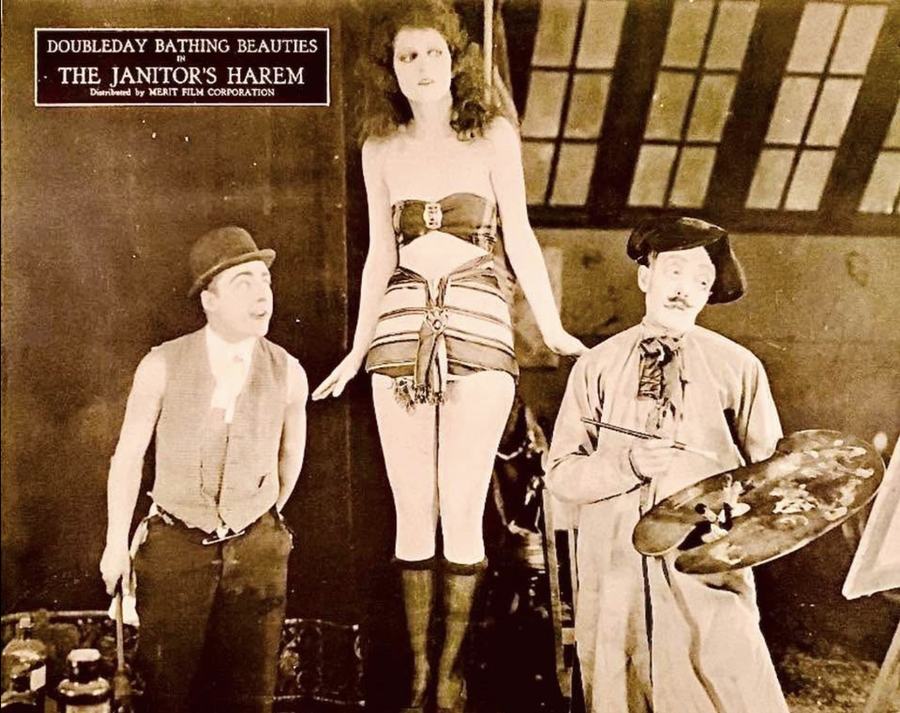
There are films that shout, demanding your attention with bombastic narratives and dazzling spectacle. And then there are films like 'The Janitor's Harem,' which whisper, inviting you into a world of profound quietude, where the most significant dramas unfold in the hidden corners of human existence. This cinematic meditation, a true anomaly in its genre, dares to elevate the mundane into the magnificent, transforming the quotidian rhythm of a building superintendent's life into an existential ballet of observation and subtle influence. It is a work that challenges conventional storytelling, favoring an atmospheric, almost ethnographic approach to character study.
At its heart is Silas, portrayed with an astonishing depth of internalized emotion by Bobby Ray. Ray’s performance is a masterclass in restraint, a testament to the power of non-verbal communication. He embodies Silas not as a mere character, but as a living, breathing landscape of quiet contemplation. Every furrow of his brow, every lingering glance, every deliberate movement of his hands as he mends a leaky faucet or polishes a banister, speaks volumes. Silas is the quintessential ‘invisible man’ – the overlooked, the taken-for-granted, whose presence is so ubiquitous and yet so unacknowledged that he becomes virtually transparent to the residents he serves. Yet, it is precisely this transparency that grants him unparalleled access to their most private moments, their vulnerabilities, their unspoken desires. Ray manages to convey a vast inner world for Silas without uttering a single expository line, allowing the audience to project their own understanding onto his enigmatic figure.
The titular 'harem' is, of course, a fascinating metaphorical construct. It refers not to a collection of lovers, but to the diverse ensemble of women whose lives Silas silently orbits. We are introduced to a struggling artist whose vibrant canvases belie her inner turmoil, a ruthless corporate executive whose power suit hides a profound loneliness, an aging socialite clinging to faded glories, and a young dancer whose dreams are as fragile as her pirouettes. These women, each meticulously crafted, represent various facets of contemporary womanhood, grappling with ambition, loss, identity, and the relentless march of time. The film eschews simplistic stereotypes, instead presenting complex individuals whose paths intersect with Silas in myriad, often imperceptible, ways. He is the quiet observer of their triumphs and their defeats, the silent witness to their most intimate moments of joy and despair. His presence, though often unnoted, is a constant, anchoring force in their fragmented lives.
The brilliance of the screenplay, attributed simply to 'The Collective,' lies in its ability to weave these disparate narratives into a cohesive, organic whole, without resorting to artificial contrivances or forced dramatic arcs. The connections are subtle, organic, mirroring the way lives truly intertwine in the dense fabric of urban existence. Silas doesn't actively interfere in grand, heroic gestures; rather, his interventions are often minute, a perfectly timed word, a forgotten item returned, a subtle adjustment to an environment that, to him, feels like an extension of his own being. This delicate touch elevates the film beyond mere voyeurism, imbuing it with a profound sense of humanism. It reminds us that empathy often manifests not in grand pronouncements, but in the quiet attentiveness to another's unspoken needs.
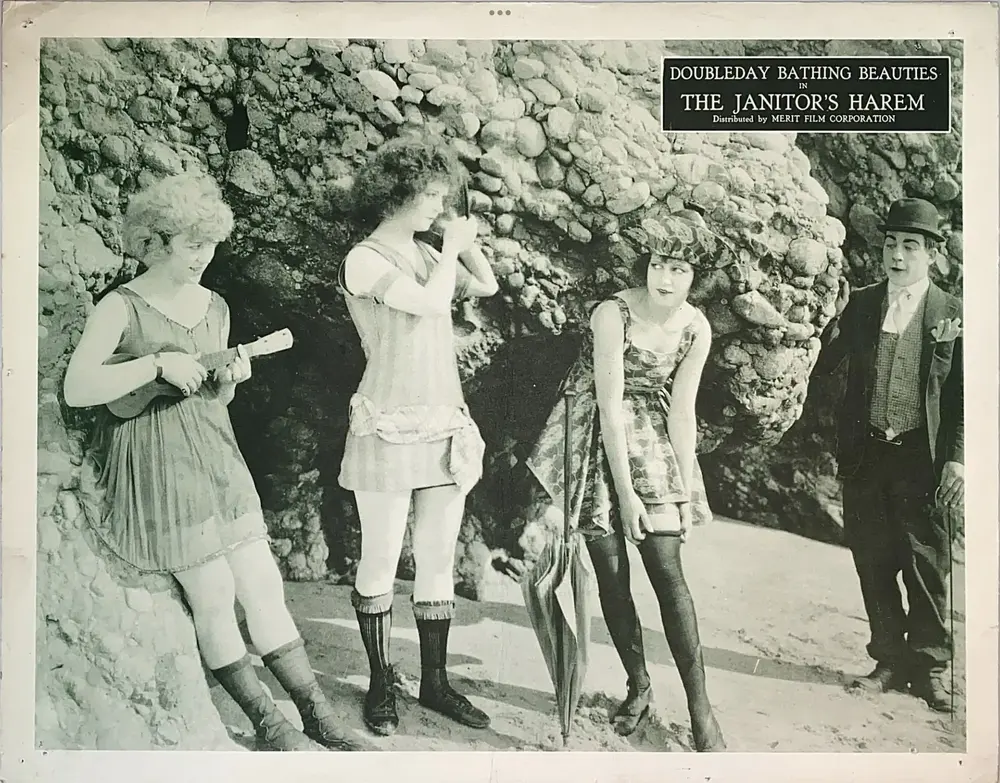
Visually, 'The Janitor's Harem' is a triumph of atmospheric filmmaking. The cinematography, drenched in the muted tones of urban twilight and the stark contrasts of fluorescent-lit hallways, creates a palpable sense of both intimacy and isolation. The camera often lingers on textures – the worn linoleum, the gleaming marble, the dust motes dancing in shafts of sunlight – imbuing inanimate objects with a quiet significance. This meticulous attention to detail is not mere aestheticism; it serves to underscore Silas’s own perspective, his world defined by the tangible and the overlooked. The sound design, too, is exceptional, transforming the ambient noises of a bustling building – the distant hum of an elevator, the muffled strains of music, the clatter of cutlery – into a melancholic symphony that underscores the film's pervasive sense of quiet longing and unspoken connection. It recalls the subtle, almost documentary-like observational style found in The Explorer, though here, the exploration is entirely internal and confined to the domestic sphere.
The director (uncredited, which further enhances the film's enigmatic quality) employs long takes and a patient pace, allowing scenes to unfold organically, mirroring the slow, deliberate rhythm of Silas's daily life. This unhurried approach can be challenging for audiences accustomed to rapid-fire editing, but for those willing to surrender to its rhythm, it offers a deeply rewarding, almost meditative experience. It encourages a deeper engagement with the internal lives of its characters, fostering a sense of shared humanity that transcends the superficial divisions of class or profession. The film's deliberate pacing allows for a profound immersion into Silas's subjective reality, where every seemingly insignificant detail holds potential meaning.
One of the film's most potent themes is the paradoxical nature of anonymity in a densely populated urban environment. Silas, by virtue of his occupation, is both everywhere and nowhere. He is a ghost in the machine, a silent witness to the endless parade of human drama. Yet, it is precisely this invisibility that grants him a unique form of power – the power of pure observation, untainted by judgment or expectation. He sees people not as they present themselves to the world, but as they truly are, in their unguarded moments. This profound insight allows him to connect with them on a level that most others, caught in the superficialities of social interaction, cannot. This perspective offers a fascinating counterpoint to films like The Fettered Woman, where societal constraints are overtly displayed; here, the fetters are often internal, observed in silence.
The film subtly explores the notion that true connection often bypasses conventional forms of communication. A shared glance, a small act of kindness, a moment of unspoken understanding – these are the threads that weave together the disparate lives in Silas's world. The 'harem' becomes a powerful metaphor for the interconnectedness of humanity, even in an age of increasing isolation. Each woman, in her own way, contributes to Silas's evolving understanding of the human condition, and he, in turn, offers them an unacknowledged anchor in their often turbulent lives. This silent reciprocity is one of the film's most moving achievements, suggesting that even the most overlooked among us possess an invaluable capacity for empathy and subtle influence. It’s a quiet testament to the enduring human need for belonging, even if that belonging is only perceived by one.

Beyond its character studies, 'The Janitor's Harem' delves into deeper philosophical questions about the nature of existence, the meaning of labor, and the value of an unheralded life. Silas's work, though physically demanding and often thankless, is imbued with a quiet dignity. He is not merely cleaning; he is tending to the physical manifestation of human lives, maintaining the vessel that contains their hopes and fears. His meticulousness is a form of reverence, a silent prayer for the well-being of those he serves. This profound understanding of his role transforms his labor from a chore into a sacred duty, echoing the quiet dedication seen in characters from films like Sunken Rocks, where unseen forces shape destinies.
The film invites us to consider the myriad 'invisible' workers who form the backbone of our society, whose contributions often go unnoticed and unappreciated. It asks us to look beyond the superficial roles people play and to recognize the inherent worth and complexity in every individual, regardless of their station. Silas, in his quiet solitude, becomes a symbol of this overlooked humanity, a reminder that profound wisdom and compassion can reside in the most unexpected places. His journey is one of quiet self-realization, as he comes to understand the unique and indispensable role he plays in the lives of others, even if they never acknowledge it.
Bobby Ray's performance here is nothing short of iconic, a testament to his ability to convey immense emotional depth through the subtlest of gestures. It stands as a powerful counterpoint to his more gregarious roles, revealing a dimension of his talent that is both surprising and deeply moving. He commands the screen not through bombast, but through sheer presence, a gravitational pull that draws the audience into Silas's internal world. His portrayal ensures that 'The Janitor's Harem' will be remembered not just for its unique narrative structure or its philosophical underpinnings, but for the indelible impression left by its central figure. It’s a performance that resonates long after the credits roll, forcing us to re-evaluate our perceptions of the people we encounter daily, particularly those who operate on the fringes of our awareness.
The film's quiet conclusion is as profound as its opening, offering not a neat resolution, but a continuation of life's intricate dance. Silas remains, a constant amidst change, a silent guardian of the human spirit. 'The Janitor's Harem' is a rare cinematic gem, a film that celebrates the beauty of the ordinary, the power of quiet observation, and the enduring capacity for human connection in an often disconnected world. It's a film that asks us to slow down, to look closer, and to listen to the whispers that often carry the loudest truths. It’s a compelling argument for the richness of inner life, even when outwardly expressed through the most unassuming of existences. In an era saturated with noise, this film offers a precious, resonant silence.
While its contemplative pace might not appeal to every palate, for those who appreciate cinema as an art form capable of exploring the profound in the prosaic, 'The Janitor's Harem' is an essential viewing experience. It leaves an impression akin to a subtle, haunting melody that lingers in the mind, prompting introspection and a renewed appreciation for the unseen architects of our collective human story. It's a film that dares to suggest that true power lies not in overt action, but in the quiet, persistent act of bearing witness, of holding space for the myriad human experiences that unfold around us, day in and day out, largely unacknowledged. The film's enduring message is a quiet plea for recognition, for the understanding that every life, no matter how humble, is a universe unto itself, deserving of contemplation and respect. This subtle yet powerful narrative sets it apart from more overt dramas like I Accuse, where themes are shouted, not whispered.
The legacy of 'The Janitor's Harem' will undoubtedly be its ability to transform the mundane into the mythical. It is a film that expands our understanding of heroism, redefines the concept of influence, and ultimately celebrates the quiet dignity of a life lived in service, both seen and unseen. It is a cinematic triumph that subtly reshapes the viewer's gaze, encouraging a more empathetic and observant approach to the world around them. The film's impact is not immediate or explosive, but rather a slow, steady accretion of meaning, much like the quiet accumulation of observations that define Silas's own profound existence. It's a testament to the power of cinema to illuminate the unseen, to give voice to the voiceless, and to find extraordinary beauty in the most ordinary of lives. Its influence, much like Silas's, is subtle but undeniably profound.
IMDb 7.1
1920
Community
Log in to comment.