DbcultAccessing Vault...
6.1/10
Senior Film Conservator
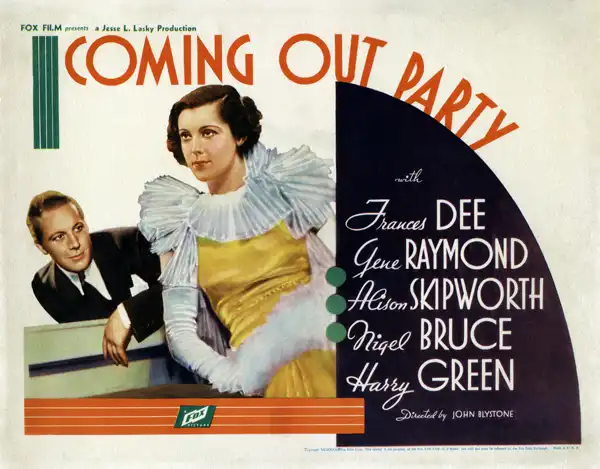
A definitive 6.1/10 rating for a film that redefined the boundaries of cult cinema. Coming Out Party remains a cornerstone of transgressive art.
You should probably watch Coming Out Party if you are the kind of person who likes watching rich people in the 1930s ruin their lives over social status. It is a classic 'poor boy meets rich girl' story that gets way more complicated than it needs to be.
If you hate movies where characters just *refuse* to talk to each other about their problems, this will drive you crazy. It’s one of those films where a single sentence would solve the whole plot, but then we wouldn't have a movie, would we?
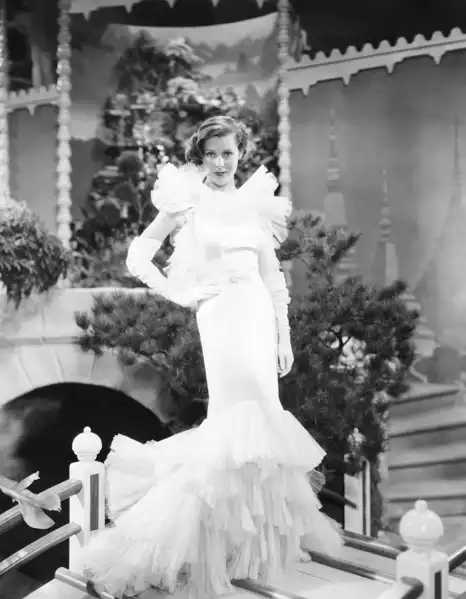
The first thing I noticed was the dresses. The costume department really went all out for Joy’s debutante party, and Frances Dee looks like she’s carrying about ten pounds of silk in every scene.
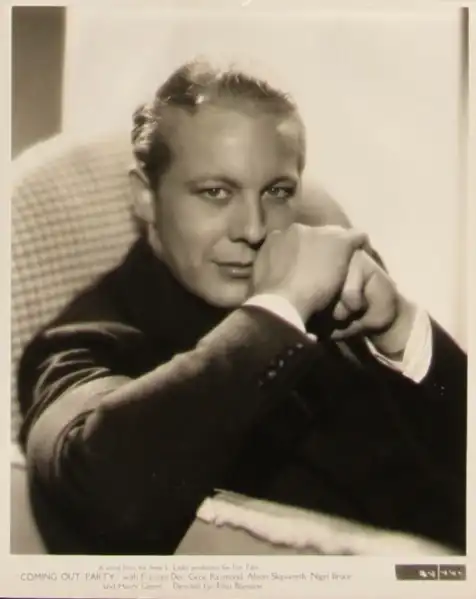
Joy is the Park Avenue girl who has everything, but she’s bored out of her mind. She is secretly dating Chris, played by Gene Raymond, who is a 'starving violinist' which is basically 1930s code for 'he doesn't have a job and her parents will hate him.'
Gene Raymond has this very specific way of playing the violin where you can tell he’s just sawing away at the strings while the actual music was recorded in a booth somewhere else. It’s a little bit distracting once you notice it.
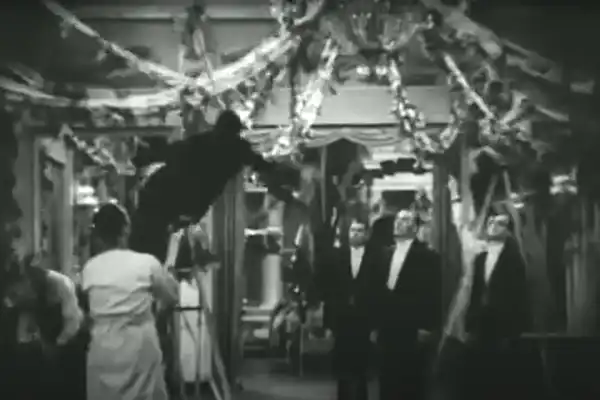
There is a scene early on where they are in a park or something, and he’s talking about his music with so much intensity. It felt a little bit like he was trying to convince himself as much as her.
The conflict starts when Chris gets jealous of Jimmy Wolverton, the 'eligible bachelor' Joy is supposed to marry. Jimmy is played by Phillip Trent, and honestly, he’s just boring. He feels like a piece of furniture that Joy’s parents bought for the living room.
I found myself actually feeling bad for Joy because she’s stuck between this intense, moody musician and a guy who has the personality of a wet napkin. It’s not a great choice either way.
Then we get the big argument scene. It’s very 1930s drama—lots of shouting and then suddenly they are madly in love again.
This leads to the 'night of passion' which the movie handles with a lot of shadows and meaningful looks. Since it’s 1934, they have to be a bit careful, but you definitely get the point.
The movie takes a weird turn when Joy finds out she’s pregnant. The way she looks in the mirror when she realizes it is one of the best moments in the film.
Frances Dee is actually a really good actress, even when the script is a bit clunky. You can see the actual panic in her eyes while she’s trying to figure out what to do.
Right when she’s about to tell Chris, he drops the news that he’s going to Europe to work with an Opera star. He is so happy about it that she just can't bring herself to ruin his big break.
I wrote down in my notes: 'Just tell him, Joy!' But she doesn't. She lets him get on that boat and go.
The pacing gets a little bit frantic here. Suddenly he’s in Europe, and Joy is back home dealing with her parents and her 'condition.'

It reminded me a bit of the vibe in Song of Love, but without the same level of musical focus. This is much more of a high-society soap opera.
Nigel Bruce is in this too, and he’s always a treat to see. He has this way of blustering around that makes the scenes feel a bit more grounded and less like a stage play.
There is a weirdly long sequence where Chris is in Europe and he’s finally learning about the pregnancy. The editing here is a bit choppy, like they cut out a few scenes to save time.
When he finally rushes back to New York, the movie hits you with the 'shock' ending. Joy has married Jimmy. It’s one of those moments where you want to yell at the screen because it feels so unfair.
The movie doesn't really give you a clean, happy ending. It feels a bit messy and unresolved, which I actually kind of liked.
It’s not as funny as something like Pie-Eyed, but it has these strange little moments of humor that feel accidental. Like the way the servants react to the drama in the house.
One of the extras in the party scene has this bizarre reaction shot where she looks like she just saw a ghost. It only lasts a second, but it made me laugh.
The film is definitely a product of its time. The 'poor immigrant son' subplot with Chris feels a bit handled with oven mitts, if that makes sense.
It doesn't dive deep into the class struggle. It just uses it as a reason for the parents to be annoying.
If you've seen The Best People, you know how these high-society comedies usually go. This one is much more of a 'weepie' though.
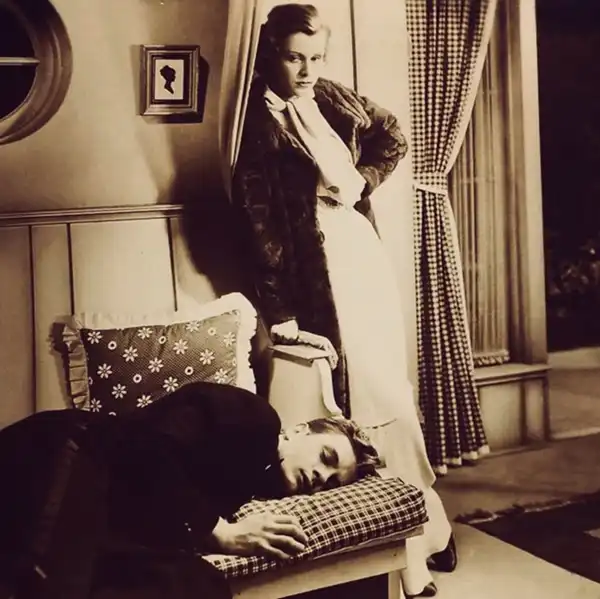
Is it a masterpiece? No. But it’s a fascinating look at what people thought was scandalous back then.
The cinematography is pretty standard for the era, but there are a few shots of the New York skyline that look really cool. Even if they are just painted backdrops.
I think the main reason to watch this is Frances Dee. She carries the whole thing on her shoulders and makes you care about Joy, even when Joy is making terrible decisions.
The ending is going to leave some people feeling frustrated. It’s abrupt and a bit of a downer, but it feels more 'real' than a perfect happy ending.
It’s a short movie, which is nice. It doesn't overstay its welcome, even if the middle section drags a little bit with all the violin talk.
Check it out if you’re in the mood for some vintage drama. Just don't expect it to change your life or anything.
Overall, Coming Out Party is a decent way to spend seventy minutes. It’s got enough heart to keep you watching, even when the plot gets a bit ridiculous.
IMDb 6.7
1933
Community
Log in to comment.