DbcultAccessing Vault...
6.8/10
Senior Film Conservator
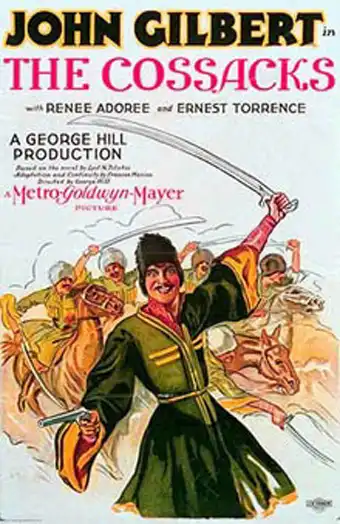
A definitive 6.8/10 rating for a film that redefined the boundaries of cult cinema. The Cossacks remains a cornerstone of transgressive art.
For silent film aficionados, fans of grand historical epics, or anyone curious about the twilight years of John Gilbert’s career, The Cossacks (1928) offers a compelling, if occasionally uneven, viewing experience. It’s a film that leans heavily on spectacle and a charismatic lead performance, delivering a distinct flavor of late-silent-era melodrama. However, if you’re new to silent cinema or expect modern pacing and nuanced character work, you’ll likely find its conventions challenging. This isn't a casual recommendation; it demands a certain patience and appreciation for its historical context, but for the right audience, it provides a fascinating glimpse into a bygone era of moviemaking.
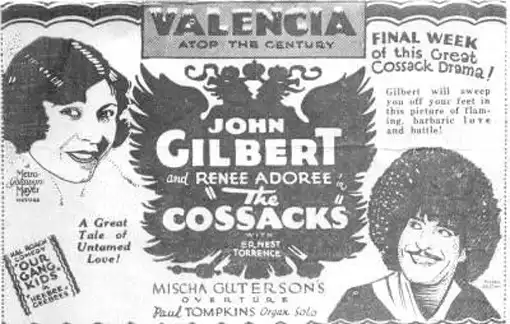
MGM’s adaptation of Tolstoy’s short novel, The Cossacks, arrives as a visually ambitious production. It transports us to a vivid, if somewhat idealized, depiction of a Cossack village and its surrounding steppes. The narrative centers on Luka (John Gilbert), a young man whose gentle nature clashes sharply with his community's warrior ethos. This core conflict—the pacifist forced to embrace violence—is fertile ground for drama, and the film wastes no time establishing Luka’s predicament. We see him tending his fields, an almost alien figure among men who are constantly drilling, riding, and boasting of conquest. This contrast is often stark, sometimes almost comically so, with Gilbert’s slender frame and earnest expression standing out against the gruff, heavily bearded faces of his kinsmen.
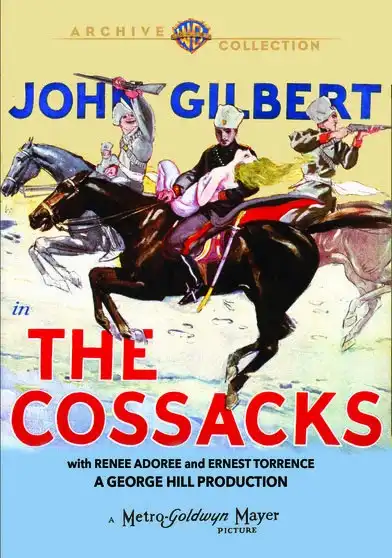
The early scenes establish the village life with a certain ethnographic ambition. There are lively dances, communal gatherings, and the omnipresent threat of conflict with the Chechens. Director George W. Hill (and uncredited Clarence Brown) manages to convey a sense of bustling community, even if some of the crowd scenes feel a little too staged. The film’s attempts at authenticity are commendable for the period, from the elaborate costumes to the sheer number of extras populating the frame.
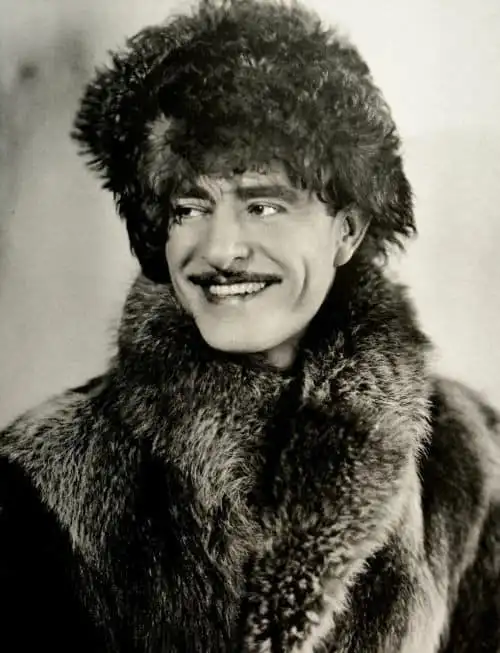
John Gilbert, one of the great romantic leads of the silent era, takes on the role of Luka with a palpable earnestness. His early scenes are characterized by a quiet melancholy, a man out of step with his world. He conveys Luka’s initial aversion to violence through subtle gestures – a slight recoil from a weapon, a hesitant step back during a boisterous celebration. However, as the narrative demands his transformation, Gilbert’s performance becomes more physically assertive. When he finally dons the traditional Cossack attire and rides into battle, there's a visible shift in his posture and gaze, a convincing portrayal of a man accepting his destiny, even if it’s one he initially resisted. Yet, there are moments where the emotional weight of his internal conflict feels externalized rather than truly felt, a common pitfall of silent melodrama.
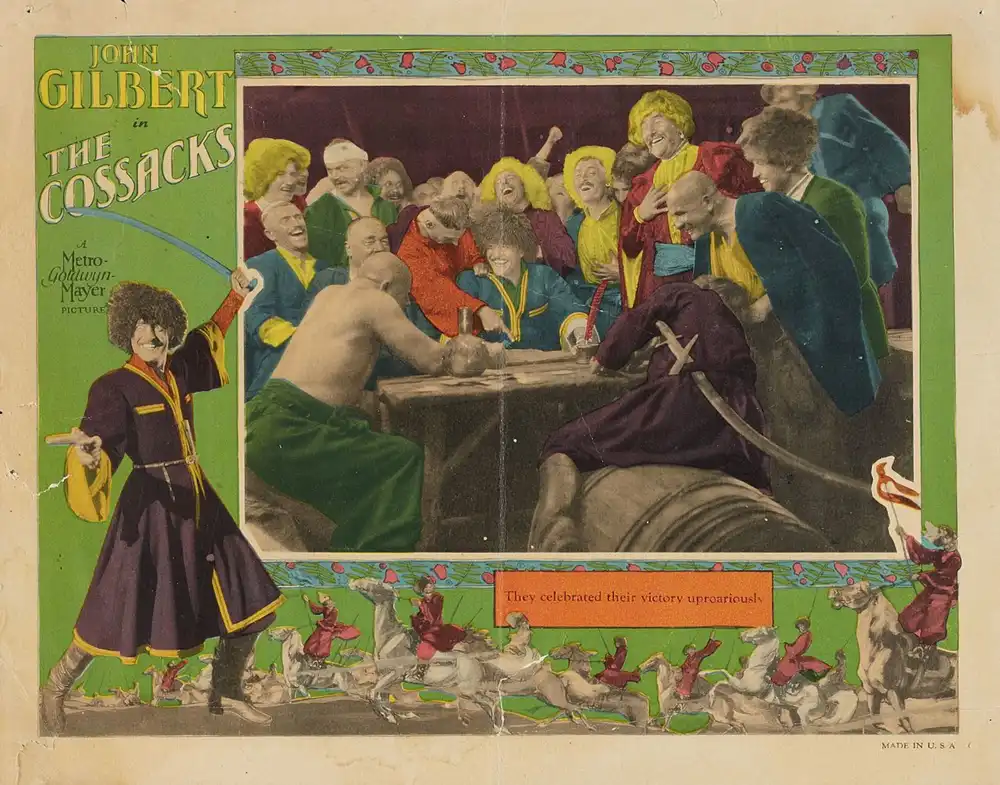
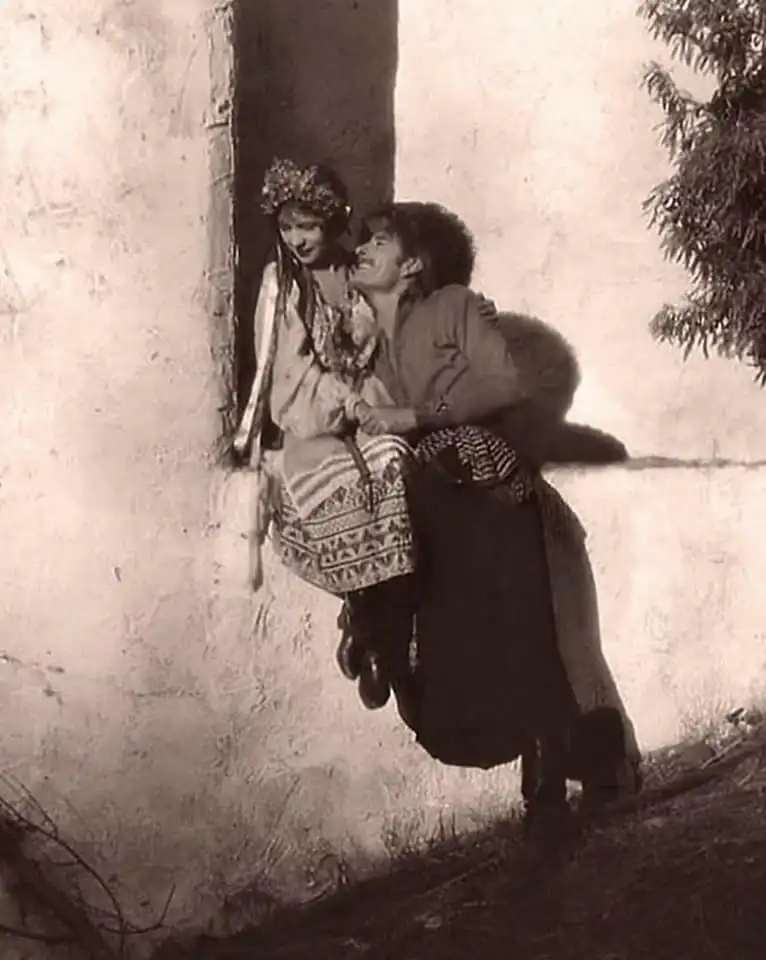
Renée Adorée, as Maryana, Luka’s love interest, is given less to work with. Her role is largely reactive, swinging between affection, disdain for Luka's perceived cowardice, and eventual admiration. She performs these shifts adequately, but the character never truly transcends the archetype of the demanding village girl. Her most memorable moments often come during the more intimate, quiet scenes with Gilbert, where their chemistry, a remnant of their earlier collaborations, briefly shines.
The true standout among the supporting cast is Ernest Torrence as the formidable and menacing old chief, who embodies the traditional Cossack ideal Luka struggles against. Torrence has a wonderful physicality, his imposing stature and grizzled features making him a natural fit. His performance is full of specific, guttural gestures and a particular grimace – a tightening of the jaw and a slight downward pull at the corners of his mouth – that signals his displeasure or impending harsh judgment. It’s a small, consistent detail that only someone watching closely would register, but it adds significant depth to a character who could easily have been a flat antagonist. He doesn't just bark orders; he inhabits the authority.
The Cossacks is a film of stark contrasts, not just in its narrative themes but in its execution. The battle sequences are undeniably the film’s strongest visual asset. Shot with a genuine sense of scale, these scenes feature hundreds of horsemen thundering across vast landscapes, creating a visceral sense of action. The choreography of the cavalry charges is impressive, almost balletic in its precision, avoiding mere chaotic melee. The camera work during these moments is dynamic for the era, often tracking the riders and immersing the viewer in the fray. The siege of the mountain fort, in particular, is a highlight, showcasing practical effects and stunt work that still hold up.
However, the film’s pacing outside of these action set pieces can feel ponderous. The early village scenes, while visually rich, sometimes linger too long on establishing shots or repetitive social interactions. There are extended sequences of Cossack men drinking and boasting that, while intended to characterize their culture, tend to drag. The intertitles, while generally well-written by Frances Marion and John Colton, occasionally over-explain emotional states that Gilbert is already conveying through performance. This uneven rhythm means that while the film has moments of undeniable excitement, it also demands patience during its slower, more exposition-heavy stretches.
Visually, the film benefits from its location shooting and the detailed set designs for the Cossack village. The low-angle shots of riders against the sky, or the wide vistas of the steppes, give the film an epic scope. The use of natural light in many exterior shots lends a raw authenticity, particularly in scenes depicting the harshness of the landscape. There's a memorable shot of a single burning hut during a Chechen raid, framed against the twilight sky, that succinctly captures the destruction without needing to show every violent act.
The Cossacks is a significant film for understanding the shift in Hollywood as the silent era drew to a close. It’s a grand, ambitious picture, trying to tell a sweeping story with the best visual tools available at the time. While it doesn't achieve consistent greatness, its strengths—particularly its battle scenes and the magnetic presence of John Gilbert and Ernest Torrence—make it a valuable watch for those interested in the history of cinema. It’s a film that asks for engagement, for an understanding of its context, and in return, it delivers moments of genuine cinematic power. Don't expect a seamless narrative or a psychological deep dive, but do expect a visually impressive spectacle that, for all its dated elements, still holds a certain rugged charm. It's a film to be appreciated as a product of its time, rather than judged by contemporary standards alone, and on those terms, it largely succeeds.
IMDb —
1918
Community
Log in to comment.