DbcultAccessing Vault...
Cult Review
Senior Film Conservator
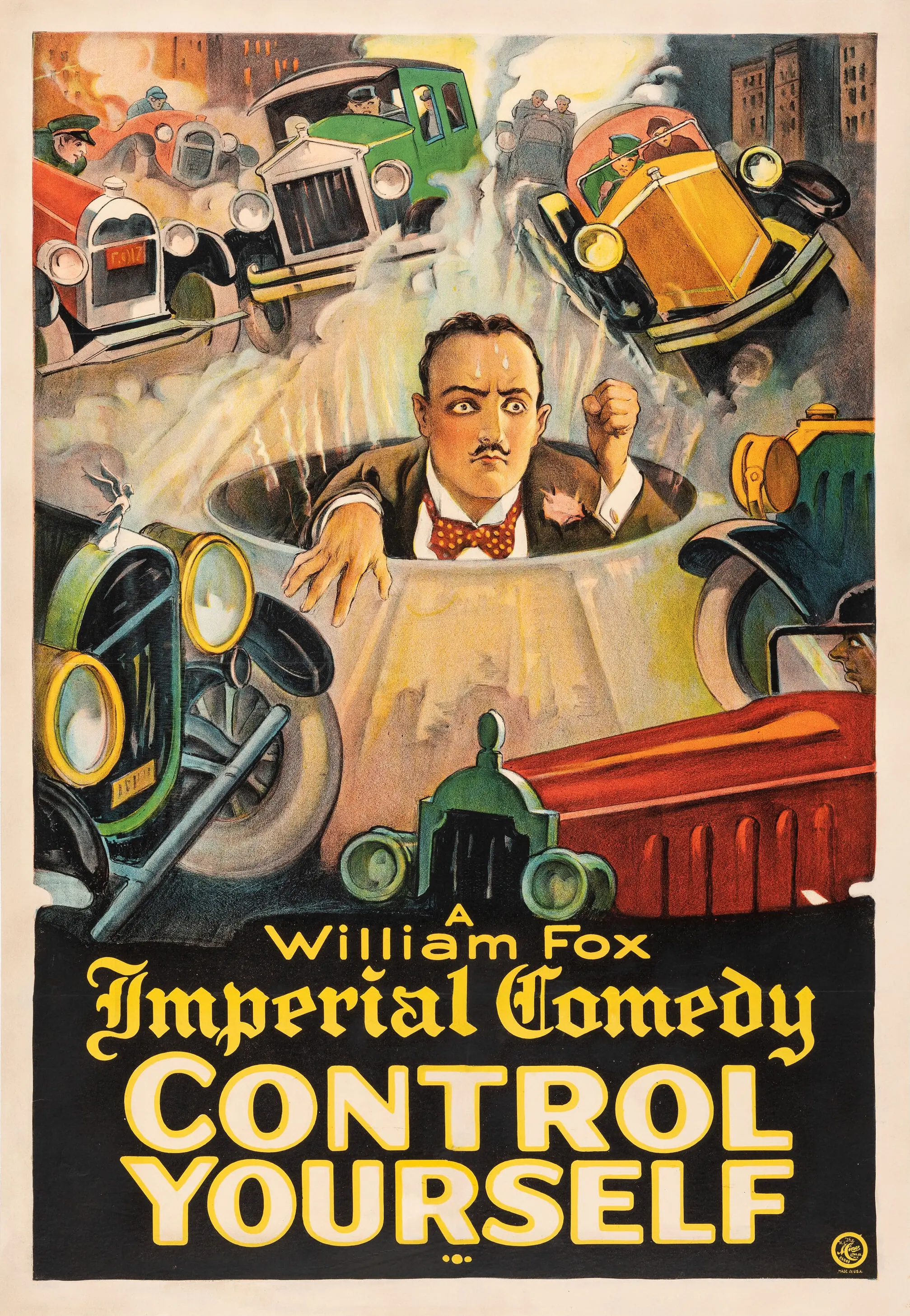
Should you invest your time in a silent film about a man struggling with an inherited rage problem? Short answer: yes, but only if you have an appetite for the peculiar intersection of literary parody and early 20th-century industrial drama. This film is specifically for those who enjoy character-driven silent comedies that aren't afraid to pivot into high-stakes action, but it is certainly not for viewers who demand the rapid-fire pacing of modern slapstick.
Control Yourself works because it takes a high-concept premise—the idea of genetic temperament—and grounds it in the physical comedy of Sidney Smith. Unlike the broader antics found in A Friendly Husband, Smith’s performance is one of constant, visible suppression. You can see the tension in his jaw as he listens to the morning harpist, a sequence that perfectly illustrates the film's central theme: the fragility of peace. It works. But it’s flawed. The film fails because it spends a disproportionate amount of its runtime on the setup of Simon’s daily routine, leaving the actual conflict with the crooked contractor feeling somewhat rushed in the final act. You should watch it if you are fascinated by how early cinema repurposed famous literary names to subvert audience expectations.
Yes, Control Yourself is worth watching for its unique historical perspective on character archetypes. While many films of the era, such as The Nervous Reporter, relied on frantic external movement, this film finds its best moments in the quiet, internal struggle of its lead. It offers a rare look at a 'legacy' character trying to outrun his family's shadow. The climax involving the unsound dam is surprisingly well-executed for the period, providing a visceral payoff to Simon’s internal pressure cooker.
The choice of the name 'Simon Legree' is not accidental. In the 1920s, the shadow of Uncle Tom’s Cabin still loomed large over the American consciousness. By casting Sidney Smith as a descendant of the arch-villain, the writers create an immediate sense of irony. Every time Simon loses his cool, the audience is reminded of the cruelty associated with his name. It is a bold narrative gambit that pays off by adding a layer of psychological depth that films like Stop That Wedding lack. There is a specific scene where Simon stares at a portrait of his ancestor; the lighting shifts, casting a harsh shadow across Smith's face, momentarily transforming the comedian into a monster. It is a chilling, effective moment that elevates the film above standard fare.
Smith’s performance is a masterclass in controlled kinetic energy. In the first twenty minutes, he barely moves his torso, maintaining a rigid posture to signify his self-control. This stands in stark contrast to the fluid, almost liquid movements of Frank Weed, who plays the crooked contractor. When Simon finally 'breaks' during the dam sequence, the explosion of movement is cathartic. It reminds me of the tonal shifts in Big Dan, where physical prowess becomes a tool for moral correction. Smith doesn't just play for laughs; he plays for the stakes of his character's soul.
The cinematography in the final third of the film is where the production truly shines. The shots of the dam—constructed of wood and stone that look terrifyingly flimsy—create a genuine sense of unease. The director uses wide shots to emphasize the scale of the potential disaster, a technique that feels much more modern than the domestic interiors of the first act. This industrial dread is a precursor to the themes we see in The Third Degree, where systems and structures pose as much of a threat as individual villains. The way the water begins to seep through the cracks is filmed with a documentary-like precision that makes the eventual collapse feel inevitable rather than scripted.
One of the most surprising observations about Control Yourself is the use of music—or the implication of it—as a plot device. The morning harp solo is Simon’s anchor. In a silent medium, the director has to work twice as hard to convey the 'calming' nature of the sound. They achieve this through slow, rhythmic editing and soft-focus shots of the harpist. It’s a sophisticated bit of filmmaking that shows an understanding of how sensory experiences can be translated visually. However, the repetition of this gag does wear thin by the middle of the second act. A little less harp and a little more plot progression would have benefited the overall flow.
Pros:
- Strong lead performance by Sidney Smith.
- Inventive use of a famous literary name to create character depth.
- Impressive practical effects during the dam collapse.
- A genuine sense of tension in the final act.
Cons:
- Inconsistent pacing that drags in the middle.
- The romantic subplot feels underdeveloped compared to the 'temper' plot.
- Some of the supporting cast, particularly Larry Steers, are given very little to do.
When compared to Creation, Control Yourself feels much more grounded and human. While Creation deals in grander philosophical strokes, this film is interested in the grit of daily life and the struggle to be a better person than your father. It shares some DNA with Who Killed Simon Baird? in its exploration of reputation and the difficulty of proving one's worth to a skeptical authority figure. However, it lacks the dark, noir-ish undertones of La belle Russe, opting instead for a more optimistic, if chaotic, resolution.
The editing in the climax is notably sharp. As the contractor's plans begin to unravel, the cuts between the dam, Simon’s frantic efforts to warn the town, and the father-in-law’s oblivious business meeting create a mounting sense of panic. This cross-cutting was a relatively sophisticated technique for the time, and it’s used here with great effect. It’s a shame the rest of the film doesn’t always match this level of intensity. The interior scenes in the Legree household are often static and rely too heavily on intertitles to explain the emotional state of the characters. We don't need to be told Simon is angry when we can see the vein throbbing in his temple.
"Control Yourself is a fascinating relic that proves even in the 1920s, filmmakers were grappling with the idea of toxic masculinity and inherited trauma, even if they didn't have those words for it yet."
Control Yourself is a film of two halves. The first half is a somewhat repetitive comedy about a man trying to stay calm, while the second half is a gripping race against time. While the transition between these two modes is jarring, the strength of the central premise keeps it afloat. Sidney Smith proves he is more than just a clown; he is a capable dramatic lead who understands the power of restraint. It isn't a perfect film—it’s too long and occasionally loses its way—but its attempt to tackle the 'Simon Legree' legacy is worth the price of admission. If you can move past the dated pacing, you’ll find a story that is surprisingly resonant in its depiction of a man trying to build a new life on the foundations of a broken past. It works. But it’s flawed. And that’s exactly why it’s interesting.
IMDb —
1920
Community
Log in to comment.