DbcultAccessing Vault...
7.6/10
Senior Film Conservator
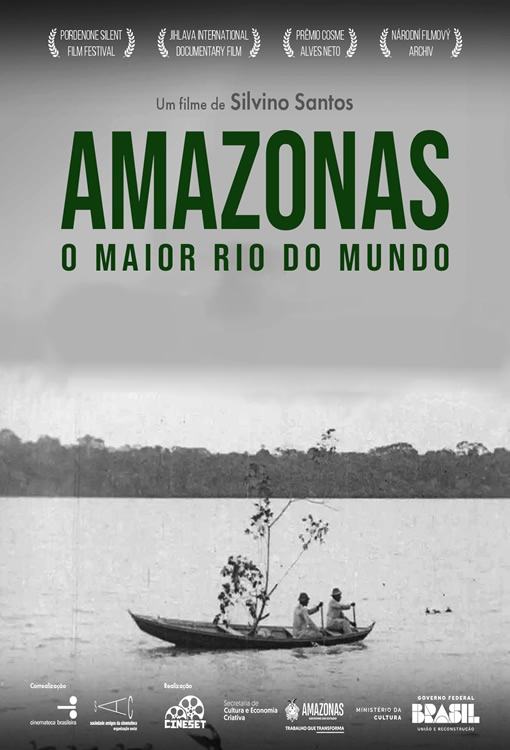
A definitive 7.6/10 rating for a film that redefined the boundaries of cult cinema. Amazonas, Maior Rio do Mundo remains a cornerstone of transgressive art.
In an age saturated with high-definition nature documentaries and meticulously crafted historical reconstructions, there exists a profound, almost sacred, power in genuine archival footage. Silvino Santos’s 'Amazonas, Maior Rio do Mundo' stands as an unparalleled testament to this power, a cinematic artifact of immense historical, anthropological, and ecological significance. To encounter this film is not merely to watch a documentary; it is to embark on a temporal journey, a voyage back to the very dawn of the 20th century, into a realm that, in many respects, has vanished forever. Santos, a Portuguese pioneer, armed with his camera and an insatiable curiosity, bequeathed to us a visual legacy that transcends its primary purpose, morphing into a poignant elegy for a pristine world and an invaluable ethnological record.
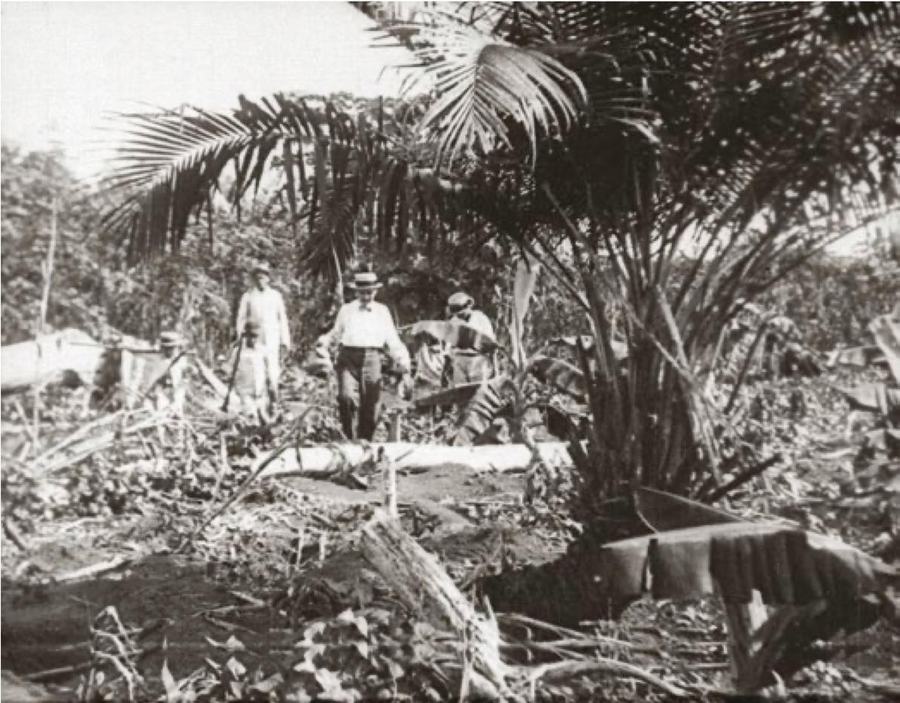
Silvino Santos was no ordinary filmmaker. Operating in an era when cinema itself was a nascent art form, and the Amazon an even more formidable, largely uncharted territory for European eyes, his undertaking was nothing short of heroic. Imagine the logistical nightmares: lugging bulky cameras, fragile film stock, and processing equipment through dense jungles, battling relentless humidity, torrential downpours, and myriad unseen dangers. This wasn't a studio production with controlled environments; this was raw, unfiltered exploration, demanding immense physical fortitude and an unwavering artistic vision. Santos's commitment to capturing the essence of the Amazon, not just its superficial beauty but its very soul, elevates 'Amazonas, Maior Rio do Mundo' far beyond a simple travelogue. It is a work born of profound dedication, an almost spiritual quest to document a world teetering on the precipice of change. His perspective, while undoubtedly shaped by the colonial lens of his time, nonetheless reveals a genuine fascination and respect for the grandeur he encountered, a quality that shines through the grainy, flickering images.
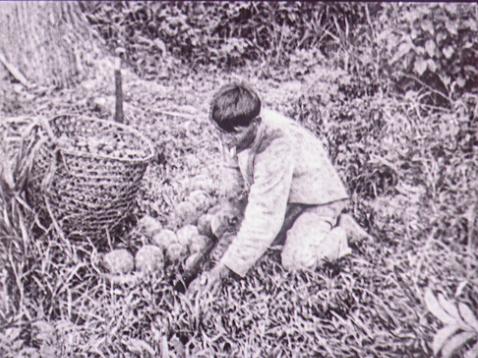
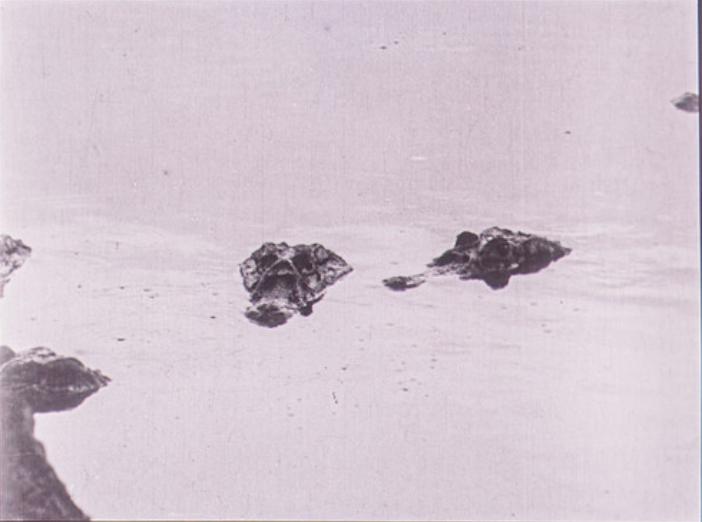
The most striking aspect of 'Amazonas, Maior Rio do Mundo' for contemporary viewers is undoubtedly its portrayal of the Amazonian ecosystem. What Santos’s camera reveals is a landscape of breathtaking, almost unimaginable, virginity. The dense canopy, the meandering rivers teeming with life, the sheer scale of the untouched forest—it's a vision that both inspires awe and provokes a deep sense of melancholy. We witness flora and fauna in their natural, undisturbed habitats, a spectacle that, lamentably, is increasingly rare today. The film serves as an invaluable baseline for ecological studies, offering a visual benchmark against which the subsequent century of deforestation, industrialization, and climate change can be tragically measured. It's a reminder of what once was, and a stark illustration of what has been lost. The vibrant tapestry of life, from the smallest insect to the majestic jaguar (though specific species may not be explicitly identified in the plot, the general depiction of 'fauna' implies a rich biodiversity), unfolds with an organic rhythm, undisturbed by human intervention, save for the Indigenous communities whose lives are intrinsically woven into its fabric. In this sense, the film functions as a cinematic lament, a silent scream across time for the preservation of our planet's most vital lungs. It’s a powerful counterpoint to later, more overtly conservationist films, offering an unadulterated glimpse of paradise before it was fully threatened.
Perhaps the most compelling and ethically complex aspect of Santos's documentary is its unprecedented footage of the Indigenous Witoto people. In an age before widespread ethnographic filmmaking, these images are profoundly significant. They offer a rare, if inevitably mediated, window into the daily lives, customs, and social structures of a people living in relative isolation. We see their homes, their methods of sustenance, their communal activities, and perhaps even glimpses of their ceremonies or rituals. While we must view such early ethnographic work through a critical lens, acknowledging the inherent power imbalances and potential for misinterpretation common to the era, the raw visual data remains invaluable. It provides historians, anthropologists, and indeed the Witoto people themselves (or their descendants), with a tangible connection to their ancestral past. This footage predates the intensive rubber boom exploitation and subsequent cultural erosion that would devastate many Amazonian communities, offering a glimpse of their lives prior to significant external disruption. Unlike the romanticized or often sensationalized depictions of Indigenous peoples in later adventure films, Santos's approach, while observational, carries an air of genuine curiosity, aiming to document rather than dramatize. It stands in stark contrast to the often exploitative gaze found in some contemporaries, such as certain sequences in 'A Florida Enchantment' (though a fictional narrative, it reflects broader societal attitudes towards 'otherness' and spectacle), or even the more overtly heroic narratives that might characterize films like 'The Huntress of Men' if it were to engage with indigenous themes.
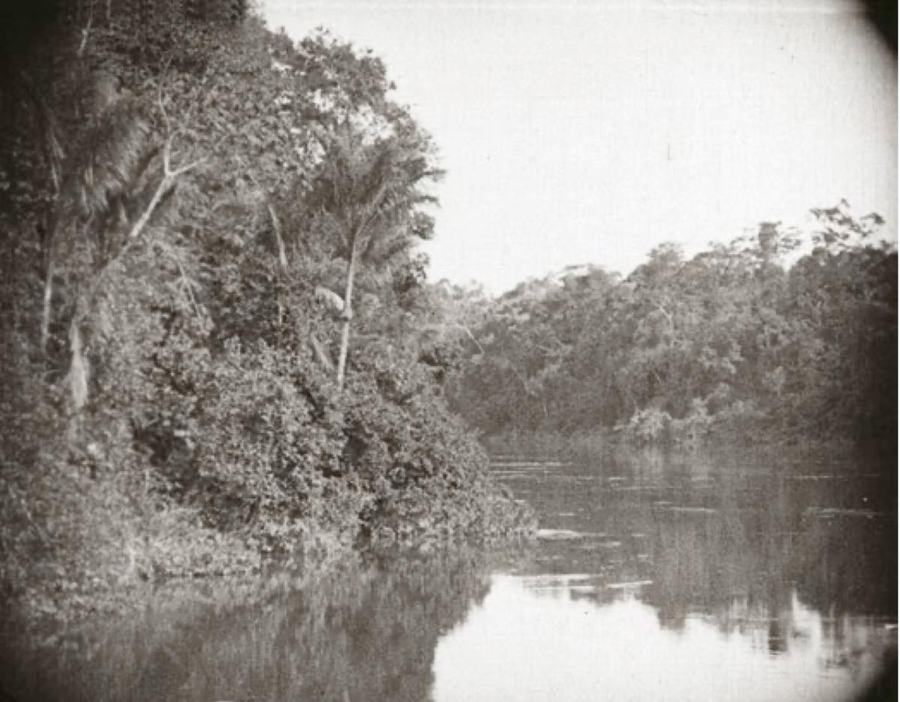
Beyond the natural splendor and the Indigenous cultures, 'Amazonas, Maior Rio do Mundo' also provides crucial insights into the nascent industrial activities taking root along the river. This aspect of the film is particularly prescient, revealing the early stages of human impact and resource extraction that would dramatically alter the Amazonian landscape over the ensuing decades. We might see the rudimentary logging operations, the beginnings of rubber tapping, or the nascent infrastructure of port towns. These scenes, though perhaps less visually poetic than the sweeping river vistas, are historically vital. They represent the thin edge of the wedge, the initial forays of a globalized economy into an untouched wilderness. They show the first tangible signs of the region being viewed not merely as a natural wonder, but as a source of raw materials for burgeoning industries elsewhere. This juxtaposition—of pristine nature alongside nascent industry—imbues the film with a subtle but powerful tension, hinting at the ecological and social conflicts that would define the Amazon's future. It’s a stark reminder that the 'development' narrative, often championed in films like 'My Country First' or 'The Better Man' (though these are fictional and focus on different contexts, they share a thematic undercurrent of national progress or individual advancement), began with such seemingly innocuous steps, with consequences that would ripple through generations.
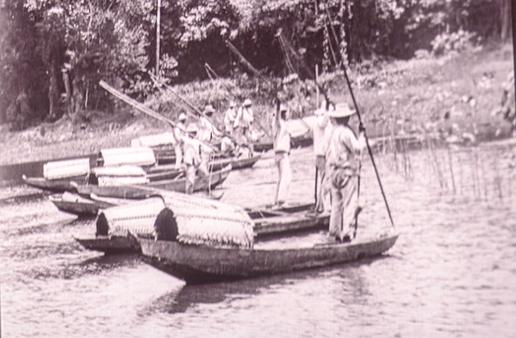
Considering the technical limitations of early 20th-century cinematography, the quality and scope of Santos’s footage are nothing short of remarkable. The clarity, the composition, the sheer amount of material he managed to capture and preserve, speak volumes about his skill and dedication. The surviving reels, often requiring painstaking restoration, offer a window into the craftsmanship of early documentary filmmaking. The film's aesthetic, with its monochromatic palette and inherent grain, lends it an almost dreamlike, ethereal quality, further emphasizing its status as a glimpse into a distant past. It’s a testament to the power of film as a medium for historical preservation, akin to how we cherish early photographs or written accounts. The very act of watching 'Amazonas, Maior Rio do Mundo' is an act of historical engagement, a direct communion with a moment frozen in time. This enduring quality, the film's ability to transcend its era and communicate with contemporary audiences, is a hallmark of truly significant cinematic achievements, much like the timeless literary adaptations such as 'Far from the Madding Crowd' or classical theatrical works like 'King Lear' continue to resonate across centuries, albeit through different mediums and narrative structures.
'Amazonas, Maior Rio do Mundo' is not merely a historical curiosity; its relevance in the 21st century is more profound than ever. As the Amazon faces unprecedented threats from deforestation, climate change, and resource exploitation, Santos’s film serves as a powerful reminder of what we stand to lose. It underscores the urgency of conservation efforts and the critical importance of protecting Indigenous cultures, whose traditional knowledge holds invaluable keys to sustainable living. The film compels us to reflect on the trajectory of human interaction with nature over the past century. Have we learned from the past? Are we honoring the beauty and complexity that Santos so painstakingly documented? The answers, sadly, are often disheartening. Yet, in the face of such challenges, the film offers a glimmer of hope: the enduring power of visual documentation to inspire, educate, and provoke action. It reminds us that the Amazon is not just a geographical region; it is a living entity, a cultural cradle, and a global treasure. Its preservation is not merely an environmental issue, but a moral imperative. In its stark, unadorned beauty, it forces a reckoning with our own impact, demanding a re-evaluation of our relationship with the natural world. This film, in its quiet power, speaks volumes more than many overtly polemical modern works, allowing the sheer visual evidence of a bygone era to make its own compelling, heartbreaking case for change. Much like how a film such as 'Over the Hill' might speak to the passage of time and the enduring human spirit, 'Amazonas, Maior Rio do Mundo' speaks to the enduring spirit of a landscape and the cultures intertwined with it, urging us to consider the profound implications of our collective journey through time and progress.
In conclusion, 'Amazonas, Maior Rio do Mundo' is far more than a historical documentary. It is an act of preservation, a piece of living history, and a silent plea from the past. Silvino Santos’s pioneering work offers an invaluable window into a world that has largely disappeared, forcing us to confront the profound changes wrought by a century of human activity. It is a film that deserves to be seen, studied, and revered, not just by historians and environmentalists, but by anyone who cares about the future of our planet and the rich tapestry of human culture. Its continued relevance lies in its ability to transport us, to educate us, and most importantly, to ignite within us a renewed sense of wonder and responsibility for the world we inhabit. It stands as a monumental achievement, a testament to the power of the moving image to capture, preserve, and communicate truths across generations. Its existence is a gift, a rare opportunity to witness the Amazon as it once was, and to reflect on what it must become if it is to survive. This film, unlike the fleeting narratives of 'The Return of Mary' or the intricate personal dramas of 'The Love Brokers', offers a grand, sweeping narrative of a place, a people, and a planet, reminding us of the enduring power and irreplaceable value of our shared global heritage. It is a cinematic experience that stays with you, long after the final, flickering frames fade to black, leaving an indelible impression of a world both lost and, perhaps, still salvageable.

IMDb —
1916
Community
Log in to comment.