DbcultAccessing Vault...
Cult Review
Senior Film Conservator
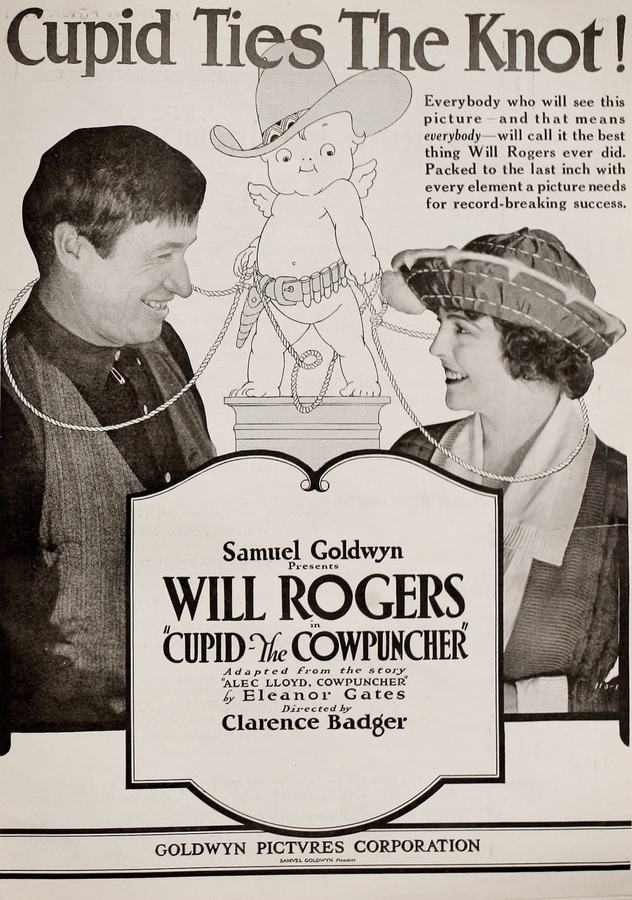
The first time we see Alec Lloyd, he is upside-down—boots skyward, head grazing sagebrush—hogtied by his own romantic circuitry. That visual gag, delivered in a single iris-shot, announces Cupid the Cowpuncher as both rodeo revue and emotional rodeo: a film that refuses to decide whether it is lampooning love or lamenting it.
Director Clarence Badger—working from Eleanor Gates’s barn-burner of a stage play—understands that the Western myth is already half parody. So he cranks the parody up until it squeals, then lets the celluloid cool into something unexpectedly tender. The result is 78 minutes of nitrate that feels like a drunken campfire tale told by Mark Twain and re-edited by Lois Weber.
"Alec Lloyd is the only cowboy who can brand a steer and brand a heart in the same swing of the rope."
Will Rogers, still years away from becoming America’s de facto conscience, plays Alec with a slow-motion grin that suggests he has already read tomorrow’s newspaper and found the joke lacking. Rogers’s rope tricks—performed without camera trickery—function like Fred Astaire’s dance numbers: athletic bravura that also reveals character. Each whip-crack is a punctuation mark in a man who speaks fluent silence.
The plot, deceptively simple, folds in on itself like origami steers. Alec has engineered engagements for every buckaroo from Guinn ‘Big Boy’ Williams’s hulking biscuit-eater to Nelson McDowell’s prune-faced ranch accountant. Yet when Helene Chadwick’s Cordelia returns East-coast polished, Alec’s rhetorical swagger collapses into monosyllabic caveman grunts. Enter Lloyd Whitlock as Monty Rhodes, a city slicker whose pomade could grease wagon wheels. Monty’s courtship of Cordelia is conducted via motorcar, jazz records, and a wristwatch that times kisses to the second—modernity’s assault on the open range.
What raises the stakes is Cordelia’s refusal to be either prairie Madonna or flapper prop. In a proto-feminist flourish, she sketches the ranch’s branding iron as a phoenix, then burns the drawing—an act the intertitles dare not interpret. Chadwick, often dismissed as a jeune fille ornament, gives her eyes the weary gleam of someone who has read every love letter and found the grammar wanting.
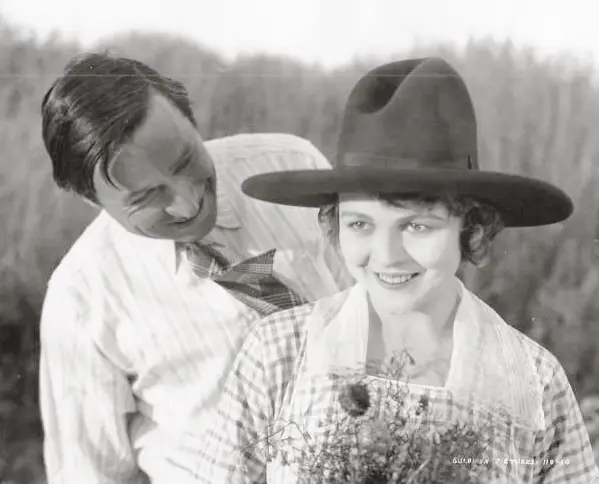
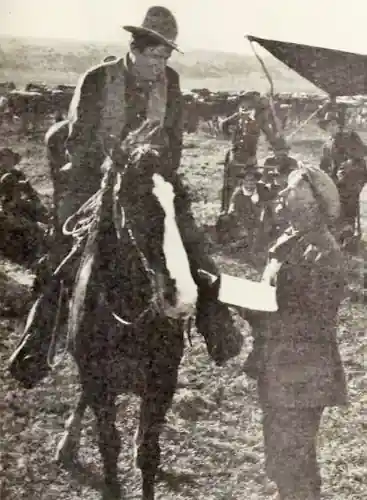
Cinematographer J.D. Jennings shoots high-contrast dusk scenes where shadows pool like spilled coffee, making human figures emerge as if developed in a darkroom. When Alec finally confesses—via a handwritten note tethered to a horse’s mane—the camera holds on the animal’s twitching flank, suggesting desire itself is a skittish beast.
Compare this to the pastoral glow of The Hungry Heart, where love is a cathedral light; here, love is a lantern swinging in a storm, intermittently illuminating faces that would rather stay hidden.
Rogers’s comic timing is so relaxed it borders on horizontal. Watch him lean against a fence post for a full ten seconds, hat brim shading his eyes, before delivering a punchline that arrives like a delayed telegram: "Some fellows get religion; I just get spring fever." The line is met with a donkey’s bray off-screen—an organic laugh track that predates sitcoms.
McDowell, as the lovelorn bookkeeper Lem Beasley, embodies pathos without pleading for it. His moonface droops like melted wax when he discovers his fiancée has eloped with a rodeo clown—a subplot dispensed in a brisk 45 seconds yet lingering like campfire smoke.
Gates’s screenplay sneaks in chewy social commentary. The ranch’s only other woman, Catherine Wallace’s maverick cook Gertie, wields a cast-iron skillet like a judge’s gavel. In a sly reversal, she proposes to her bashful beau by dangling a marriage license above a vat of chili con carne—domesticity as dare. The intertitle reads: "Some men need a push; others need a shove off a cliff." The line earned gasps in 1920 Kansas City, according to Variety’s dispatch.
Surviving prints circulate with a 1999 piano score by Jeff Rapsis that alternates between Scott Joplin rags and Satie-esque minimalism. During the climactic stampede, Rapsis inserts a quote from Tchaikovsky’s Pathétique—a melodramatic choice that somehow works, turning cattle into fate’s hoofed choruses.
For home viewing, I recommend syncing the film with The Reapers’ ambient soundtrack; the dissonance births a new film—one where cowboys drift through an eternal dusk, forever chasing what they’ve already roped.
Modern rom-coms—from Failure to Launch to Fool’s Gold—replicate Alec’s arc: the love guru felled by his own advice. Yet few match the existential bite beneath Rogers’s affability. When Alec finally kisses Cordelia inside a dilapidated barn as rain leaks through bullet holes, the camera tilts upward to reveal stars visible through the gaping roof—cosmic indifference framed as accidental poetry.
Compare this finale to The Fall of Babylon, where love collapses under historical weight; here, love survives because history hasn’t yet arrived. The barn is America before the Crash, a fragile utopia held together by spit, baling wire, and sheer gall.
Viewed today, Cupid the Cowpuncher plays less like quaint nostalgia and more like a prophecy of Tinder fatigue. Its thesis: orchestrating desire is easier than sustaining it—a lesson Alec learns not through tragedy but through a series of pratfalls that bruise both shins and vanity.
The film’s final intertitle, superimposed over a freeze-frame of the kiss, reads: "Love is the only brand that sticks for life." The word brand carries a double meaning—both the ranch’s insignia and the burning mark of ownership. In that pun, the movie collapses romance and capitalism, leaving viewers to wonder whether hearts are ever truly free range.
Seek out the 4K restoration from Undercrank Productions; the nitrate damage resembles fluttering moth wings, a reminder that every print is as mortal as the love it immortalizes. Watch it at midnight, preferably alone, preferably after a breakup. Let Rogers’s lariat loop around your own regrets; then, when the credits roll, go outside, look at the indifferent stars, and laugh—because the joke, dear reader, is on all of us who ever thought we could manage love better than a cowboy with a crooked grin and a pocketful of bent arrows.
IMDb 4.8
1928
Community
Log in to comment.