DbcultAccessing Vault...
5.2/10
Senior Film Conservator
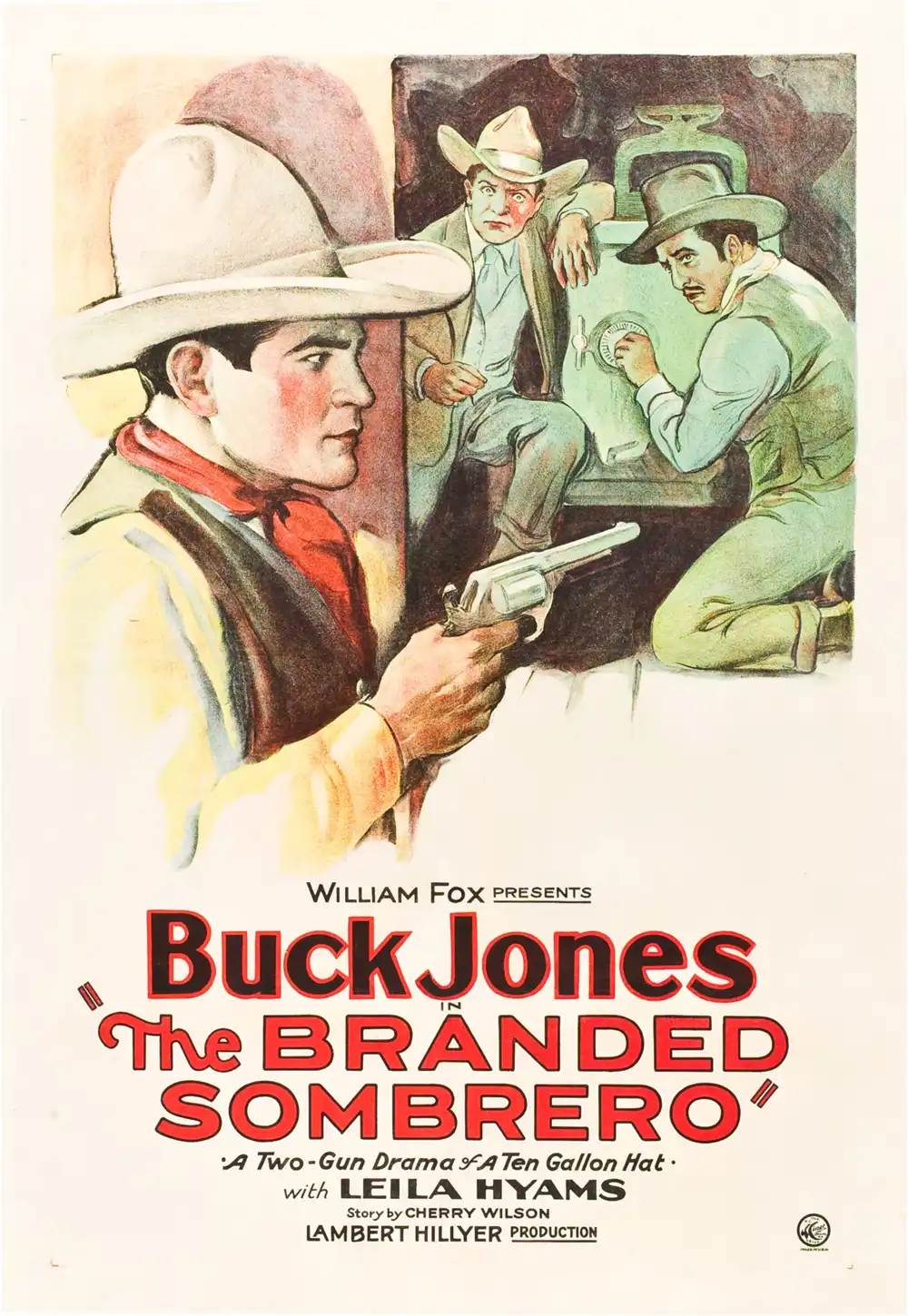
A definitive 5.2/10 rating for a film that redefined the boundaries of cult cinema. The Branded Sombrero remains a cornerstone of transgressive art.
Okay, so The Branded Sombrero. Should you watch it today? Probably not, unless you’re really, truly into early 1930s Westerns where the plot is less a journey and more a series of gentle nudges in a predetermined direction. If you appreciate the raw, slightly unpolished charm of a B-movie from that era, and you like Buck Jones, you might find something here. But if you're looking for anything resembling modern pacing or complex character work, you'll likely be bored stiff, or at least mildly confused by some of the choices.
The whole thing kicks off with "HonestJohn" Hallett on his deathbed, which is immediately a bit much. He's this respected cattleman, right? But then the old man pulls out this sombrero, covered in brands from other ranches. Turns out, he built his empire on rustling. And he makes his two sons, Starr and Lane, swear an oath to go out and repay all these people he stole from. It’s a pretty wild premise, honestly. Not exactly the usual "avenge my death" or "find my hidden gold" setup. This is "clean up my surprisingly extensive criminal past."
One son, Starr (Buck Jones), takes it to heart. The other, Lane (Francis Ford), not so much. This is where the movie really splits, and where the acting starts to show its age, or maybe just its budget. Jones has this quiet, earnest thing going on, which works for his character. He's got his horse, Silver, who honestly gives one of the more consistent performances. Silver always hits his marks. Lane, on the other hand, is just kinda... sneering. It’s a very one-note villain turn, and he doesn’t really evolve beyond "bad son." You just know he’s going to make trouble.
The scene where John gives the sombrero to his sons, it just drags. It feels like an important moment, but the dialogue is so stiff, so formal, that the emotional weight just gets lost. You can almost feel the movie trying to convince you this moment matters, but it’s not quite landing. The close-ups on the sombrero are a little clunky too. Like, "Look! The MacGuffin!"
Starr’s journey to repay these debts is the main thrust, and it’s mostly him riding around, finding a rancher, explaining the situation, and then usually getting into some kind of minor scrape that he resolves. Often by punching someone. The fights are exactly what you’d expect from this era: lots of flailing, very little impact, and often a quick cut that makes you wonder if anyone actually connected.
Leila Hyams plays Sally, the daughter of one of the ranchers Starr is supposed to repay. She’s fine, very much the standard damsel who needs saving and also provides a love interest. Her chemistry with Buck Jones is... present. It’s not electric, but they manage to convey a certain mutual respect. There’s a scene where she’s tied up, and the rope looks so loose, you wonder why she doesn’t just wiggle out. Small thing, but it pulls you out of it.
The pacing is very much a product of its time. Things happen, but there's not a huge sense of urgency. Starr will ride for a bit, then stop, chat, maybe a mild misunderstanding, then ride again. It feels a bit like a series of short stories stitched together rather than one continuous narrative. Some of the transitions between scenes are pretty abrupt, too, almost like they just cut out a few frames to get to the next plot point. It keeps things moving, I guess, but it doesn’t always feel smooth.
There’s this one part where Starr is trying to prove his father’s good intentions, and he’s talking to a rancher who is just furious. The rancher's face is red, he's yelling, but the camera just stays on Starr, who’s looking earnest as ever. You almost wish for a reaction shot from the rancher to let us see the anger more directly, or even a close-up on Starr's face to show his discomfort. Instead, it’s just a wide shot, and the anger feels a bit distant.
And the branding itself! The whole title is The Branded Sombrero, and you’d think the sombrero would be a constant presence, a symbol. But it kinda comes and goes. It’s there at the start, then Starr wears it sometimes, but it doesn’t really feel like a character in itself. It’s more of a plot device that gets mentioned when convenient. I wanted more close-ups of those brands, maybe Starr tracing them, thinking about his father's complicated legacy. But nope.
Honestly, the most interesting thing about this film might be just watching how these older Westerns tried to grapple with morality. "HonestJohn" is a fascinating character concept that the movie doesn't really explore beyond the initial setup. He's a criminal who wants to make amends, but his sons are the ones doing the legwork. It’s a weird kind of redemption.
The whole thing wraps up pretty cleanly, which is to be expected. The bad son gets his comeuppance, the good son gets the girl and probably a clear conscience. It’s not groundbreaking. It’s a snapshot of a particular style of filmmaking, a simple story with simple motivations. You watch it, you get it, and then you probably move on to something else. It feels like a Saturday afternoon matinee from 1934, and that's exactly what it is. No more, no less.
IMDb 6.2
1928
Community
Log in to comment.