DbcultAccessing Vault...
6.8/10
Senior Film Conservator
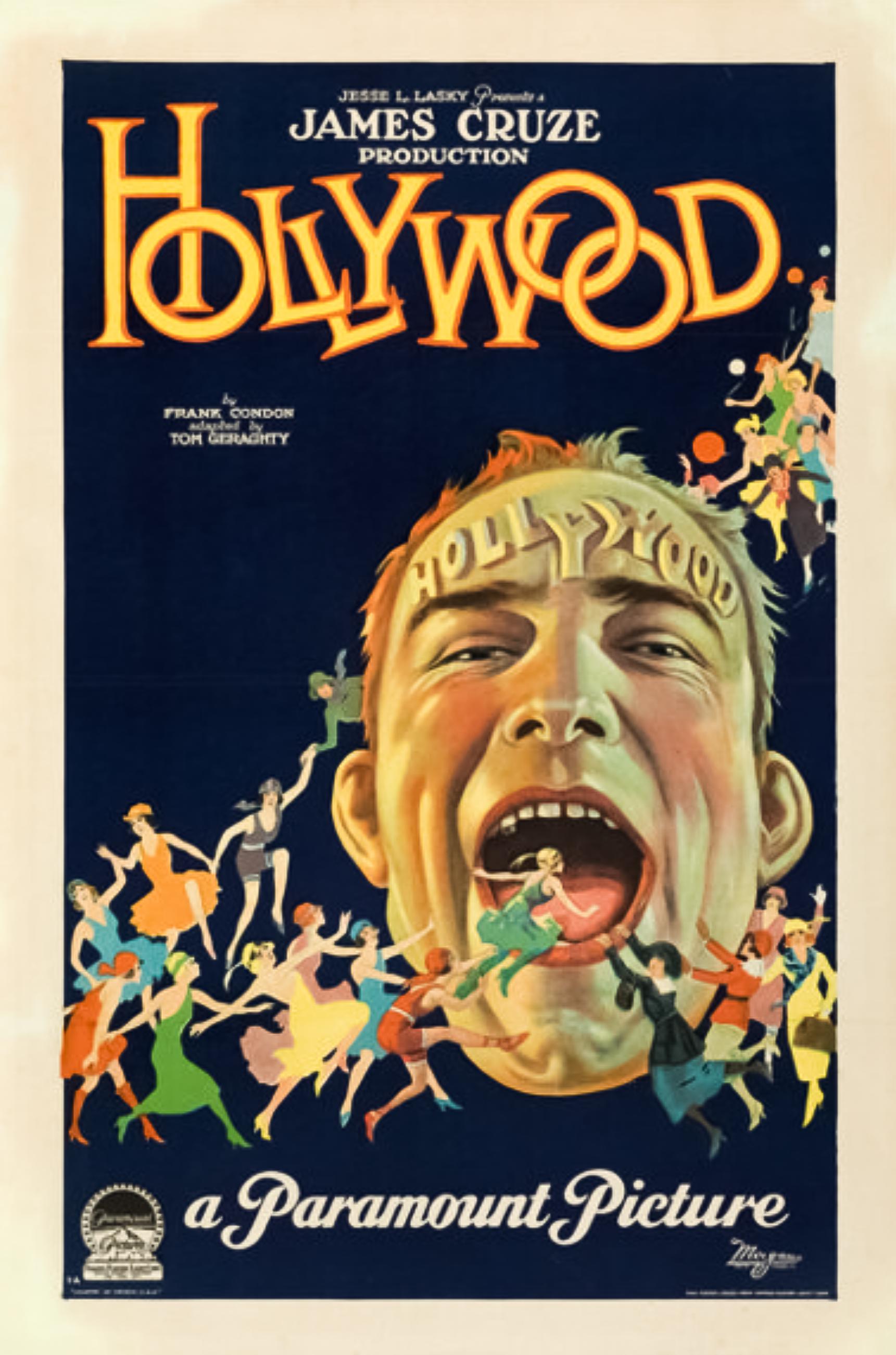
A definitive 6.8/10 rating for a film that redefined the boundaries of cult cinema. Hollywood remains a cornerstone of transgressive art.
In the annals of cinematic history, few films capture the nascent glamour and inherent absurdity of the burgeoning movie industry quite like James Cruze’s 1923 masterpiece, Hollywood. This isn't merely a film; it's a vibrant, living snapshot, a meta-commentary from within the very dream factory it depicts, offering a fascinating glimpse into the self-awareness of an industry still finding its footing. At its core, the narrative orbits around Angela, portrayed with an earnest vivacity by Bebe Daniels, a young woman who journeys from the unassuming quietude of Centerville to the dazzling, cacophonous heart of Los Angeles, armed with little more than an unshakeable dream of becoming a star and the endearing companionship of her Grandpa. It's a tale as old as ambition itself, yet rendered with a freshness and an ironic twist that resonates even a century later.
The film’s genius lies not just in its engaging plot but in its audacious embrace of its own reality. Hollywood is a sprawling panorama of the early 1920s film scene, brimming with an astonishing array of real-life movie stars playing themselves in a parade of dazzling cameos. Imagine a modern film about aspiring actors featuring virtually every A-lister of the day; that's the equivalent impact of this silent spectacle. Charles Chaplin, Agnes Ayres, Roscoe 'Fatty' Arbuckle, Mary Astor, William Boyd, Ricardo Cortez, Bebe Daniels herself, and even the formidable director William C. de Mille—whose presence is pivotal to the plot—all grace the screen, lending an unparalleled authenticity and a delightful, knowing wink to the proceedings. These aren't just background players; they are the very fabric of the dream Angela chases, making her struggle all the more poignant against their effortless ubiquity.
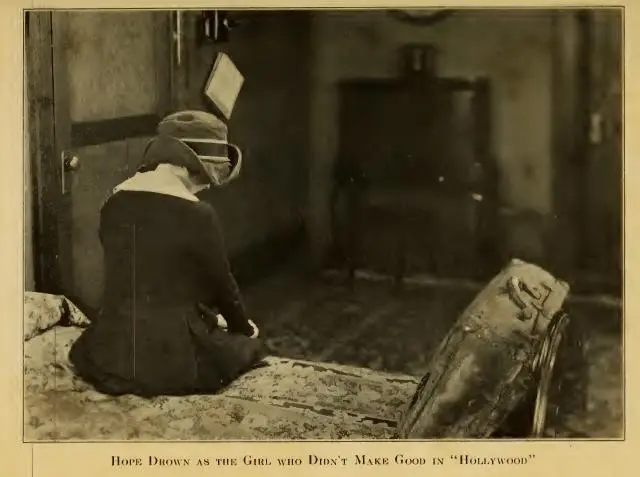
Angela's initial foray into Tinseltown is a masterclass in hopeful disillusionment. She’s surrounded by the very idols she aspires to emulate, their faces plastered on billboards and their personas radiating from every street corner. Yet, despite her tireless efforts, knocking on countless casting office doors, the day concludes with the harsh reality of unemployment. It's a stark, unvarnished depiction of the industry's brutal indifference, a counterpoint to the romanticized image of immediate stardom. Many aspiring artists, then and now, could echo Angela's initial frustration, the feeling of being an outsider peering into a glittering, impenetrable world. This early segment of the film establishes a grounded realism, contrasting sharply with the fantastical turns that follow.
The narrative pivots dramatically, almost farcically, with the unexpected rise of Grandpa. Here, the film leans into its satirical edge, exposing the capricious nature of fame. While Angela, the quintessential ingénue, toils in obscurity, her elderly relative—a figure seemingly antithetical to the youthful allure of the silver screen—is discovered by William C. de Mille. Grandpa, with his unassuming charm and perhaps a touch of accidental novelty, becomes an overnight sensation. This reversal of fortunes is both humorous and deeply ironic, underscoring the film's central theme: Hollywood's pathways to stardom are often circuitous, illogical, and utterly unpredictable. It's a subtle but powerful critique of the industry's often arbitrary selection process, where talent sometimes plays second fiddle to timing, novelty, or sheer luck.
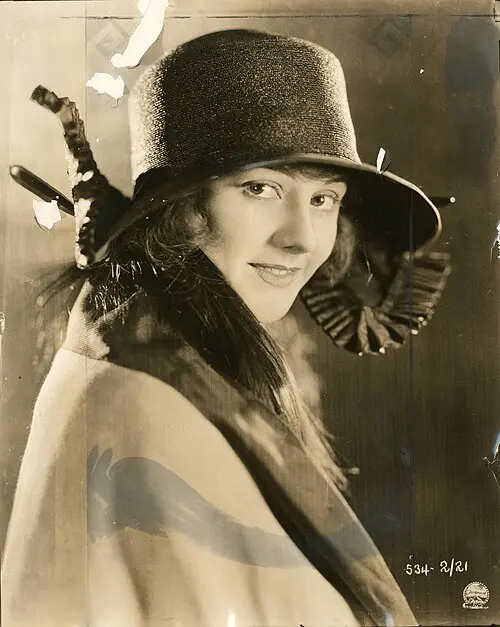
The arrival of Angela's worried family from Centerville—Grandma, Aunt, brother, and her long-suffering boyfriend—only amplifies the film's comedic and satirical dimensions. Their concern for Angela and Grandpa’s moral well-being in the perceived den of iniquity that is Hollywood quickly gives way to their own unexpected brushes with stardom. In a series of delightfully improbable events, each family member, including even the family parrot, finds themselves inadvertently propelled into the cinematic firmament. The Aunt becomes a dramatic actress, the Grandma a character player, the brother a dashing lead, and the boyfriend a matinee idol. This cascade of accidental celebrity is where Hollywood truly shines as a biting satire. It lampoons the idea that anyone, regardless of prior experience or ambition, could stumble into fame, while the one person actively pursuing it remains stubbornly overlooked. This exaggerated scenario serves as a brilliant commentary on the 'dream factory's' often arbitrary and nonsensical mechanisms, where the most unlikely candidates sometimes find the brightest spotlights.
The film’s portrayal of Centerville, the idyllic small town, versus the frenetic energy of Hollywood, creates a compelling cultural contrast. Centerville represents tradition, stability, and perhaps a touch of naiveté, while Hollywood embodies modernity, change, and an intoxicating blend of opportunity and moral ambiguity. The family's initial apprehension about the perceived moral decay of the movie capital, a common sentiment in early 20th-century America, quickly dissolves as they themselves are consumed by its allure. This transition highlights the powerful, almost transformative, pull of Hollywood, capable of reshaping not just individual lives but entire family dynamics. The writers, Frank Condon and Thomas J. Geraghty, weave this cultural commentary with remarkable dexterity, transforming what could have been a simple comedic premise into a nuanced social observation.
The sheer scale of the cameo appearances is perhaps Hollywood's most enduring legacy and its most fascinating historical document. For film historians and enthusiasts, it's an unparalleled time capsule, offering a rare opportunity to see an extraordinary number of silent era legends interacting, however briefly, within a fictional framework. Names like Edythe Chapman, Charles de Rochefort, Daisy Dean, Ruby Lafayette, T. Roy Barnes, Luke Cosgrave, Gertrude Astor, King Zany, Betty Compson, Eleanor Lawson, Harris Gordon, Bess Flowers, Julia Faye, George K. Arthur, Viola Dana, Baby Peggy, Richard Arlen, Clarence Burton, Robert Cain, Noah Beery, and Helen Dunbar—each a star in their own right—contribute to this grand tapestry. This isn't merely stunt casting; it's a deliberate, self-referential act that blurs the lines between reality and fiction, creating a meta-narrative that celebrates and simultaneously critiques the very industry that produced it. It transforms the film into a living yearbook of early cinema, a testament to the collective identity and burgeoning self-awareness of Hollywood itself. The sequence where Angela walks through the studio lot, encountering these luminaries, is a particularly potent moment, capturing the star-struck awe of the newcomer and the casual grandeur of the established elite.
Cruze’s direction is masterful, balancing the broad comedic strokes with moments of genuine pathos. He deftly navigates the film’s dual nature as both a lighthearted satire and a more profound commentary on the pursuit of dreams. The pacing is brisk, a hallmark of silent era comedies, ensuring that the narrative never sags despite its ambitious scope. Bebe Daniels delivers a performance that is both charming and relatable, embodying the universal struggle of the aspiring artist. Her facial expressions and body language convey a spectrum of emotions, from wide-eyed optimism to weary resignation, making Angela's journey the emotional anchor of this star-studded spectacle. Her presence, along with the brief but impactful appearance of Charles Chaplin, elevates the film beyond a mere curiosity into a significant work of its time. One might draw a thematic parallel to films like Love at First Sight or New Love for Old in their exploration of new beginnings, though Hollywood stands distinct in its industry-specific critique.
The film’s historical significance cannot be overstated. It arrived at a pivotal moment in Hollywood's development, just as the studio system was solidifying and the concept of the 'movie star' was reaching its zenith. By turning the camera inward, Hollywood provided an invaluable, albeit fictionalized, document of this era. It reflected the public's fascination with the lives of movie stars while simultaneously demystifying the process of fame. The film acts as a cultural mirror, showing how society viewed its new idols and how the industry itself perceived its own burgeoning power and influence. It’s a testament to the timeless appeal of stories about ambition, luck, and the often-unforeseen paths to success.
Beyond its historical value, Hollywood remains remarkably entertaining. Its humor is universal, its characters endearing, and its central irony persistently amusing. The sheer audacity of its premise—that everyone *but* the protagonist achieves stardom—is a comedic stroke of genius that carries the film. It's a reminder that even in the most fantastical of settings, human aspirations and the unpredictability of life are constant. While films like Nerven or Politik och brott might delve into more serious societal critiques, Hollywood offers its own form of social commentary through laughter and lighthearted satire.
Ultimately, Hollywood is more than just a silent film; it's a cultural artifact, a vibrant, witty, and surprisingly insightful exploration of the dream factory’s inner workings. It’s a love letter to the magic of cinema, penned with a healthy dose of self-deprecating humor and a keen eye for the absurd. For anyone interested in the foundational myths of stardom, the evolution of the film industry, or simply a delightful cinematic experience, this film offers a journey back in time that feels remarkably fresh and relevant. It reminds us that the pursuit of a dream, even when fraught with unexpected detours and ironic reversals, is a universal and enduring human endeavor, and that sometimes, the greatest stage is not the one you initially sought, but the one you inadvertently create.
IMDb 6.4
1936
Community
Log in to comment.