DbcultAccessing Vault...
Cult Review
Senior Film Conservator

Alright, let's get this out of the way right upfront: Daibutsu kaikoku is not for everyone. Not even close. If your idea of a good time at the movies involves fast pacing, clear motivations, or, you know, a traditional plot, then you're probably going to be utterly confused. But if you’re into films that are *weird*, *slow*, and almost *meditative* in a very, very strange way, then maybe give this one a look. It’s certainly unique. 🤷♀️

The premise itself is wild. A giant Buddha statue, known as the Daibutsu, just *comes to life*. It’s a whopping 33 meters tall. No real explanation. No dramatic lightning strike or ancient prophecy fulfilled. It just… starts moving. Like, it just gets up.

And then it begins its journey. Not to destroy cities, which you might expect from a giant creature flick. Oh no. The Daibutsu just kinda… tours the country. It visits tourist sights. It’s almost like it’s a really, really big, very quiet tourist itself. I spent a lot of the runtime just trying to figure out what it was *thinking*.

The visuals of this enormous stone figure against everyday Japanese landscapes are often quite striking. One shot, where it’s just standing there, gazing at a traditional temple courtyard, felt so bizarre yet kinda peaceful. You expect panic, right? But the film often goes for this odd sense of quiet wonder. Or maybe just acceptance.
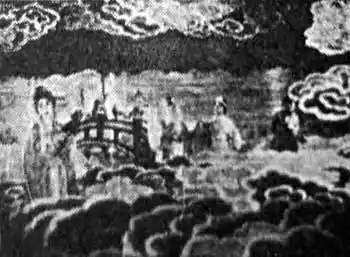
There are these small moments. Like when it passes a group of kids. And this one boy, probably about ten years old, just stares up at it. His expression isn't fear; it’s *pure wonder*. That particular reaction shot really stuck with me. You can almost feel the movie trying to convince you this moment matters, and for me, it did.

The pacing is, well, *deliberate*. There’s no rush. The Daibutsu walks, it looks, it contemplates. Or seems to. We get very little in the way of dialogue, especially from the Daibutsu itself, obviously. The sound design is minimal too. Just a lot of ambient noise, and the rhythmic *thump, thump* of the statue's steps. It felt like someone took a long walk with a camera, then added a massive Buddha.
I kept waiting for some kind of big dramatic confrontation. Or for it to accidentally step on a bus. But it mostly just… exists. The film focuses on the simple act of observation, both by the statue and by the people it encounters. It's a strange mirror. What does a giant, ancient deity see when it looks at modern Japan? And what do modern Japanese people see when they look at a living god?
There's a scene where the Daibutsu is overlooking a city from a distance. The way it just *lingers* on that shot for what feels like 30 seconds too long… you start to feel the sheer scale of it, and also the immense slowness. It becomes almost funny in its seriousness.
The human characters, like those played by Kazuyo Kojima or Hidemichi Ishikawa, often feel like observers themselves. Their reactions are subdued, adding to the film’s overall contemplative vibe. No one is running around screaming too much. It’s more like, “Oh, there’s a giant Buddha now. Huh.”
I’m still not entirely sure *why* the Daibutsu woke up. The film doesn’t care to tell you. Is it a metaphor for nature’s reawakening? Or maybe the weight of history? Perhaps it’s just because it *can*. The movie is happy to leave you with questions, which is honestly quite refreshing in a way. It doesn't spoon-feed answers.
This movie feels like a passion project. Maybe even like a very ambitious student film at times, but in a good way. The scale is huge, but the storytelling is very intimate and peculiar. If you're looking for something totally different, something that just washes over you with its sheer oddness, give Daibutsu kaikoku a go. Just don't say I didn't warn you about the lack of explosions. ✨

IMDb —
1928
Community
Log in to comment.