DbcultAccessing Vault...
Cult Review
Senior Film Conservator
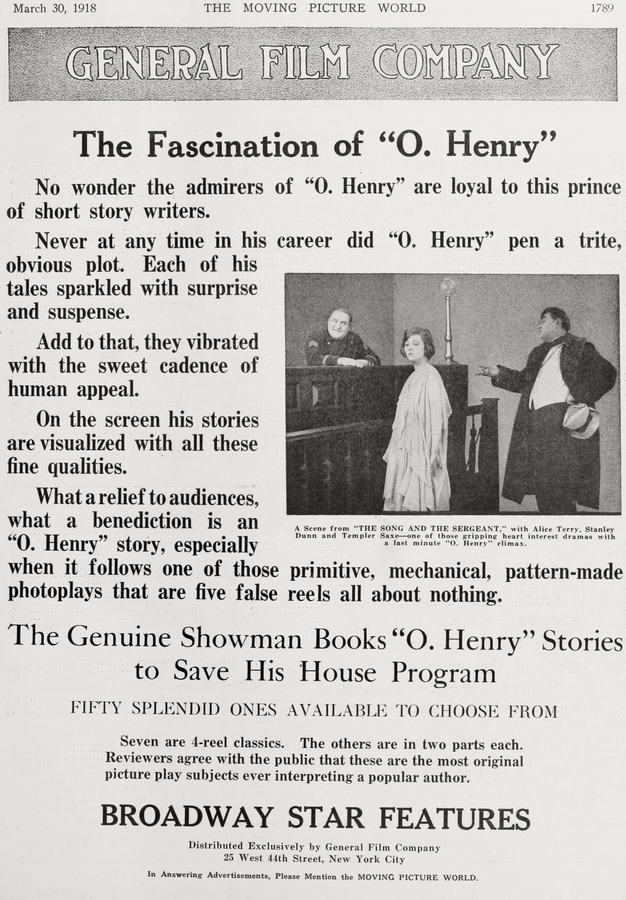
Stepping back into the nascent years of cinematic storytelling, one encounters a fascinating artifact in The Song and the Sergeant (1917), a film that, even a century removed from its original exhibition, offers a compelling glimpse into the narrative ingenuity of early cinema, particularly when infused with the distinctive touch of O. Henry. This isn't merely a silent picture; it's a finely wrought tapestry of human emotion, theatrical ambition, and the subtle, often unseen currents of affection that dictate our reactions, both on and off the stage. The film, a two-reeler, which was a common format for short narrative films of the era, manages to pack an astonishing amount of psychological depth and dramatic tension into its compact runtime, a testament to the efficient storytelling prevalent in a period where every frame counted.
The premise, at first glance, appears deceptively simple: a vaudeville act, brimming with initial promise, inexplicably crumbles. The stage, meant to be a canvas for dazzling performance, becomes instead a stage for recurring, inexplicable failure. This dramatic tension forms the very core of the narrative, drawing viewers into a mystery that transcends mere plot mechanics. What force could so consistently undermine a seemingly talented ensemble? This question isn't just a hook; it's an invitation to ponder the intricate interplay between art and life, between intention and reception, and the profound ways in which our innermost sentiments can manifest in the most unexpected arenas. The film brilliantly uses the theatrical setting to explore the fragile boundary between performed emotion and genuine feeling, a theme that resonates deeply even today.
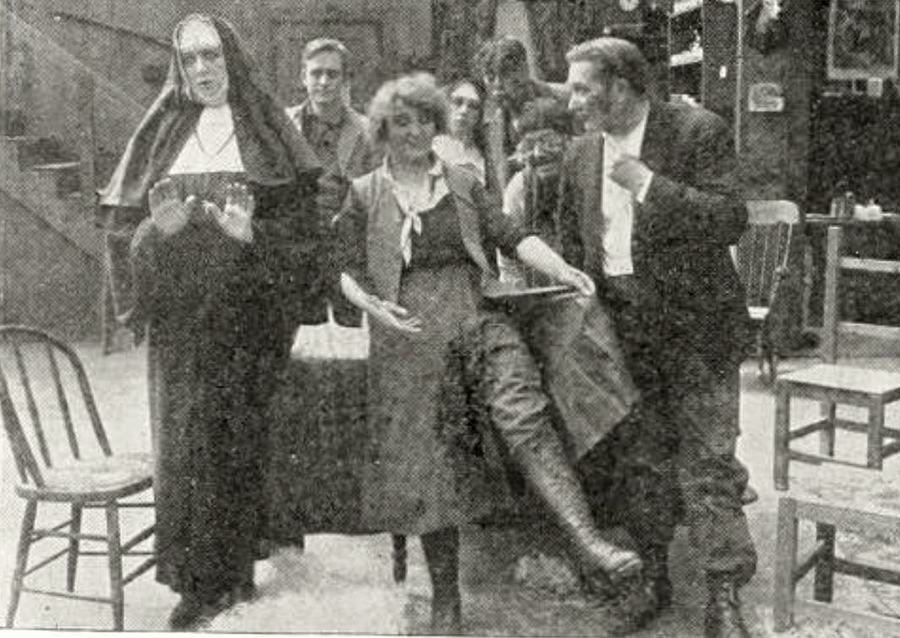
The narrative unfolds with a keen sense of observation, characteristic of O. Henry's literary style, adapted for the screen by Harry Southwell. We are introduced to a vaudeville troupe, presumably on the cusp of greatness. The initial promise, the anticipation of triumph, is palpable. Yet, with each performance, the act, particularly its star, portrayed with a poignant vulnerability by Alice Terry, falters. This isn't a technical misstep or a lapse in choreography; it's an emotional breakdown, a cascade of tears that derails the entire spectacle. The audience, the fellow performers, and even the viewer are left to wonder: what hidden sorrow, what unspoken burden, could so consistently sabotage a public display meant for joy and entertainment?
Alice Terry, a luminous presence in early cinema, likely brings a nuanced fragility to her role, making her character's inexplicable collapses all the more affecting. Her performance here, even without the benefit of sound, would have relied heavily on subtle gestures, facial expressions, and the evocative power of her eyes, a hallmark of silent film acting. One can imagine the close-ups capturing the tremor of her lip, the welling of tears, communicating volumes about her internal turmoil. Joseph Donohue, as the leading man, would have had the delicate task of portraying both his artistic commitment to the act and the underlying, unacknowledged depth of his feelings, a duality that is central to the film's ultimate revelation. The other cast members, including Stanley Dunn, Templar Saxe, Alice Rodier, and Jane Jennings, would have formed the bewildered and increasingly frustrated ensemble, their reactions serving as a mirror to the audience's own confusion.
The failure of the act is not just a plot device; it's a metaphor for miscommunication, for emotions so profound they cannot be contained within conventional artistic expression. This struggle echoes in other silent era dramas exploring internal conflict, such as The Conflict or The Iron Heart, which often delved into the psychological landscapes of their characters without the aid of dialogue. The challenge for the filmmakers was to visually articulate this emotional breakdown, making it palpable and perplexing, thereby setting the stage for the dramatic reveal.
The film cleverly transitions from the theatrical stage to a more mundane, yet equally dramatic, setting: a restaurant, where the frustrated troupe's antics lead to their arrest. This seemingly trivial incident serves as the crucial narrative pivot, moving the story from the realm of artistic failure into the sphere of public order and, ultimately, private revelation. The disturbance itself is a manifestation of the pent-up tension and confusion surrounding their failed performances. It's a public outburst born from a private enigma, an act of desperation from individuals who cannot comprehend the source of their professional downfall.
Being hauled before a police sergeant, a figure of authority and pragmatic wisdom, sets the stage for the film's O. Henry-esque twist. The sergeant's role is not merely to enforce the law but to act as a kind of unwitting psychoanalyst, his "judicious questions" cutting through the superficial chaos to uncover the underlying truth. This shift in setting and authority figure is brilliant; it pulls the characters out of their insulated world of performance and into a space where societal rules and direct interrogation prevail. This kind of external intervention, forcing characters to confront their inner workings, is a narrative technique found in many compelling dramas, including those that explore societal pressures and personal dilemmas, much like Ingeborg Holm or Les Misérables, Part 2: Fantine, though in a much lighter vein here.
The introduction of the police matron is equally crucial. In many early films, female characters, even in supporting roles, often brought a different kind of insight, a more empathetic or intuitive understanding to situations. Here, the matron acts as the discerning eye, the one who can synthesize the sergeant's logical inquiries with an understanding of human emotion. Her ability to "fathom the mystery" highlights a common trope in O. Henry's stories: the unexpected source of wisdom, the subtle observation that unlocks a complex truth. It's a testament to the power of observation and empathy over brute force or strict adherence to rules, suggesting that some truths require a different kind of lens to be seen.
The revelation is, of course, the heart of the O. Henry experience. The star's persistent breakdowns, it is discovered, are not due to stage fright, artistic inadequacy, or a personal tragedy unrelated to the act. Instead, they are a direct, unconscious response to the leading man's profound, yet unexpressed, love for her, subtly conveyed through his singing. This is a masterful stroke of narrative genius, transforming a seemingly professional failure into a deeply personal, romantic entanglement. The very act of performance becomes a conduit for genuine emotion, blurring the lines between the theatrical and the authentic.
Joseph Donohue’s portrayal of the leading man would have been pivotal in selling this revelation. His singing, though silent to the audience, would have been conveyed through his passionate gestures, his gaze towards Alice Terry, and the sheer intensity of his stage presence. The audience would have to infer the 'song' itself from his actions, making the police matron's interpretation of his 'singing' as a declaration of love all the more impactful. It's a testament to the power of silent film to convey complex emotional subtexts through purely visual means. The idea that love could be so potent, so overwhelming, that it could physically manifest in another person's tears, speaks to a deeply romantic sensibility prevalent in the era.
This twist resonates with the charming innocence often depicted in films of the period, such as Seventeen or Sunshine and Gold, where youthful emotions and budding romances often drive the plot. However, The Song and the Sergeant elevates this by embedding the romance within a professional crisis, adding layers of complexity. It's not just about two people falling in love; it's about how that love, when unacknowledged or unexpressed directly, can become a disruptive force, even in the most public of settings. The film beautifully articulates the idea that the heart has its own language, often spoken in ways the conscious mind cannot immediately comprehend.
O. Henry's influence on narrative structure, particularly his penchant for the surprise ending, is evident throughout this film. His stories, celebrated for their wit, irony, and often poignant twists, translated remarkably well to the silent screen, where visual storytelling could amplify the impact of an unexpected turn. Harry Southwell, as the writer, faced the challenge of translating O. Henry's prose and internal monologues into a purely visual medium, relying on intertitles, acting, and mise-en-scène to convey the nuances of the original story. The success of The Song and the Sergeant lies in its ability to capture that quintessential O. Henry spirit: a situation that seems one thing, only to be revealed as something entirely different and far more human.
The twist isn't merely a gimmick; it serves to illuminate the characters' inner lives and the film's broader themes. It underscores the idea that true understanding often requires looking beyond the surface, questioning assumptions, and listening to the unspoken. This narrative device was a powerful tool in early cinema, allowing filmmakers to engage audiences intellectually and emotionally, providing a satisfying resolution that often recontextualized everything that came before. It’s a technique that predates and informs later mystery and psychological dramas, even influencing films like The First Law, which also delves into uncovering hidden truths.
The film's exploration of performance as a medium for hidden truths is particularly compelling. Vaudeville, by its very nature, is an arena of artifice and illusion. Yet, within this constructed reality, the most genuine emotions emerge, almost against the will of the performers. This tension between the staged and the real is a timeless theme in art, explored in countless forms, but rarely with such a charming and direct resolution as presented here. It reminds us that even when we try to maintain a professional facade, our deepest feelings often find a way to break through, sometimes with disruptive, yet ultimately revealing, force.
Beyond its narrative cleverness, The Song and the Sergeant offers a valuable window into the social and cultural sensibilities of the early 20th century. The idea of love as a powerful, almost uncontrollable force, capable of inducing such a profound physical reaction, speaks to a romantic idealism that permeated popular culture. It's a world where emotions, though often repressed or unspoken, held immense power over individuals' actions and experiences. The film, in its own quaint way, becomes a study in silent psychology, where the inner workings of the human heart are externalized through tears and theatrical mishaps.
The casting of Joseph Donohue and Alice Terry would have been crucial to the film's success. Terry, known for her delicate beauty and expressive acting, was a natural fit for the vulnerable star. Donohue, while perhaps less remembered today than some of his contemporaries, would have needed to convey a potent blend of stage presence and simmering affection. The chemistry between the leads, conveyed through glances, proximity, and subtle interactions, would have been paramount in making the matron's final interpretation believable and emotionally resonant. Their performances, though silent, would have been the emotional anchors of this delightful little drama.
Comparing this film to other romantic dramas of the era, such as Scars of Love or The Mortal Sin, one can appreciate its distinctive charm. While those films might have explored more overt melodrama or social commentary, The Song and the Sergeant opts for a more intimate, psychologically focused narrative, wrapped in the clever packaging of an O. Henry tale. It's a reminder that silent films were far from simplistic; they often tackled complex human emotions with a subtlety and grace that belied their lack of spoken dialogue.
The film's setting in the world of vaudeville also provides a historical snapshot of a popular entertainment form that was gradually being supplanted by cinema itself. This meta-narrative layer, where a film about a failing stage act is presented through the burgeoning medium of film, adds another dimension to its appeal. It captures a moment of transition, celebrating the theatrical while simultaneously demonstrating the expressive power of the cinematic form. This interplay between old and new mediums is a fascinating undercurrent, often present in films of this transitional period, like Hampels Abenteuer, which also explored different forms of spectacle and adventure.
Even without the full sensory experience of sound and color, The Song and the Sergeant leaves a lasting impression due to its ingenious plot and universal themes. It speaks to the enduring power of unspoken affection, the unexpected ways in which our emotions can betray our intentions, and the profound satisfaction of a mystery ingeniously solved. The film's compact structure, dictated by its two-reel format, forces a narrative economy that many modern films could learn from, demonstrating how much can be conveyed with precision and wit.
The resolution, rather than diminishing the preceding drama, elevates it, transforming a series of unfortunate events into a beautiful testament to love's subtle influence. It’s a story that posits that even the most perplexing human behaviors can often be traced back to the simplest, yet most profound, of emotions. The film, in its quiet way, champions empathy and observation, suggesting that true understanding comes from looking beyond the obvious, a message that remains eternally relevant.
In retrospect, The Song and the Sergeant stands as a charming example of early cinematic artistry. It's not a grand epic like some of its contemporaries, but a meticulously crafted short story brought to life on screen, embodying the cleverness of O. Henry and the expressive potential of silent film. It reminds us that sometimes, the most profound declarations of love are not spoken aloud, but sung in the heart, and felt in the most unexpected of tears. Its legacy, however small in the grand scheme of film history, is a testament to the timeless appeal of a well-told story, especially one with a delightful, heart-warming twist. It's a cinematic whisper that speaks volumes about the human condition, a testament to the fact that even in silence, love finds its voice, and sometimes, it takes a police matron to hear it.
The film's ability to create such a detailed emotional landscape within its constraints is a credit to the collaborative efforts of its writers, Harry Southwell and the original genius of O. Henry, and its cast, particularly Alice Terry and Joseph Donohue. They collectively crafted a piece that transcends its historical context, offering a delightful and insightful exploration of love, performance, and the unexpected paths to truth. It serves as a valuable reminder of the rich storytelling traditions that flourished in the silent era, proving that even without dialogue, films could communicate with profound clarity and emotional resonance, much like other heartfelt narratives such as His Father's Son or The Wasted Years, which also explored deep personal connections.
IMDb 7.1
1927
Community
Log in to comment.