DbcultAccessing Vault...
Cult Review
Senior Film Conservator
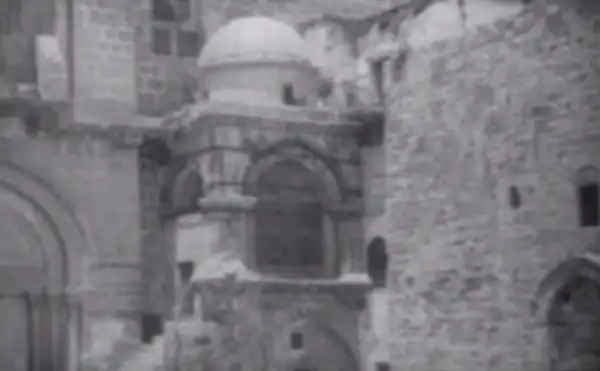
Alright, so you’re thinking about watching something old, maybe a bit different? *Damascus and Jerusalem* fits that bill perfectly. It's definitely worth checking out today if you have a soft spot for historical footage or just want to see how these places looked decades ago. People who love history, old travel films, or just a really slow, observational pace will probably get a kick out of it. If you need explosions or a tight plot, though, you'll probably hate it. This one’s more for a quiet Sunday afternoon.
Right off the bat, the print quality, well, it’s not exactly 4K, is it? It’s pretty grainy, a bit dusty, and you can see those little speckles jumping across the screen. But honestly, that just *adds* to the vibe. It makes you feel like you’re actually pulling an old film reel from a forgotten box. 📦
The film opens with these sweeping shots of Damascus. You get a real sense of its scale, even through the faded lens. There are moments in the market where the camera just sort of *lingers* on a spice merchant, his face etched with something you can’t quite place. It’s not a close-up, just a steady shot from a medium distance. You can almost feel the heat radiating off the cobblestones.
One thing that caught my eye, a detail I kept thinking about, was this small boy chasing a flock of pigeons in a narrow alleyway. It’s a super quick shot, maybe three seconds. He wasn't the focus, just part of the scene, but it felt so real. It's those little, unplanned moments that really stick. ✨
The narration is very formal. Like, *very* proper. It describes what you’re seeing with a certain academic distance, which sometimes clashes a bit with the raw, everyday life unfolding on screen. You’ll hear things like, “Observe the intricate tapestry of daily commerce,” while someone is clearly haggling rather loudly over a basket of dates. It's a bit funny, actually.
When it shifts to Jerusalem, the tone changes a bit. More emphasis on the religious sites, naturally. But even there, you see these glimpses of people just living. There's a scene near the Western Wall, I think, where a woman is just sitting on a step, totally oblivious to the camera. Her expression is just… tired, maybe? Or thoughtful. It’s hard to tell, but it felt very authentic.
The cuts between scenes are often quite abrupt. One moment you're watching a panoramic view of the city, the next you're suddenly inside a crowded bazaar. There isn't much in the way of smooth transitions. It feels a bit like someone just spliced together the best bits they captured, which, for a film from this era, makes sense.
I also appreciated how they sometimes just let the camera run. There's a particular shot of a donkey pulling a cart through a really narrow street, and the camera just follows it for a good 30 seconds. No narration, no dramatic music. Just the donkey, the cart, and the street. It’s almost meditative, or maybe just a little too long. Depends on your mood, I guess. 🤷♀️
You can tell André de la Varre, or whoever was behind the lens, really tried to capture the essence of these places. It’s not about pushing a particular message; it’s more about documentation. There’s a quiet respect in how they present everything.
This film won’t blow your mind with special effects, obviously. It’s more about the feeling it evokes. It transports you. And for a moment, you’re not watching a movie; you’re just a fly on a very old, dusty wall, watching history unfold.
It's not a thrill ride. It’s more like looking through a really old photo album, but with movement. And a formal voice telling you what you’re seeing. Pretty cool, for what it is. And it *is* something special.
IMDb —
1926
Community
Log in to comment.