DbcultAccessing Vault...
Cult Review
Senior Film Conservator
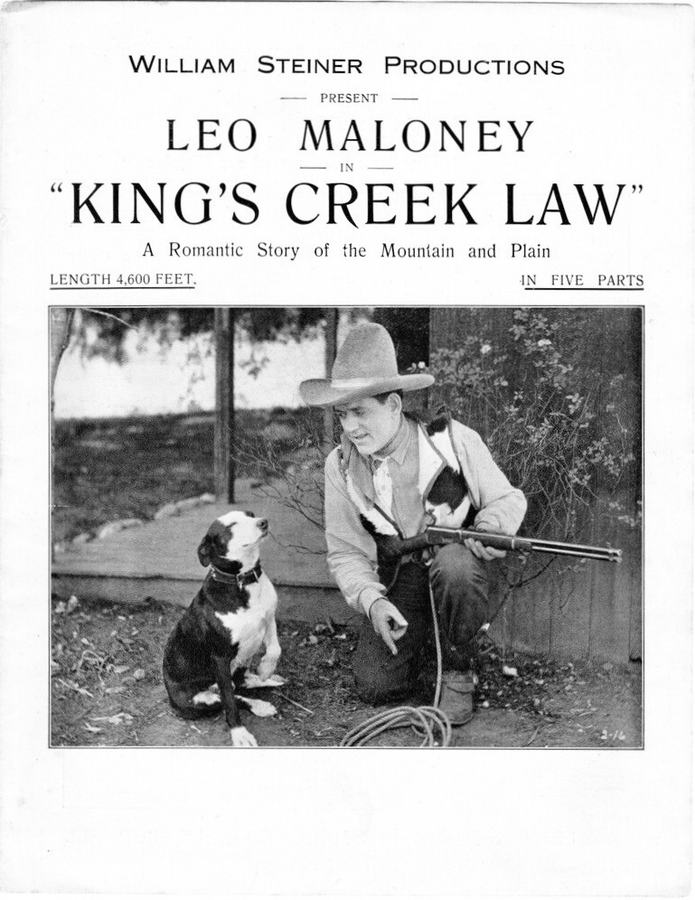
The cinematic topography of the 1920s Western often oscillated between the mythic and the mundane, yet King's Creek Law carves out a niche that is as intellectually demanding as it is viscerally engaging. Directed with a keen eye for spatial dynamics by Leo D. Maloney and penned by the formidable duo of Ford and Frances Beebe, this film transcends the rudimentary tropes of the 'silent oater.' It presents a nuanced interrogation of the transition from the law of the gun to the law of the gavel. Unlike the maritime claustrophobia found in Vengeance of the Deep, the vastness here is not an ocean but a psychological frontier where the protagonist, Tom Hardy, must navigate the ego of a local autocrat.
Saul Jameson, portrayed with a gravitas that rivals the dramatic intensity of The White Raven, represents the 'unreconstructed' Southerner whose identity is inextricably linked to a pre-federalist past. His refusal to acknowledge government interference is not merely stubbornness; it is a philosophical stance on local sovereignty. When he decides to try his own son, Kirk, for murder, we see a perversion of the 'impartial judge' archetype. It is a sequence that evokes the moral weight found in Sodoms Ende, where the domestic sphere is invaded by the consequences of public transgression. Jameson’s trials are a pantomime of justice, a performance designed to maintain his hegemony over King’s Creek.
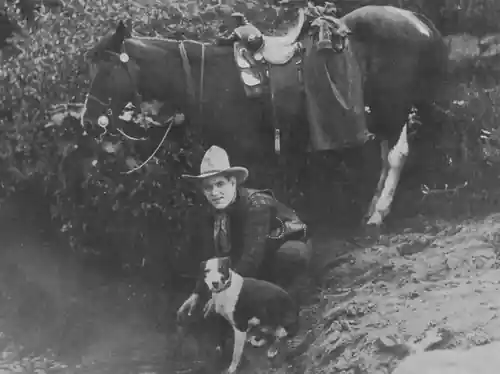
Leo D. Maloney’s Tom Hardy is a far cry from the slapstick physicality of Three Ages. Hardy is a figure of stoic observation. He enters King City not as a conqueror, but as a detective. The film’s pacing allows for a slow-burn revelation of evidence, a narrative choice that mirrors the tension in Sealed Orders. Hardy’s role is to bridge the gap between the chaotic 'eye for an eye' mentality of the frontier and the structured evidence-based reality of the modern state. His interaction with Bullet the Dog adds a layer of canine loyalty that serves as a thematic foil to the fractured human loyalties within the Jameson household.
The cinematography captures the grit of King City with a realism that anticipates the rugged aesthetics of Wolves of the North. Ford Beebe utilizes the landscape not just as a backdrop, but as an active participant in the drama. The dust-choked streets and the shadows of the trial room create a chiaroscuro effect that emphasizes the moral gray areas Hardy must navigate. This isn't the sanitized West of later decades; it is a tactile, breathing environment. The editing, while constrained by the technology of the era, maintains a brisk tempo that prevents the heavy thematic elements from becoming turgid, much like the rhythmic flow seen in Le sept de trèfle.
Josephine Hill’s Milly Jameson is more than a mere trophy for the hero. She represents the potential for a new generation to move past the grievances of their fathers. Her romance with Hardy is the catalyst for the reconciliation between Jameson and the United States government. It is a softer narrative arc that balances the hard-boiled nature of the murder mystery, reminiscent of the romantic undercurrents in Forever. By winning Milly’s hand, Hardy doesn't just solve a crime; he integrates into the community he was sent to reform.
When comparing King's Creek Law to It Happened Out West, one notices a distinct lack of levity in the former. While many Westerns of the era sought to entertain through spectacle, Maloney and Beebe aimed for a sociological study. There is a gravity here that one might find in the tragic dimensions of Drama na okhote. Even the titles of contemporary films like When Do We Eat? suggest a domesticity that King's Creek Law rejects in favor of a harsh, externalized conflict. The film shares a certain DNA with Idolators in its depiction of men who worship their own power, only to see it crumble under the weight of truth.
The resolution of the plot—the exoneration of Kirk and the unmasking of the real killer—is handled with a precision that avoids the melodramatic pitfalls of Who Was the Other Man?. It is a satisfying conclusion because it feels earned through investigative work rather than divine intervention or sheer luck. The reconciliation of Saul Jameson to the 'law of the land' serves as a metaphor for the closing of the American frontier. The wildness is not eradicated; it is simply channeled into the service of the state. This film remains a vital piece of silent cinema history because it dares to ask what happens when the hero is not just faster with a gun, but smarter with the law.
In the broader context of Leo D. Maloney’s filmography, which includes works like The Man o' War's Man and The Coast of Opportunity, King's Creek Law stands out for its thematic density. It is a film that rewards multiple viewings, as the subtle interplay between the characters reveals a deep understanding of human frailty and the necessity of communal order. The inclusion of Bullet the Dog is not just a gimmick for the audience; the animal serves as a silent witness to the truth, a being untainted by the complex social hierarchies of King City. As the credits roll, one is left with a profound sense of the precariousness of justice and the enduring strength of the individual who stands up for the truth in a town built on secrets.
The technical prowess exhibited by the Beebe writing team is evident in the tight structure of the screenplay. Every character, from Chet Ryan to Frank Ellis, serves a specific purpose in the narrative engine. There is no wasted motion. The film’s ability to convey complex legal and moral arguments through intertitles and expressive acting is a testament to the sophistication of 1920s cinema. While it may lack the high-budget sheen of modern blockbusters, it possesses an authenticity and a heart that are often missing in contemporary Westerns. It is a stark reminder that great storytelling does not require sound, only a clear vision and a deep understanding of the human condition.
Ultimately, King's Creek Law is a foundational text for anyone interested in the evolution of the Texas Ranger in popular culture. It sets the stage for the archetypal 'lone lawman' who must fight both the outlaws and the system itself to ensure that justice is served. It is a compelling, rugged, and deeply thoughtful film that deserves its place in the pantheon of great American Westerns. Whether you are a fan of Leo D. Maloney’s physical performance or Ford Beebe’s directorial precision, there is something in this film for every lover of classic cinema. It is a journey into the heart of Texas, where the law is as harsh as the sun, but the truth is as clear as the morning sky.
IMDb —
1934
Community
Log in to comment.