DbcultAccessing Vault...
Cult Review
Senior Film Conservator
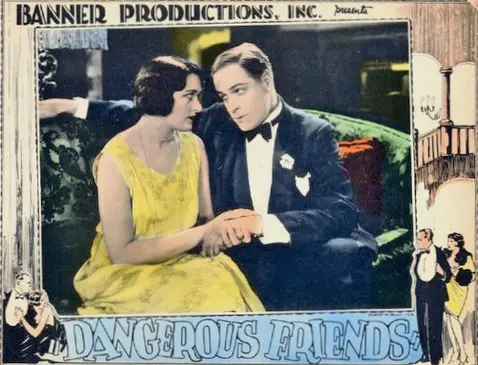
Is Dangerous Friends a hidden gem of the silent era or a forgotten relic of domestic farce? Short answer: It is a fascinating, if occasionally frustrating, artifact that serves best as a time capsule of 1920s social anxieties and real estate obsession.
This film is for viewers who enjoy the frantic, high-stakes energy of early situational comedies and those interested in the 'wrong man' trope. It is certainly not for those who require a protagonist with a moral compass or a plot that adheres to modern logic.
If you enjoy fast-paced domestic comedies, you should watch this. It captures a specific American era of reckless speculation. The film moves quickly and avoids the drag found in many contemporary dramas. However, the resolution relies entirely on luck rather than character growth.
This film works because: The physical comedy of Arthur Hoyt perfectly captures the desperation of a man who knows he has ruined his life by noon.
This film fails because: The ending is a blatant deus ex machina that rewards the protagonist’s incompetence rather than challenging it.
You should watch it if: You have an interest in how early cinema treated suburban infidelity and the 'get rich quick' culture of the 1920s.
Augustus 'Gusty' Gale is not your typical silent film hero. As played by Arthur Hoyt, he is a ball of nervous energy and questionable ethics. The opening sequence, where he wakes up with a headache after a night with his neighbor's wife, sets a tone that is surprisingly edgy for its time. There is no romanticizing his behavior; he is a mess.
Hoyt’s performance is built on a series of micro-expressions. When he realizes he has traded Peerless Park for a swamp, his face goes through a dozen stages of grief in seconds. It is a masterclass in silent-era reactive acting. He doesn't need intertitles to tell us he’s terrified of his employer.
Unlike the stoic leads in The Vanishing American, Gusty is a man of the moment. He reacts to everything and plans for nothing. This makes him relatable, if not particularly likable. He is the everyman of the Florida land boom era, chasing dreams that are literally underwater.
One of the most intriguing aspects of Dangerous Friends is how it handles the secondary characters. While Gusty is out making a fool of himself with Linda, his wife Honey and the neighbor Frederick Betts are left at home. The scene where they spend the evening listening to the radio is a biting observation of domestic boredom.
The radio, a new technology at the time, acts as a character itself. It provides a soundtrack to their mutual dissatisfaction. It’s a sharp contrast to the more traditional romantic tensions found in films like Molly and I. Here, the 'cheating' isn't just about sex; it's about escaping the suffocating routine of the suburban home.
Marjorie Whiteis brings a quiet dignity to Honey, which makes Gusty’s antics feel even more egregious. She isn't just a prop; she is a woman clearly weighing her options. The film hints at a much darker story about the failure of the American domestic dream, though it eventually retreats into comedy.
The 'Paradise Garden' subplot is where the film finds its satirical teeth. The idea of trading valuable land for a swamp was a common anxiety in the early 20th century. It’s a trope that appears in various forms in films like The Land of Long Shadows, but here it is played strictly for laughs.
When Gusty’s boss gives him the swamp as his commission, it’s a moment of brutal corporate irony. The boss isn't just firing him; he’s tethering him to his own failure. The cinematography in these office scenes is stark, emphasizing the power dynamic between the desk-bound employees and the wealthy owners.
The film suggests that in the world of real estate, there is no such thing as 'worthless' land—only land that hasn't found its buyer yet. This is a cynical take on capitalism. It implies that success isn't about hard work, but about having the right connections at the right time.
The direction maintains a breakneck pace that prevents the audience from questioning the plot’s holes. The introduction of the Barkers—Honey’s parents—adds a layer of slapstick that feels grounded in the 'meet the parents' anxiety we still see in cinema today. Burr McIntosh as the father-in-law is particularly effective.
McIntosh plays Barker with a booming presence that dwarfs the nervous Gusty. The scene where Barker offers to buy the land for his railroad is the film's turning point. It’s a moment of pure convenience. The pacing here accelerates, rushing toward a happy ending that the characters haven't necessarily earned.
Compared to the methodical pacing of The Call of the Cumberlands, Dangerous Friends feels like a sprint. It doesn't want you to think; it wants you to laugh at the absurdity of Gusty’s luck. The tone shifts from domestic drama to corporate satire with surprising fluidity.
Pros:
- Arthur Hoyt’s performance is energetic and endlessly watchable.
- The film offers a rare, cynical look at 1920s suburban life.
- The pacing is tight, making it a quick and engaging watch.
- It uses technology (the radio) in a way that feels ahead of its time.
Cons:
- The plot resolution is unsatisfying and relies on pure coincidence.
- The female characters are somewhat sidelined in favor of Gusty’s antics.
- Some of the slapstick with the in-laws feels dated compared to the sharper satire.
Dangerous Friends is a film that refuses to be forgotten, even if it isn't a top-tier classic. It is a messy, vibrant, and occasionally mean-spirited comedy that captures the frantic spirit of its age. It works. But it’s flawed.
The central performance by Arthur Hoyt is the glue that holds the disparate parts together. Without his nervous energy, the film would likely collapse under the weight of its own coincidences. It is a much more interesting film than Faith or Bring Him In because it dares to make its lead a bit of a scoundrel.
Ultimately, Dangerous Friends is a reminder that the anxieties of the 1920s—bad investments, shaky marriages, and the pressure of in-laws—are not so different from our own. It’s a cynical ride through a Florida swamp that somehow ends in a penthouse. It is well worth a look for anyone interested in the evolution of the American sitcom.
"A frantic artifact of suburban desperation that rewards the incompetent with a railroad."
IMDb 5.9
1933
Community
Log in to comment.