DbcultAccessing Vault...
6.2/10
Senior Film Conservator
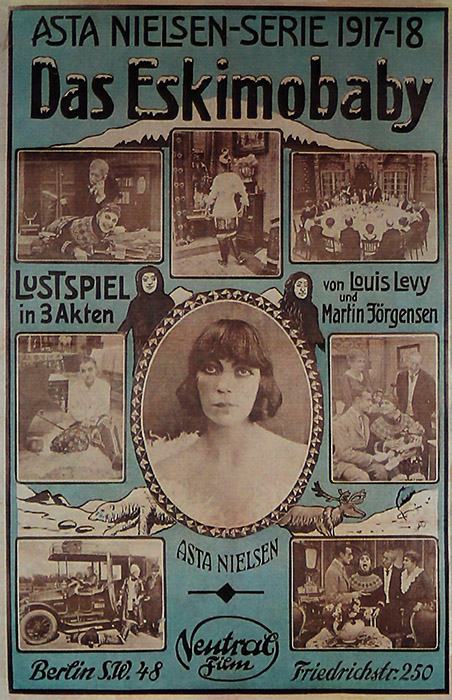
A definitive 6.2/10 rating for a film that redefined the boundaries of cult cinema. Das Eskimobaby remains a cornerstone of transgressive art.
*Das Eskimobaby* is a film that smells of seal oil and bergamot, a scent that lingers on the skin long after the credits roll. It is a story of migration not just of bodies, but of ideologies, where the Arctic’s breath fogs against the steel of Berlin’s windows. Freddy Wingardh, the polar explorer, is less a hero than a vessel for the contradictions of his era—a man whose beard is combed with the precision of a man who has forgotten the wind on his face. His act of bringing Ivigtut, the Eskimo woman, to Berlin is not charity but a theft cloaked in paternalism, a narrative that unfolds like a seal’s hide stretched too thin.
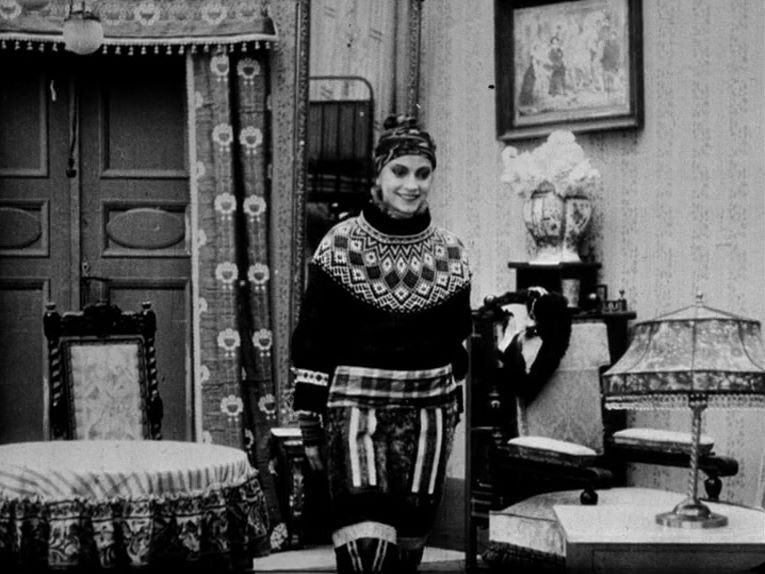
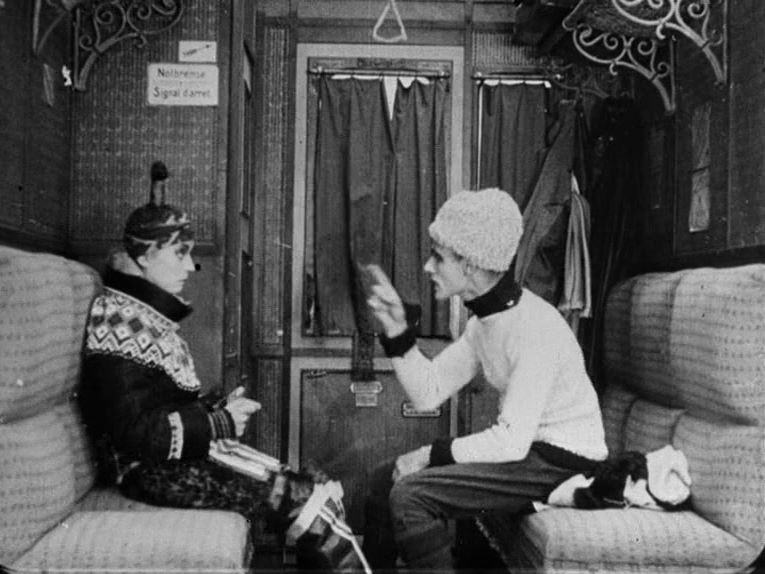
Asta Nielsen, as Ivigtut, is a force of nature. Her eyes, black as the winter sky, hold the weight of generations. She moves through Berlin’s streets like a ghost, her body aching with the dissonance between her ancestral rhythms and the mechanical ticking of the city. The film’s first act is a masterclass in cultural dislocation: Ivigtut’s hands tremble as she touches the icy glass of a café window, mistaking it for a barrier to the warmth she craves. The contrast is stark—Freddy’s world is one of controlled heat and scheduled meals, whereas hers is a world of survival, where the moon dictates the tides and the stars chart the path home. This tension is not just spatial but temporal, a clash between the linear march of progress and the cyclical heartbeat of tradition.
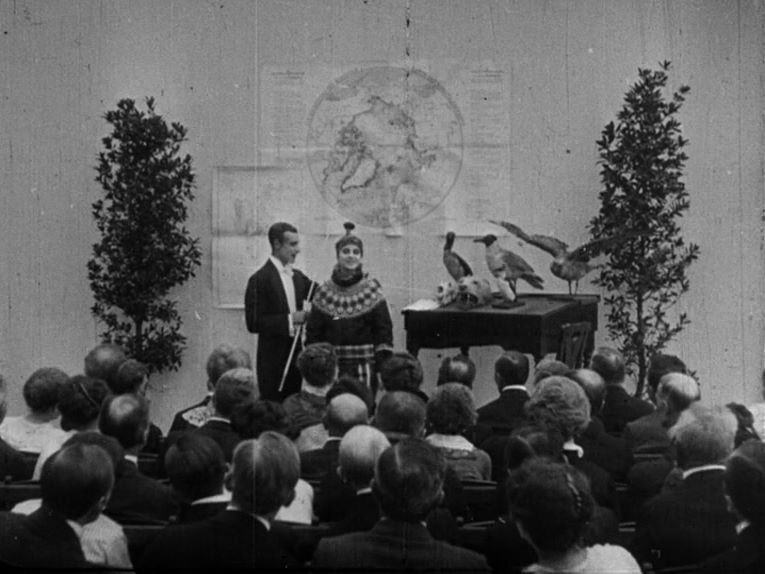
The Western world, as depicted in *Das Eskimobaby*, is a gilded cage. The film’s second act descends into the grotesque as Ivigtut is subjected to the “civilizing” rituals of the Berlin elite—hair braided with lace, her skin scrubbed raw in a bid to conform to Eurocentric beauty standards. Yet, these acts of erasure only fuel her resistance. A scene where she smears ash on her face, a ritualistic act of defiance, is a visual crescendo. The ash, a dark shadow against her skin, becomes a symbol of her reclaiming agency. It is here that the film’s proto-feminist undertones surface: Ivigtut’s pregnancy, the titular “Eskimobaby,” is both a product of violation and a testament to her strength. The child is not Freddy’s salvation but a reminder of the violence of his intrusion.
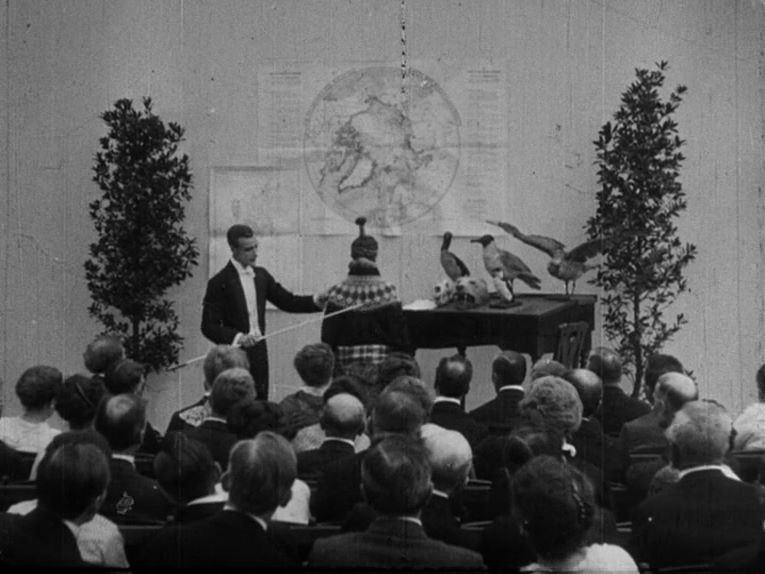
Asta Nielsen’s portrayal of Ivigtut is a revelation. She does not emote in the traditional sense; instead, she communicates through glances, the tilt of a head, the way her fingers curl around a thread of light. In one haunting scene, she watches Freddy’s family at dinner, their laughter a language she cannot parse. Her lips part, as if to speak, but she remains silent, her voice swallowed by the weight of cultural incompatibility. Nielsen’s performance is a quiet storm, a testament to the power of understatement in an era of overwrought melodrama. Her chemistry with Freddy Wingardh is electric, though tinged with the inevitability of tragedy—a dance that ends not with a resolution but with a fracture.
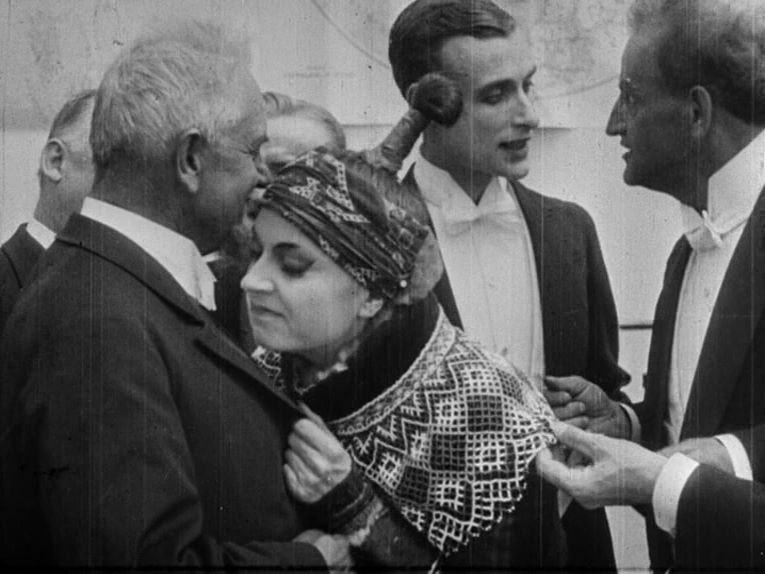
*Das Eskimobaby* is a film that feels both archaic and urgently contemporary. Its exploration of cultural appropriation and the commodification of the “other” resonates with the debates of our time, yet its execution is firmly rooted in the aesthetics of early 20th-century cinema. The writers, Martin Jørgensen and Louis Levy, weave a narrative that is as much about the internal conflict of Freddy as it is about Ivigtut’s external struggle. His journey from savior complex to self-awareness is clumsily rendered, yet it serves as a critique of the Western savior archetype. The film’s third act, where Freddy “rescues” Ivigtut from a life of Western “corruption,” is a double-edged sword—it reiterates the colonial mindset it critiques while also acknowledging the futility of such interventions.
To situate *Das Eskimobaby* within the broader cinematic landscape, one might draw parallels to *The Dormant Power* (href="/movies/the-dormant-power") and *The Captive* (href="/movies/the-captive"). Like these films, *Das Eskimobaby* employs the trope of the “innocent native” as a vehicle for Western moral introspection. However, where *The Dormant Power* leans into mysticism, *Das Eskimobaby* grounds its themes in the stark realism of cultural dissonance. Similarly, *The Captive*’s exploration of prostitution and exploitation shares thematic DNA with Ivigtut’s subjugation, though the latter film’s focus on maternity adds a layer of emotional complexity absent in its counterparts.
In contrast to the more fantastical elements of *Sunlight's Last Raid* (href="/movies/sunlights-last-raid") or the medical horror of *Urteil des Arztes* (href="/movies/urteil-des-arztes"), *Das Eskimobaby* is a grounded, almost documentary-like portrayal of its subject matter. This realism is both its strength and its limitation. While the film’s cultural critique is incisive, its pacing suffers from the didacticism of its era, with moments of dialogue that feel more like lectures than organic exchanges.
The cinematography in *Das Eskimobaby* is a study in contrasts. The Arctic sequences, though few, are rendered with a stark beauty that belies their artificiality—snowscapes conjured from cotton絮 and white paint. These scenes are juxtaposed with the claustrophobic interiors of Berlin, where shadows cling to the walls like memories. The use of light is particularly noteworthy: in scenes where Ivigtut is isolated, the lighting becomes a character in itself, casting harsh angles that emphasize her alienation. The film’s palette, dominated by neutrals and deep blues, mirrors the emotional austerity of its themes.
One cannot overlook the influence of *The Serpent* (href="/movies/the-serpent") in the film’s visual storytelling. Both films use their settings as metaphors for entrapment, though *Das Eskimobaby* does so with a subtlety that avoids the overt symbolism of its predecessor. The recurring motif of the window—both literal and metaphorical—serves as a visual anchor, a reminder of the boundary between the known and the unknown.
Though *Das Eskimobaby* has been largely overshadowed by the more celebrated works of Asta Nielsen and her contemporaries, its themes remain strikingly relevant. The film’s interrogation of colonialism, gender, and identity prefigures postcolonial critiques by nearly a century. Its flaws—stilted dialogue, uneven pacing—are the product of its time, yet they also serve as a reminder of the evolving nature of cinematic language. For modern viewers, the film is a palimpsest: a document of early cinema’s limitations and a blueprint for its possibilities.
In the pantheon of silent cinema, *Das Eskimobaby* occupies a unique space. It is not a film for the casual viewer; its themes demand engagement, its visuals require contemplation. Yet for those willing to meet it halfway, it offers a profound meditation on the cost of cultural imperialism and the resilience of the human spirit. It is a film that, like the Arctic itself, is both forbidding and sublime.
IMDb —
1920
Community
Log in to comment.