DbcultAccessing Vault...
5.7/10
Senior Film Conservator
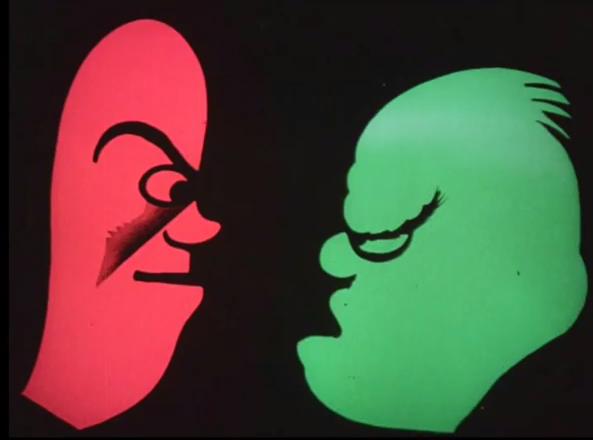
A definitive 5.7/10 rating for a film that redefined the boundaries of cult cinema. Das Wunder remains a cornerstone of transgressive art.
One does not so much watch Das Wunder as ingest it—an optic dram that leaves the tongue buzzing with copper and the mind reeling from the aftershock of distilled modernity. Walter Ruttmann, the same montage-mad surgeon who later autopsied Berlin in Berlin: Symphony of a Metropolis, here turns his scalpel toward a humbler patient: a family-owned Polish distillery whose cellars burrow beneath Łódź like pagan catacombs. Commissioned work usually suffers creative anemia, yet this sixty-second advertising embryo bursts with more arterial color than most auteur opuses dared in 1922.
Frame zero already detonates hierarchy: a single droplet magnified until planetary, its surface tension warping into a convex mirror of the viewer’s own eye. The droplet quivers, splits, and births twin planets of refracted orchard light—an origin myth told in the language of physics. Ruttmann’s animation cels refuse flatness; instead they stack translucencies, so that every fruit feels hermetically suspended in its own private cosmos. When a plum ruptures, its violet flesh does not simply fall—it avalanches upward, reversing gravity as though the distillery’s copper belly generated its own relativistic field.
Advertising normally begs for the hard sell, yet Das Wunder withholds product until the 48-second mark, preferring to transmute base fruit into transcendental signifiers. The Kantorowicz logo appears only after we have traversed a full alcimentary cycle: blossom, frost, fermentation, vapor, condensate, auric nectar. Ruttmann thus reframes the commodity as the culmination of seasonal necromancy rather than the起点 of profit. In an era when divorce court melodramas peddled reductive moralism, this nominally mercantile fragment dares a metaphysical wager: that selling can be a form of summoning.
The soundtrack, often misattributed to a light orchestra, is in fact a quartet of factory noises—steam valves, rivet guns, bottle-cap percussion—mic’d and equalized until they chime like gamelan. Each audio spike corresponds to a visual spurt of liquid, forging a synesthetic contract that predates Disney’s Fantasia by seventeen years. Listen on quality cans and you’ll catch the sub-bass throb of the Vistula’s current beneath the distillery floor, a ghost river that anchors the ethereality.
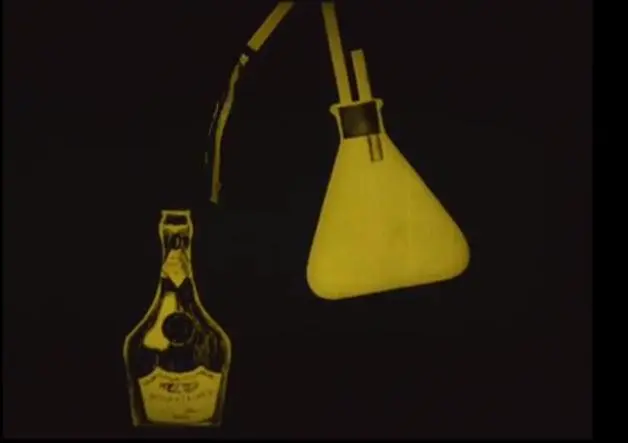
Ruttmann’s technique hybridizes stop-motion, ink-on-glass, and multiple exposure. Fruit skins peel themselves in negative space, curling into calligraphic question marks that spell out “częstochowa” in the split-second before dissolving. You will need freeze-frame cruelty to catch it, but the word is there—a clandestine signature smuggled into commodity spectacle. Such micro-gestures invert the power dynamic: the filmmaker plants folkloric graffiti inside a corporate brief, smuggling peasant memory into the bourgeois parlor.
Color—though hand-tinted rather than true chromatic film—arrives as seismic jolts: saffron for apricot, arterial crimson for sour cherry, bruise-indigo for sloe. Because each hue is applied frame-by-frame with a camel-hair brush, saturation breathes, palpitates, nearly decays before your eyes. The result is a living fresco that feels closer to Byzantine iconography than to the assembly-line palettes of later Technicolor.
Contextual placement amplifies resonance. Released months before hyperinflation devoured the Weimar mark, Das Wunder offers a fantasy of liquid stability—alcohol as hedge against currency entropy. While Hargraves toyed with sentimental duplicity and syphilis melodramas wallowed in moral plague, Ruttmann’s miniature proposes that distilled fruit can arrest time, bottle history, render volatility potable. It is both escapist and pragmatic, a shot of ontological certainty one could still afford before the Reichsmark cratered.
Yet the short also whispers a threnody for a Poland that no longer existed on the map, partitioned as it was among empires. By foregrounding Polish orchards and the Kantorowicz lineage, Ruttmann smuggles national identity into a German-funded commission, forging a covert act of diasporic remembrance. Every slosh of mash becomes a muted uprising against erasure.
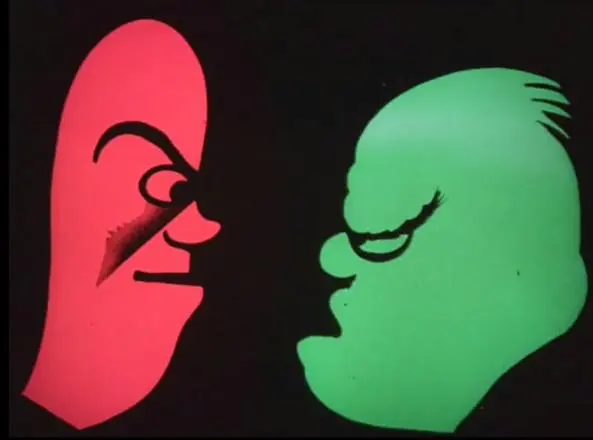
Notice how the copper coils glisten, filmed so tight that sweat-beads of condensation mimic pores. When hot alcohol meets cold steel, the exhalation forms a ghostly caress—an industrial ménage à trois between fruit, fire, and metal. The erotic charge is not subtext; it is surface tension. Ruttmann’s camera lingers on the moment of phase transition with the same devotional patience that Scandinavian art-house lovers reserved for illicit glances. Here, however, the lovers are matter and energy, and their union yields not offspring but buzz.
Gender, too, is fluid. The maternal orchard bears fruit; the paternal still transmutes. Yet the final decanter is curved like a corseted torso, its neck long and swanlike, waiting to be uncorked—a hermaphroditic object of desire that conflates consumption and consummation. One leaves the short suspecting that every toast is an Oedipal drama in miniature.
Duration belies legacy. Ruttmann’s distilled syntax prefigures the liquid metal menace in Terminator 2, the chromatic mutations of 2001’s star gate, even the macro cinematography of Ratatouille’s taste montage. Advertising students mine it for proof that branding can be high art; film scholars cite it as the missing link between Bauhaus abstraction and music-video synesthesia. The short loops endlessly in Berlin’s Museum für Film und Fernsehen, where children stand transfixed as if the distillery’s phantom scent might leak through the screen.
Meanwhile, Kantorowicz—nationalized under the People’s Republic, privatized after 1989—still slaps a stylized still from this film onto its export labels. Thus an avant-garde relic sells plum brandy to Brooklyn hipsters who have never heard of Ruttmann, proving that the true miracle is not the liquid but the perpetuity of its image.
There are longer films, louder films, films swollen with dialogue and carnage. Yet few achieve the mute majesty of Das Wunder, where advertising transcends its transactional birth to become a secular Eucharist. Ruttmann proves that even in the marketplace, the soul can negotiate its own ransom—one droplet at a time.
“We drink to forget, but the best spirits make us remember what never happened.” — Graffiti on a Łódź distillery wall, 1923
If you seek narrative comfort, look elsewhere. If you crave a shot of pure optic fire that burns the throat of the eye, press play. Just do not blame me when every subsequent toast tastes like celluloid and yesterday’s sunlight.
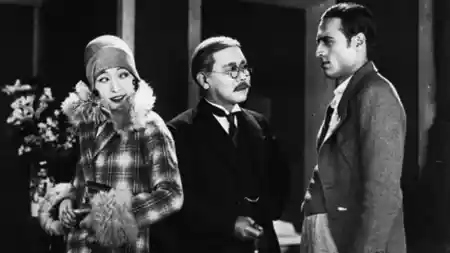
IMDb 5.8
1930
Community
Log in to comment.