DbcultAccessing Vault...
Cult Review
Senior Film Conservator
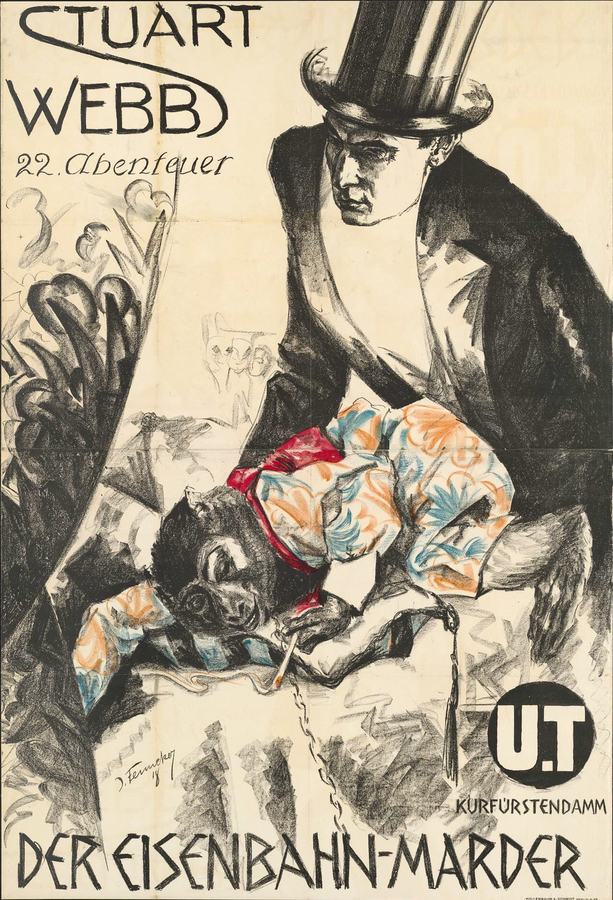
The cinematic landscape of Der Eisenbahnmarder is a rich tapestry, interwoven with themes of love, betrayal, and the relentless pursuit of one's aspirations. As the story unfolds, the characters, brought to life by Ernst Reicher and Erner Huebsch, find themselves entangled in a complex web of relationships, each thread carefully woven by the writers, notably Richard Hutter. The narrative echoes the emotional depth found in La dame aux camélias, where the pursuit of love and the harsh realities of life intersect, painting a poignant picture of the human experience.
The film's exploration of the human condition, with all its complexities and frailties, is a testament to the enduring power of cinema to capture the essence of our shared humanity. This is evident in the character development, which rivals that of The Better Woman, where the protagonist's journey is a compelling exploration of resilience and the human spirit's capacity to overcome adversity. The intricate plot of Der Eisenbahnmarder, with its twists and turns, keeps the viewer engaged, much like the gripping narrative of The War of the Tongs, where the struggle for power and the consequences of one's actions are laid bare.
One of the standout elements of Der Eisenbahnmarder is its ability to balance light and dark, hope and despair, in a way that feels authentic and engaging. This balance is crucial, as it allows the film to explore deeper themes without becoming overly somber, a trait it shares with Brother Against Brother, where the conflict between siblings serves as a backdrop for a broader exploration of family, loyalty, and the bonds that tie us together. The film's use of setting, character development, and plot progression all contribute to a narrative that is both captivating and thought-provoking, inviting viewers to reflect on their own values and morals, much like The Greater Law, which challenges its characters and audience to consider the higher principles that guide our actions.
In considering the film's place within the broader cinematic landscape, it's interesting to note the parallels that can be drawn with other works of the era. For instance, the character-driven narrative of Der Eisenbahnmarder finds a counterpart in The Vicar of Wakefield, where the titular character's experiences serve as a lens through which to examine societal norms and personal morality. Similarly, the emotional depth and complexity of the characters in Der Eisenbahnmarder are reminiscent of Pigen fra Palls, which explores the intricacies of human relationships with a sensitivity and nuance that resonates deeply with audiences.
The film's cinematography and direction also deserve mention, as they play a crucial role in setting the tone and atmosphere of the narrative. The use of lighting, in particular, is noteworthy, as it helps to underscore the emotional states of the characters and the unfolding drama. This attention to detail is on par with The Midnight Wedding, where the visual elements combine to create a sense of urgency and anticipation that propels the story forward. Furthermore, the pacing of Der Eisenbahnmarder, which balances moments of intense drama with periods of contemplative reflection, is a testament to the director's skill in managing the narrative's tempo, a skill also evident in Cohen's Luck, where the blend of humor and pathos creates a compelling and engaging viewing experience.
Der Eisenbahnmarder also explores themes of identity and the search for one's place in the world, themes that are central to Journey's End and The Cowardly Way. In these films, as in Der Eisenbahnmarder, the characters' journeys are metaphors for the broader human experience, with all its challenges, uncertainties, and moments of triumph. The film's ability to capture these universal themes, and to present them in a way that feels both personal and relatable, is a significant part of its enduring appeal.
In addition to its thematic depth, Der Eisenbahnmarder is also notable for its historical context, offering a glimpse into a bygone era that is both fascinating and informative. This aspect of the film is reminiscent of Richelieu, which explores the intricacies of political power and intrigue in 17th-century France. Similarly, the attention to period detail in Der Eisenbahnmarder, from the costumes to the settings, helps to immerse the viewer in the world of the film, making the story feel more vivid and alive, much like Filling His Own Shoes, where the protagonist's journey is set against the backdrop of a changing social landscape.
The performances in Der Eisenbahnmarder are another highlight of the film, with the cast delivering nuanced and compelling portrayals of their characters. The chemistry between the leads is particularly noteworthy, as it adds a layer of authenticity to the story, making the characters' interactions feel genuine and engaging. This is similar to An American Widow, where the performances are central to the film's emotional impact, and The Evil Eye, which explores the darker aspects of human nature with a depth and complexity that is both captivating and unsettling.
IMDb —
1915
Community
Log in to comment.