DbcultAccessing Vault...
Cult Review
Senior Film Conservator
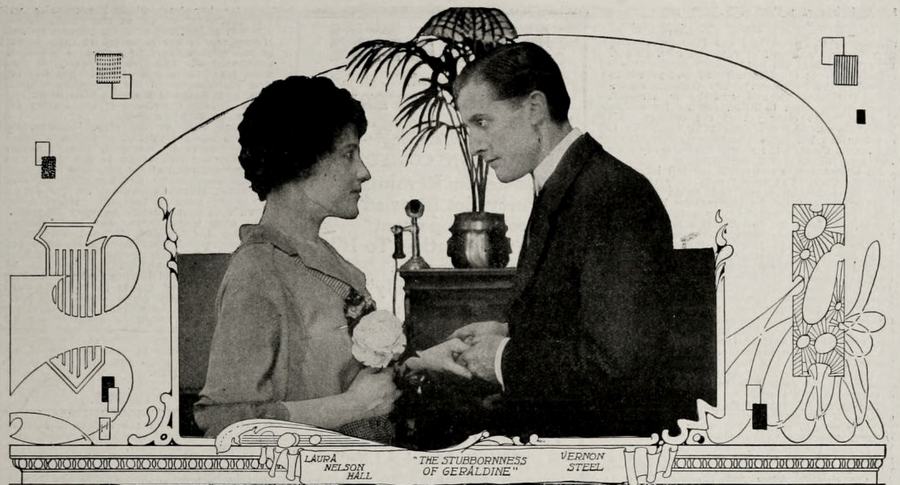
The film arrives like a letter you forgot you wrote to yourself—sealed with wax, smelling faintly of Danube mildew and Ritz-Carlton cigars. From the first iris-in on that embassy ballroom, director George Cowan weaponizes chiaroscuro as class warfare: diplomats in obsidian tailcoats swallow light while Geraldine’s pearl-sprayed gown ricochets it back, a refusal to be possessed. Laura Nelson Hall never lowers her eyelids—she lowers the temperature of the room. When her mask slips, the camera does not zoom; it inhales, as though cinematographer Louis Ostland feared exhaling might bruise the moment.
Clyde Fitch’s scenario, posthumously shot, is a Möbius strip of reputational blood sport. The plot hinge—an old suicide in London—feels almost too modern, a #MeToo parable smuggled inside a 1915 Edison release. Yet the film refuses to prosecute the brother; it indicts memory itself, the way it can be weaponized by servants with grudges and governesses armed with newspaper clippings. Fraulein Handt, essayed by Daisy Belmore with the relish of a woman who has catalogued every crack in the patriarchy, becomes the first viral troll of American cinema.
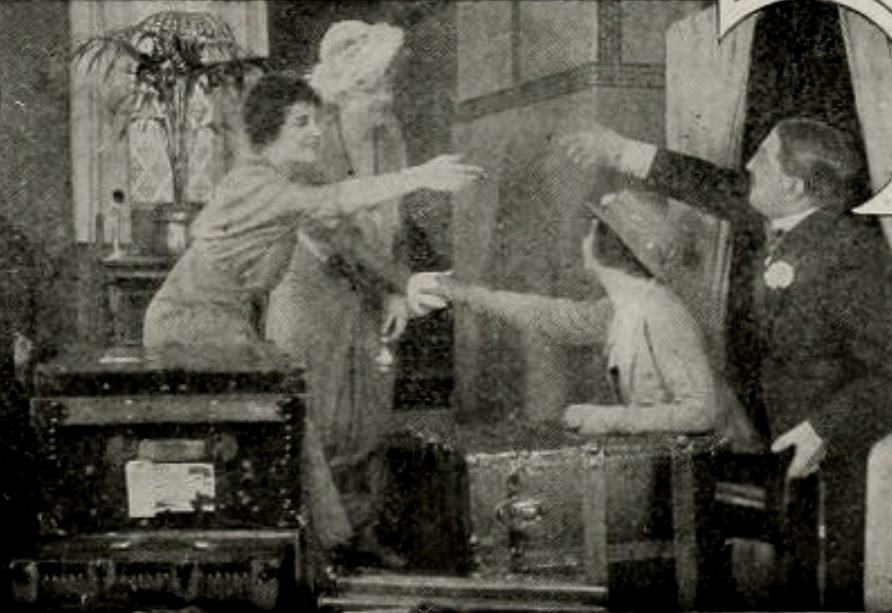
At sea, the mise-en-scène mutates. The liner’s second-class salon is a cathedral of tubular steel and vulcanized rubber—materials that will soon kill more men than any duel. Geraldine plays chess with a Hungarian terrier at her feet; Carlos, framed through a porthole, becomes a living cameo brooch. Their flirtation is conducted in ellipses: a glove dropped on a companionway, a book left on a deckchair, the wordless exchange of a bread roll. Fitch understood that desire in the nickelodeon era had to be synecdochic; the whole body is too scandalous, so a kneecap under a tartan rug must do the heavy lifting.
Then comes the sabotage: Handt’s whispered accusation ricochets from steerage to the captain’s table like a bullet in a battleship. Geraldine’s stubbornness crystallizes into a moral carapace. She will not ask Carlos to defend himself; she demands the universe provide exculpation ex nihilo. Hall’s performance here is a masterclass in negative space—she acts by refusing to act, letting the silence balloon until it squeaks against the edges of the frame. Watch her hands in the letter-writing scene: they hover above the stationery like two snowy owls that cannot decide whether to perch or strike.
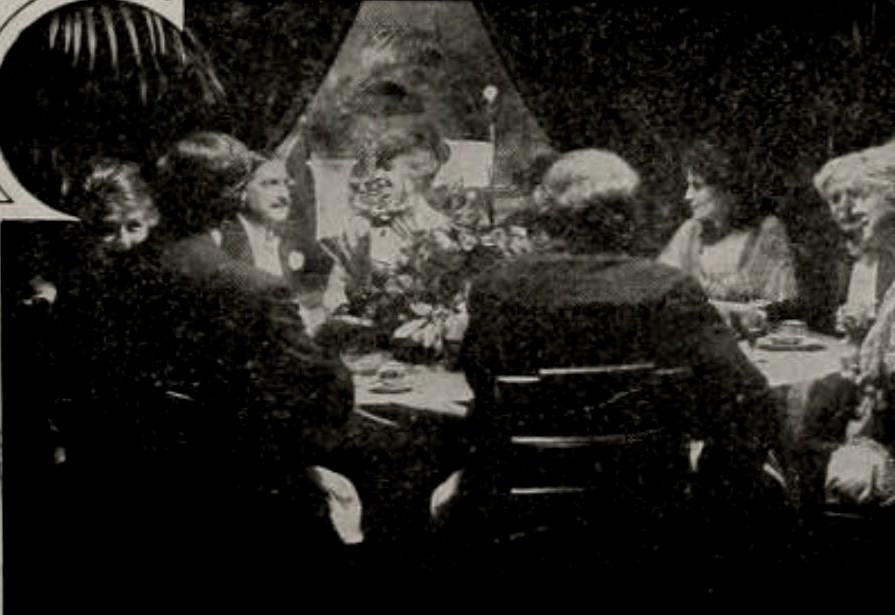
Meanwhile, the Count’s vineyard—shot on location in Tokaj—becomes a character. The vines, gnarled like the plot, are strung with dessicated grapes that look suspiciously like shriveled hearts. Cinematographer Ostland overlays the vineyard scenes with a cyan tint that makes the foliage appear submerged, as though the entire hillside were a shipwreck of some forgotten love affair. When Carlos hacks at the rootstock with a sickle, the film achieves a perverse communion: blood from his palm drips onto the graft, a pagan baptism that will eventually yield the vintage of absolution.
The climax is not a kiss but a delivery: a leather portfolio stamped with the double-headed eagle, carried across the ocean by a messenger whose face we never see. Inside, a deposition, a signature, a seal. The moment Geraldine’s gloved finger cracks the wax, the film cuts to an insert of the suicide’s balcony—now empty, curtains billowing like a ghost giving up the haunt. Fitch denies us the courthouse scene; instead, he gifts us a harvest festival. Peasants in embroidered vests twirl to a czardas; the camera pirouettes with them, drunk on the sudden lightness of being wronged and then un-wronged. Geraldine’s final smile is not surrender; it is acknowledgment that stubbornness, like terroir, needs time to mellow into wisdom.
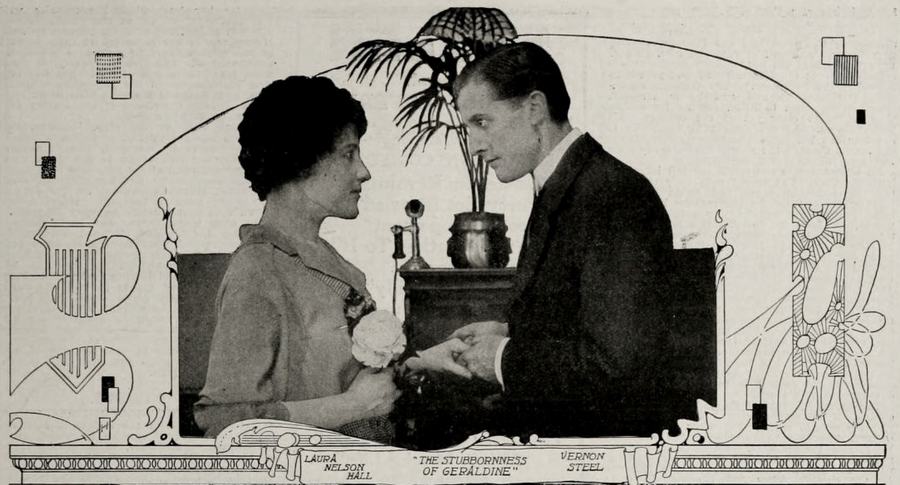
Compare this redemption to Anna Karenina (1914), where the train becomes the guillotine of female desire, or to The Golden Chance, where DeMille turns marriage into a stock-exchange. The Stubbornness of Geraldine dares to imagine that reputational death can be undone, that a woman may refuse the sacrificial script and still harvest joy. The film’s politics are not utopian; they are restitutional.
Vernon Steele, as Carlos, has the impossible task of acting while shackled to a monocle. He solves it by letting the monocle slip at crucial beats—a tiny glass curtain fall that reveals the pupil’s tremor. When he finally clasps Geraldine’s hand among the vines, the monocle is gone, pocketed like a superfluous nation. The gesture reads as a man divesting himself of surveillance itself.
The film survives only in a 35 mm nitrate print at the Library of Congress, riddled with Dutch tilts and water stains that resemble aerial maps of old empires. Yet those scars feel curatorial: history’s own marginalia. The tinting—amber for New York, viridian for the Atlantic, rose for the vineyard—has faded into bruise-like gradients, as though the reels themselves were blushing at the melodrama they contain.
In the最后 shot, the lovers recede into a tunnel of vines, the camera craning up until the foliage forms a Gothic arch. It is a reverse immaculate conception: not the birth of a god, but the birth of two mortals into a future scrubbed clean of scandal. The stubbornness that once walled Geraldine inside herself becomes the keystone of a new doorway. And the film, like a good Tokaj aszú, finishes with a hint of noble rot—an aftertaste that reminds us redemption is never sterile; it ferments in the very wounds that once seemed fatal.
IMDb 5.2
1934
Community
Log in to comment.