Summary
In the candle-smoked corridors of a brittle Valois court, Richelieu—scarlet spider, cardinal-cipher—spins silk from absolution; he unthreads the Languedoc rebels with a parchment sigh, sparing every throat save that of Adrien de Mauprat, the wolf-captain who stormed a town on private thunder. To the block-eyed youth the prelate proffers a single exit visa: charge the Spanish tercios, bleed out beneath a flag, earn a posthumous halo. Yet war, capricious sculptress, carves the obverse: instead of a martyr’s notch on some Flemic ditch, de Mauprat harvests laurels, limping home alive—his heart a hollow drum for Julie, Richelieu’s porcelain ward, whose pulse syncopates only for him. Into this trembling triangle slithers Baradas, the King’s perfumed lapdog, a peacock with adder’s eyes; coveting Julie, he drips slander like venomous dew until Versailles whispers that the battlefield hero is a revenant traitor. Julie, summoned to court, becomes a mirror in which the vacillating monarch preens, forgets, then imprisons her. Beneath gilded grids the nobles sharpen betrayal: a scroll to Madrid, France bartered for a throne. De Mauprat, duped by forged letters, believes his promised bride and the Cardinal both perfidious; he inks his name among the regicides. When the hour of daggers tolls, conscience erupts—he races through torch-whipped corridors, intercepts the blades meant for Richelieu, exposes Baradas, and offers his own neck to the King. Richelieu, ever the card-sharp of statecraft, trades the incriminating parchment for one life, two wedding rings, and a kingdom intact. Dawn finds the lovers on a river barge, exile swapped for a pardon, the cardinal’s thin smile vanishing into morning mist like a conjurer’s last candle.
Synopsis
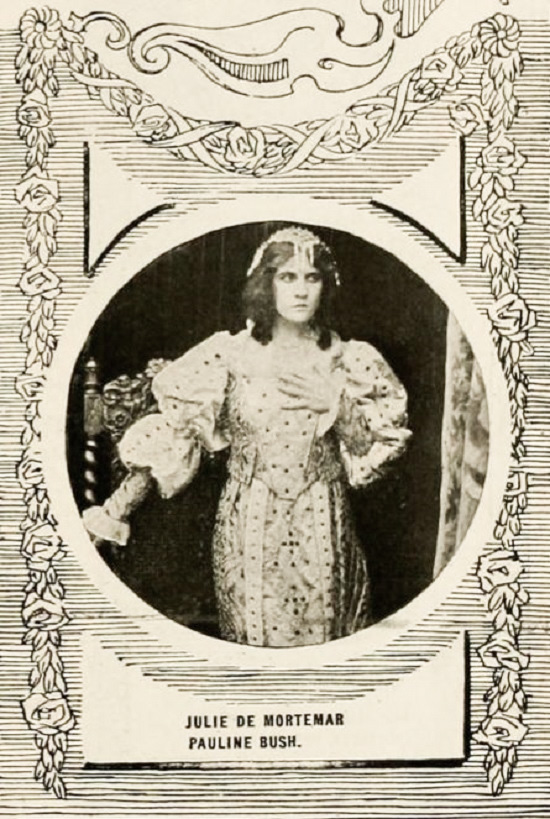
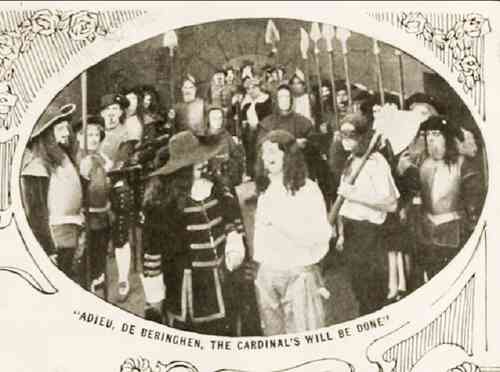
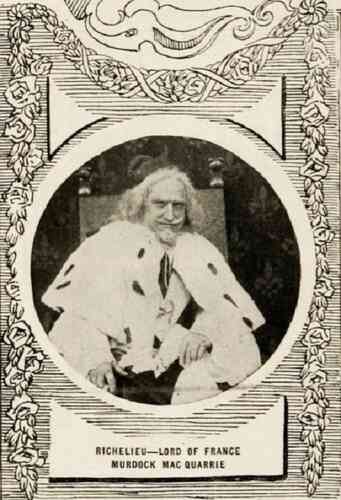
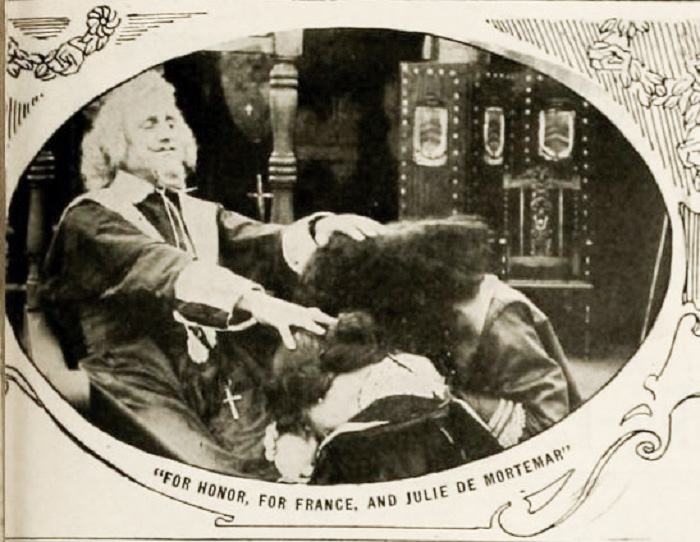
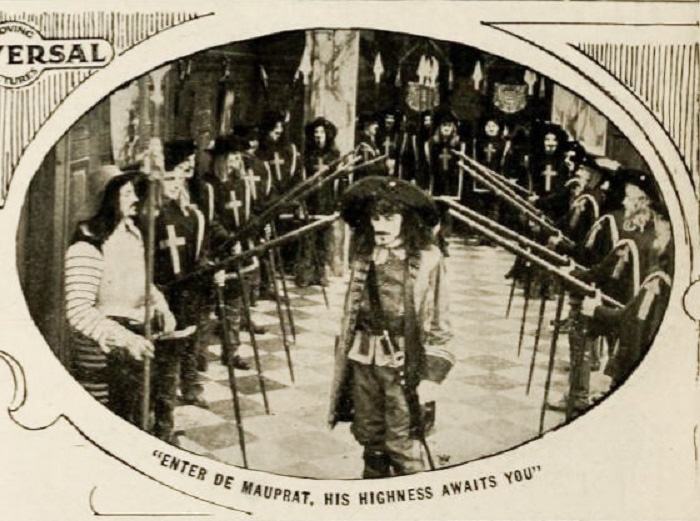
With the opening of the story Richelieu pardons the Duke of Orleans and all his followers in the Languedoc revolt, save one. The exception is Adrien de Mauprat, because he seized a French town without his leader's orders. Richelieu advises him to lead his troops against the Spaniards and seek honorable death in battle. Julie, Richelieu's ward, loves de Mauprat, but notwithstanding her entreaties, the Cardinal is relentless; de Mauprat courts death on the battlefield. But now that he seeks death, it shuns him; instead of a soldier's grave, he wins glory. Julie has another admirer, Haradas, the King's favorite. Aware of de Mauprat's place in Julie's affections, he sets himself to bring discredit upon his rival. Later, Julie, at the King's request, attends court. She makes a deep impression upon the weak-minded, fickle monarch. A year after the departure of de Mauprat, Baradas and his followers conspire to murder Richelieu and seize the throne of France. At this critical time de Mauprat returns, famous in battle, sad of heart and loathing Richelieu. Thus he becomes a ready member of the conspirators. However, Richelieu hears of his arrival and of the conspiracy and has him arrested. In the meantime, Julie has returned from court and again appeals for de Mauprat's life. Thus, when de Mauprat is ushered into the Cardinal's presence, instead of hearing his death sentence, he is informed that he will marry Julie the following day. Hearing of this the King is violently angry: Julie is summoned to appear at court. Once there she is virtually held prisoner and her marriage is declared invalid. The false Barad is convinces de Mauprat that he has been tricked by Richelieu. De Mauprat swears vengeance and again joins the conspirators, all of whom sign a scroll addressed to the Spaniards offering to deliver France into their hands. From here the story develops with plot and counterplot. How de Mauprat discovers his tragic mistake in thinking the Cardinal has double-crossed him, how he manages, through a heroic effort, to save the old man's life, how de Mauprat falls into the hands of the King and is only saved by a master stroke of diplomacy on Richelieu's part, the death of the scheming Baradas and the final achievement of happiness for the young lovers, Julie and de Mauprat, makes up the essential points of the story.
Review Excerpt
"
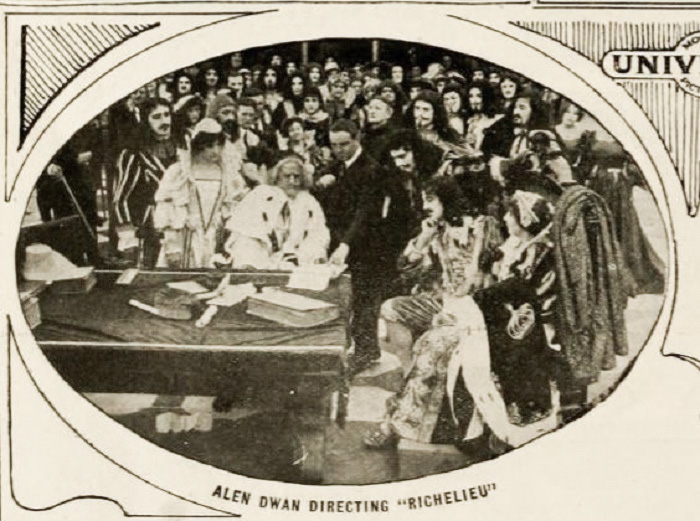
A cathedral of shadows, celluloid incense, and one cardinal who gambles kingdoms like poker chips—welcome to Allan Dwan’s Richelieu, a 1914 phantasm that feels far older than its century.
The film arrives like a whispered confession from a forgotten confessional: Edward Bulwer-Lytton’s fustian stage play, stripped of velvet verbosity, distilled into stark visual psalms. Intertitles flare, then vanish, leaving only the quiver of Pauline Bush’s mouth or the mercury glint in James Robert Chandle..."