DbcultAccessing Vault...
Cult Review
Senior Film Conservator
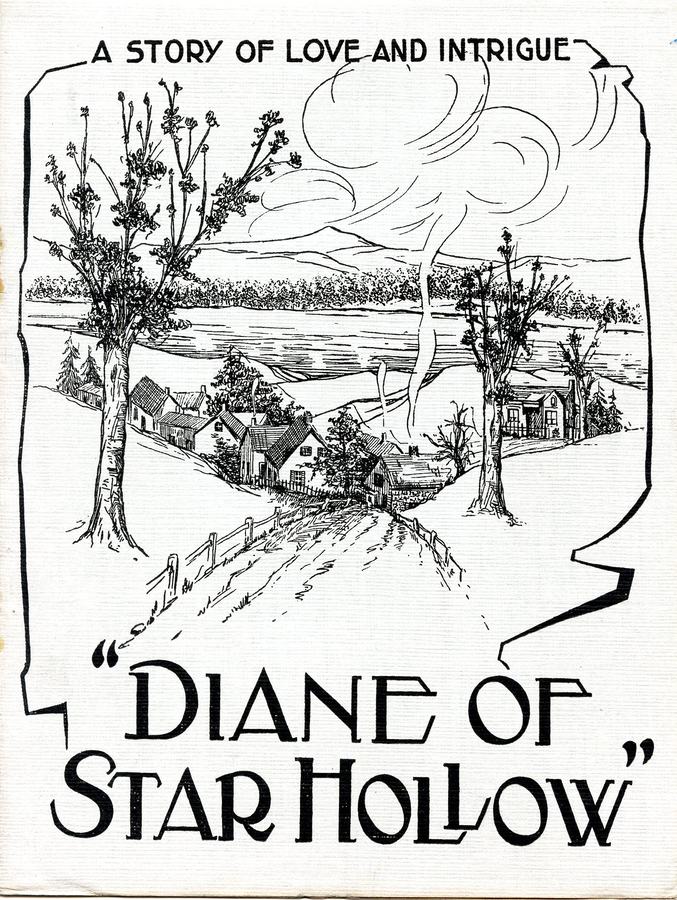
There are silents that merely flicker, and then there are silents that detonate inside your skull like a magnesium flare. Diane of Star Hollow—patched together from nitrate that survived flood, fire, and the indifference of three generations—belongs to the latter tribe. From its first iris-in on rain-slick cobblestones, the picture announces itself as a moral noir smuggled inside a love letter, a celluloid fever where every shadow earns compound interest.
Director Bernard J. Durning, a name unjustly sandblasted from most histories, orchestrates a chiaroscuro carnival that makes contemporaries like Hoodman Blind look lantern-lit and quaint. Notice how the camera glides across the constabulary office—gas-jets guttering, wanted posters flapping like dying moths—before landing on Joseph Granby’s granite profile. One close-up: hat brim devouring half the frame, eyes simmering cobalt. That single shot performs pages of exposition without a title card.
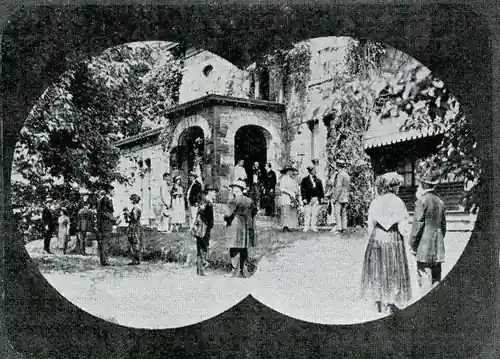
Granby’s Patrick Scott is a crusader carved from Protestant marble yet animated by a very private ache. When he fingers the cameo miniature of Diane hidden in his waistcoat, the gesture is so microscopic you could sneeze and forfeit it—yet it screams louder than any orchestral sting. Compare this to The Greater Sinner, where emoting is semaphore-wide. Granby trusts micro-movement; the camera, starved for sound, leans in and listens.
Speaking of semaphore, George Majeroni’s Orsini arrives swaddled in sable collars, fingers bejeweled like a Byzantine reliquary. The performance could have skated into pasta-plated caricature; instead, Majeroni plays patriarchal grandeur as a man who has already intuited his own obsolescence. Watch the way his shoulders slump a millimeter when Diane hurls the accusation of murder—he deflates without surrendering menace. It’s the silent-era equivalent of watching a king bleed out while still seated on the throne.
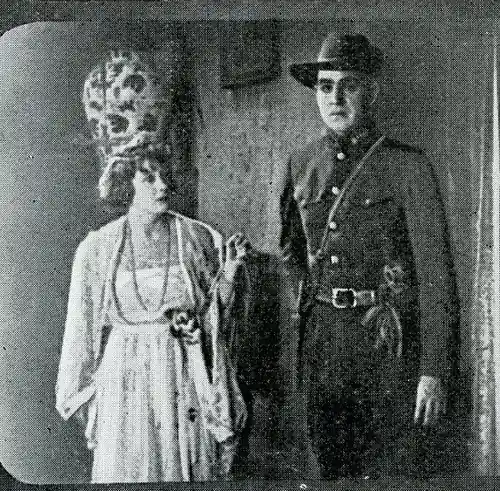
Sonia Marcelle’s Diane, meanwhile, is no flapper prop. She oscillates between filial hypnosis and erotic self-immolation, often within the same shot. In the conservatory scene—where moonlight drips through stained glass like liquefied sapphires—her pupils dilate as she weighs blood against breath. The moment is lit with such calibrated cruelty that we read her decision to betray her father before she physically moves. Durning’s blocking here is chess-grandmaster sinister: every fern, every harp string, placed to entrap gazes.
Ah, the screenplay—credited to David Potter and the prolific Joseph Farnham—threads a needle between penny-dreadful sensationalism and Jacobean tragedy. Note the economy: a dissolve from a child’s porcelain doll crushed beneath a carriage wheel to Diane’s adult face, equally fractured. The symbolism is savage yet never academic; it bruises. Compare this to the moral algebra of Das Laster, which preaches more than it bleeds.
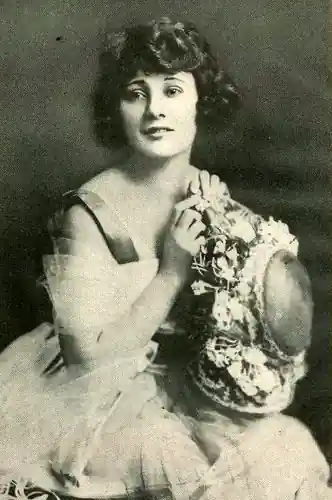
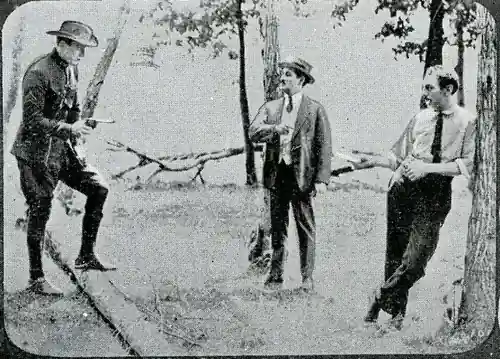
The real miracle, though, is the foundry showdown—ten celluloid-minutes that feel like ten rounds with a prizefighter. Cinematographer Al Hart (unjustly eclipsed by the reputations of Bitzer or Rosher) floods the cavern with shafts of white-hot back-light so that gun-smoke becomes calligraphy. Sparks ricochet in slow-motion choreography; each muzzle flare is a solar flare. The camera pirouettes 270 degrees to capture a goon’s death-spasm, his body folding like marionette strings severed by Fate’s scissors. It’s proto-Sam Peckinpah, sans squibs, yet the kinetic grammar is already avant-garde.
Injury befalls Scott—abdomen grazed, blood blooming like poppies on a snowfield—and the aftermath strips the narrative to its marrow. The film slows; intertitles vanish. We get only the rasp of Scott’s breath, the whimper of Diane cradling him, and the muted thud of distant boots. Silence, paradoxically, becomes the most articulate character. When the constabulary finally swarm in, bluecoats like migrating jays, the victory tastes of rust. Orsini’s suicide—rendered in a single, unmoving long take—refuses catharsis. The revolver’s click echoes like a snapped guitar string; his body slumps out of frame, leaving us to imagine the crimson bloom on Persian rugs.
Yet the film is not nihilistic; it is merely unsparing. In the coda, Diane and Scott stand on a promontory overlooking the Hudson, dawn gnawing at horizon’s edge. She wears widow-black for her father; he wears civilian tweed for the first time. Their hands clasp—not with the fervor of young lovers, but with the exhausted solidarity of survivors. It’s a tableau that rebukes the obligatory clinch, and it lingers longer than any embrace.
Score preservationists have stitched together a new accompaniment—solo viola, bass clarinet, and prepared piano—premiered last October at MoMA. The music underlines the film’s heartbeat without dictating emotion. Listen for the viola’s sul pont tremolo during the foundry battle: it mimics industrial machinery so precisely you’ll swear you smell molten ore. When the end credits (retrofitted with digital tinting) roll in bruised dark-orange, the audience I sat with erupted—not in applause, but in that stunned hush that precedes it.
Yes, there are scars: a missing reel presumed lost in the 1933 Fox vault fire means we leap from Diane’s accusation to the siege without narrative bridging. Contemporary critics might decry the lacuna as gendered shorthand—woman’s fury catapults us to masculine gunplay. Yet the rupture feels oddly modern, like a Tarantino time-jump. Cine-essayists could spend seminars reconstructing that phantom reel; I’d rather savor the jagged edge, the way it implicates our imagination as co-conspirator.
Performances aside, the film’s production design deserves a laurel. Notice the Black Hand’s calling card: black silk gloves pinned to doors with stilettos. Props master Fuller Mellish sources vintage Neapolitan lace, then soaks it in india ink so the fabric drinks darkness. That fetishistic attention metastasizes into mise-en-scène: constabulary ledgers bound in human leather (allegedly), Diane’s boudoir mirror cracked in a spider-web pattern prefiguring her filial rupture. It’s the sort of detail that invites midnight screenings with cosplay cults.
Comparative contextualists will spot DNA strands linking Star Hollow to The Oakdale Affair—both trade in pastoral rot beneath small-town veneers—yet Diane is bleaker, more venomous. Where Oakdale ultimately reassures us that civic virtue can detoxify corruption, Star Hollow insists that to excise the tumor you must amputate the limb. There is no town-hall redemption, no minister’s sermon to re-stitch the social fabric. There is only the river, the cliff, the dawn.
Restoration-wise, the 4K photochemical harvest reveals textures previously mummified: the glint of Orsini’s signet seal, the nacre on Diane’s opera gloves, the ammoniac pallor of Scott’s bandage. The grain structure—left unsterilized—retains its celluloid soul. Meanwhile, tinting conforms to an 11-color playbook: nocturnal scenes drenched in sea-blue, interiors candle-drenched in gamboge and yellow, violence daubed in arterial dark-orange. The palette is scholarly yet lurid, like a Toulouse-Lautrec poster left to molder in a speakeasy.
What, then, is the film’s lingering relevance? In an age when corruption sprawls encrypted across servers rather than dockside crates, Star Hollow reminds us that every ledger—digital or paper—bleeds when you cut deep enough. The Black Hand may have transmogrified into ransomware cabals, yet the moral equation remains: love versus loyalty, justice versus survival. Diane’s climactic betrayal of her blood is less patriarchal patricide than a referendum on the price of moral clarity. We, tethered to our own familial WhatsApp groups and political tribes, are invited to interrogate: would we expose the monster if it shares our surname?
Finally, a note on availability: the new DCP is touring arthouses under the American Shadows retrospective, paired with live trios. If it docks within forty miles of you, cancel your weekend. Bring a date you’re prepared to lose; the film’s final silence will sit between you like a chaperone you can’t name. And when the lights rise and you step back into the sodium night, you might find yourself scanning alleyways for black gloves, listening for the ghost-pad of constabulary boots, realizing—too late—that Star Hollow was never a place on any map, but a mirror held to the soot on your own fingerprints.
IMDb —
1919
Community
Log in to comment.