DbcultAccessing Vault...
5.9/10
Senior Film Conservator
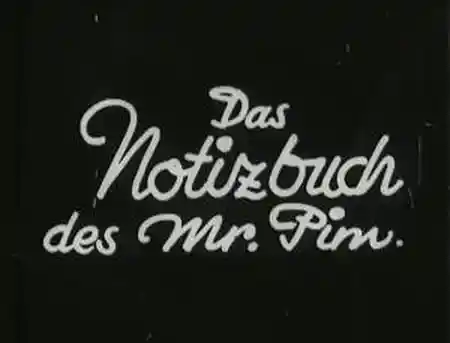
A definitive 5.9/10 rating for a film that redefined the boundaries of cult cinema. Das Notizbuch des Mr. Pim remains a cornerstone of transgressive art.
Okay, so Das Notizbuch des Mr. Pim isn’t your average Saturday night flick. If you’re looking for fast action or a neat, tidy plot with a big star, you’re probably gonna hate it. Skip it.
But if you’re into history, silent films, or just really good, observant social commentary? This is absolutely worth watching today. It’s a bit of a hidden gem, really. 🧐
The whole film is built around this wild idea: two completely different stories about 'beautiful old Vienna.' It’s like the movie itself is having an argument. Right there on screen.
You get these title cards, supposedly notes from a right-wing journalist. They talk about the 'golden heart of Vienna,' all this nostalgia for a time before workers had a say. It’s very much trying to sell you a dream.
Then, immediately after, the film just *shows* you something else entirely. Like, _right after_ that glowing text, BAM, a shot of a street crammed with terribly poor people. No golden hearts visible there.
The contrast is **stark**. It’s the film's main trick, and it works wonderfully. You can almost feel the movie pushing back against those pretty words.
One moment, you're reading about 'economic and cultural decline' because of workers. The very next, you're seeing images of capitalist exploitation that make your stomach churn a bit.
It’s not subtle, but it doesn't need to be. The film just lays it all out. You see grim living conditions, militarism, really tough poverty. And these aren’t just quick flashes; some of these shots linger.
There's this one sequence, I remember, where a title card describes 'das schone alte Wien' with all this poetic language. Then it cuts to a factory floor, just a sea of tired faces, all anonymous. You don't see any beauty there. Just hard work and grime.
And those faces, even without famous actors, they really stick with you. The camera just holds on them. No big dramatic close-ups, just a simple, honest look.
The way it jumps back and forth between the journalist's notes and the actual footage, it creates this incredible tension. It’s like the film is constantly reminding you: _don't believe everything you read_.
It gets you thinking about who writes history. And what gets left out. Or, more accurately, what gets *deliberately* painted over with a rosy brush.
There's a shot of what looks like a military parade, all pomp and circumstance. Then it quickly cuts to a family huddled in a really small, dark room. The implication is crystal clear, even without words. It's powerful.
It's not trying to make you feel any specific emotion, really. Just to see things. To think about them. It's more of an intellectual challenge than an emotional one.
Even though it’s a silent film from a century ago, its message feels super relevant. How we remember the past, how we *choose* to remember it, that’s a big deal.
The film isn't trying to be fancy. It's just very honest in its presentation. It's a bit like someone took a bunch of old photographs and news clippings and arranged them to tell a story, but also to _disprove_ another story.
It’s a masterclass in how to use visuals to make a point. And without a single spoken word, it says so much. It truly makes you reconsider what 'history' actually means. Or who gets to write it.
For those who appreciate such a deep, silent dive, it’s a compelling watch. Don’t expect Hollywood, expect something real. 🎬
IMDb 7
1933
Community
Log in to comment.