DbcultAccessing Vault...
Cult Review
Senior Film Conservator
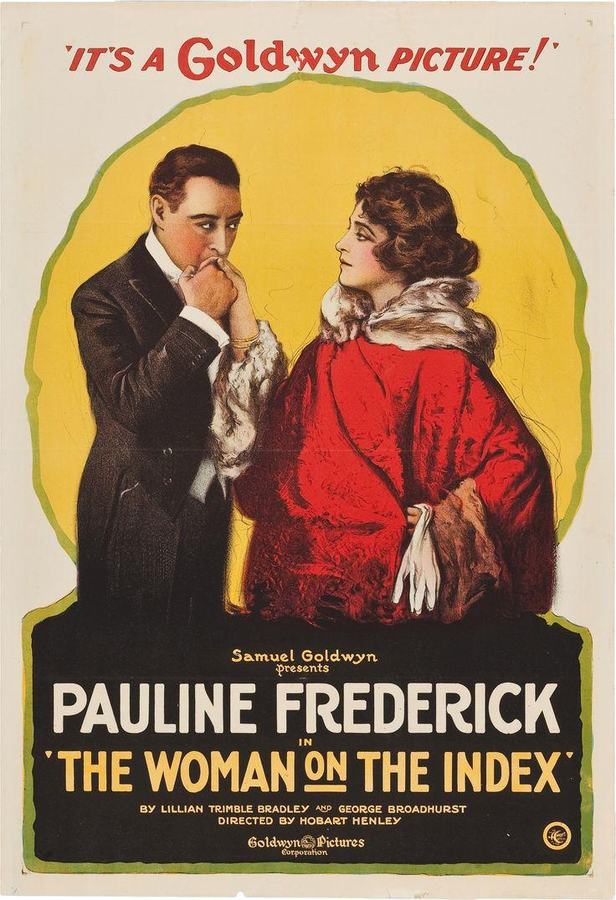
In the pantheon of silent era melodramas, few films capture the claustrophobic anxiety of social surveillance with the same vitriolic intensity as Hobart Henley’s 1919 production, The Woman on the Index. At a time when the world was reeling from the tectonic shifts of the Great War and the burgeoning Red Scare, this film serves as a chilling palimpsest of American paranoia and the fragile nature of female reputation. It is not merely a story of a woman with a past; it is a harrowing examination of how the state codifies identity, turning a person into a permanent record—an 'index' from which there is no escape. Pauline Frederick, an actress of unparalleled gravitas, delivers a performance that transcends the standard histrionics of the era, offering instead a portrait of a soul under siege.
The film opens with a sequence that mirrors the stark naturalism found in Out of the Darkness. Sylvia Martin’s flight from her abusive father is depicted with a gritty realism that sets the tone for the struggles to follow. When she collapses on the doorstep of Louis Gordon, the audience is momentarily led to believe this is a fairy-tale rescue. However, the narrative quickly subverts this, as Gordon’s criminal lifestyle becomes the very cage that will eventually trap her. The cinematography utilizes shadow and light to emphasize Sylvia’s gradual entrapment within Gordon’s world, a visual motif that recurs throughout the film.
The central conceit of the 'Index' is where the film finds its most potent thematic resonance. In an age before digital databases, the idea of a physical book containing the names of the 'socially undesirable' was a terrifying reality. Much like the titular symbol in The Scarlet Letter, the Index serves as a mark of Cain. Even after Sylvia is acquitted of Gordon’s murder, the bureaucratic machine refuses to exonerate her. Her name remains in the ledger, a dormant virus waiting for the right conditions to strike. This theme of inescapable history is a haunting precursor to modern discussions regarding the 'right to be forgotten' in the digital age.
As the plot transitions into the high-stakes world of Washington diplomacy, the film shifts gears from domestic melodrama to a proto-noir espionage thriller. The introduction of Hugo Declasse, the Bolshevik agent, brings a sense of contemporary urgency to the narrative. One cannot help but compare this segment to the intricate web of deceit found in The False Faces. However, where The False Faces leans into the adventure of the spy genre, The Woman on the Index remains focused on the psychological toll of double-dealing.
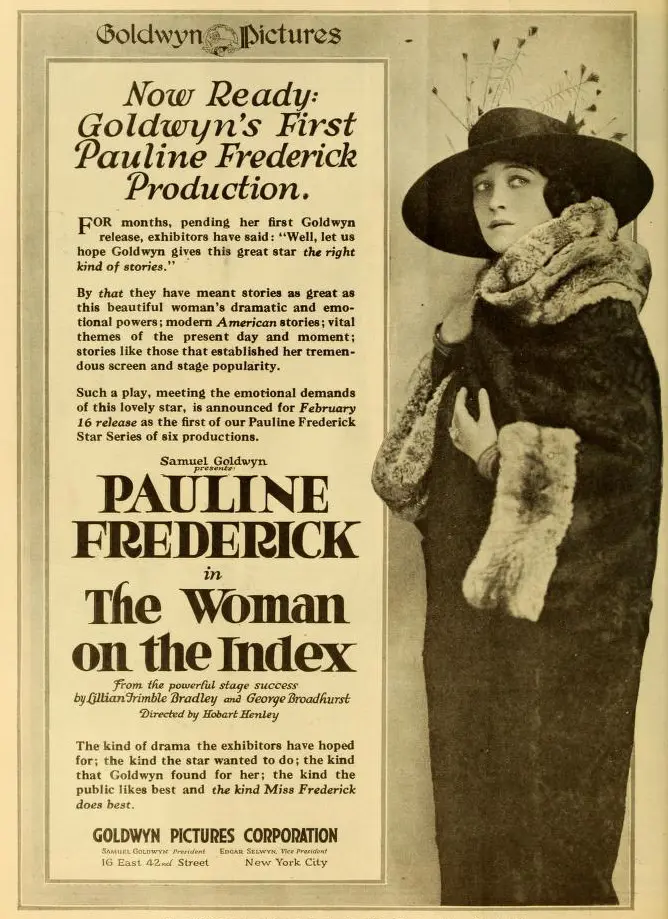
John Alden, the Secret Service chief, represents the cold pragmatism of the state. His willingness to use Sylvia’s past as leverage is a damning indictment of the 'patriotism' he claims to serve. He doesn't see Sylvia as a human being seeking redemption; he sees her as a tool—a skeleton key to unlock Declasse’s secrets. The interplay between Frederick and the rest of the cast, particularly Willard Mack (who also contributed to the writing), is electric. The tension in the scenes where Declasse threatens to expose her is palpable, enhanced by the film’s clever use of close-ups that capture every flicker of terror on Frederick’s face.
Technically, the film is a marvel of its time. The set design of the Maber household, with its sprawling libraries and heavy drapes, creates an atmosphere of suffocating luxury. It contrasts sharply with the cold, barren streets of the prologue and the clandestine, smoke-filled rooms where the Bolsheviks plot their uprising. The visual storytelling here is much more sophisticated than in contemporary works like The Lonesome Chap, utilizing camera movement and framing to dictate the emotional flow of the scene.
One of the most striking sequences involves the discovery of the Index on David Maber’s shelf. The camera lingers on the leather binding, making the book itself seem like a living antagonist. The way Sylvia interacts with the object—half-drawn to it, half-repulsed—is a masterclass in physical acting. It reminds the viewer of the tension found in The Riddle of the Tin Soldier, where a single object holds the power to destroy an entire life. The lighting in these scenes often casts long, jagged shadows, perhaps a nod to the expressionist influences that were beginning to filter through from Europe, similar to the dark aesthetics in Das Geheimnis von Chateau Richmond.
What elevates The Woman on the Index above its peers is its refusal to fully lean into the 'fallen woman' tropes that dominated the era. In many films of the 1910s, a woman with a criminal past would be expected to suffer a tragic end to achieve moral equilibrium. However, this film offers a more nuanced resolution. Sylvia’s eventual forgiveness by her husband, David Maber, is not just a happy ending; it is a radical act of social defiance. It suggests that empathy can triumph over the rigid classifications of the state.
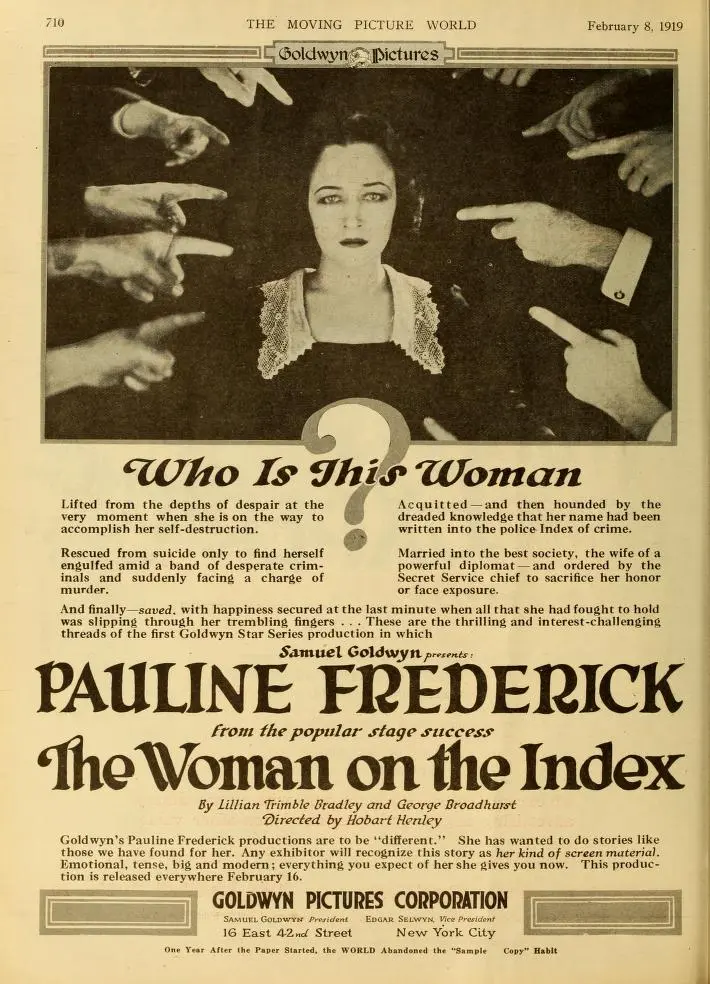
This theme of redemption is also explored in The Glory of Yolanda, but here it feels more hard-earned. Sylvia isn't just a victim of circumstance; she is a woman who makes difficult choices under impossible pressure. Her decision to assist the Secret Service isn't born out of a simple sense of duty, but out of a desperate need to reclaim her own narrative. The 'Japanese butler' twist, while a product of its time's specific orientalist tropes, serves a narrative function by highlighting the ubiquity of surveillance—no one is truly who they seem to be in this world of shifting loyalties.
Looking back at The Woman on the Index from a century's distance, its relevance is startling. While the 'Bolshevik uprising' might feel like a dated plot point, the underlying fear of a permanent, searchable record of one's past mistakes is more relevant than ever. The film stands as a testament to the power of silent cinema to tackle complex socio-political issues through the lens of individual suffering. It shares the thematic depth of The Sign of the Poppy in its exploration of the underworld’s reach into 'polite' society.
The performances, particularly by Frederick and Standing, ground the film’s more sensationalist elements in a palpable human reality. Frederick’s ability to convey a sense of 'dignity under fire' is what makes the film's conclusion so satisfying. She doesn't just survive the Index; she forces the men around her to acknowledge the injustice of its existence. In the end, the film is a powerful critique of any system that seeks to reduce a human life to a series of entries in a ledger. It is a cinematic cry for the possibility of New Love for Old, for the chance to start again regardless of the ink that has already been spilled.
Ultimately, The Woman on the Index is an essential watch for anyone interested in the evolution of the political thriller. It manages to balance the intimate stakes of a marriage with the global stakes of an international conspiracy, all while maintaining a laser focus on its protagonist's inner life. It is as much a character study as it is a genre piece, a feat that few silent films achieved with such consistency. Whether compared to the pastoral dramas like Under the Greenwood Tree or the more fantastical elements of Zongar, this film remains a singular achievement in 1919 cinema—a dark orange flame of defiance in a world of sea blue shadows.
IMDb 5.1
1919
Community
Log in to comment.