DbcultAccessing Vault...
7.2/10
Senior Film Conservator
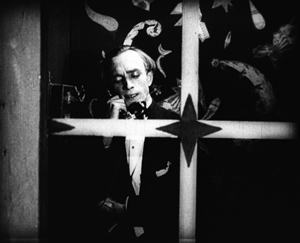
A definitive 7.2/10 rating for a film that redefined the boundaries of cult cinema. Die Liebschaften des Hektor Dalmore remains a cornerstone of transgressive art.
Richard Oswald’s Die Liebschaften des Hektor Dalmore slithered into cinemas during the summer of 1922, a moment when Europe still reeked of cordite and orgiastic desperation. Viennese authorities banned it within a fortnight, ensuring every alley projector from Budapest to Barcelona lusted for the forbidden reels. Viewed today, the film remains a bruise-toned jewel: part morality play, part velvet-gloved slap, part epidemiological fever chart of a continent coupling itself into oblivion. It is also a master-class in star semiotics—Conrad Veidt’s cheekbones alone deliver more erotic menace than most talkies manage with full Dolby surround.
There is no three-act spine here; instead Oswald stitches together a daisy-chain of tableaux vivants, each pinned to a different woman’s disillusionment. The camera glides through ballrooms that seem perpetually on the verge of becoming brothels, then slips into boudoirs already half morgues. Intertitles arrive sparingly, often superimposed over wallpaper patterns shaped like coiled serpents—an early instance of graphic design doubling as foreshadowing.
Hektor himself is introduced via a sustained close-up: cigarette smoke veiling his face, eyes glittering with the predatory patience of a man who has learned that every no contains the ghost of a yes. From there the film fractures into episodes named after perfume brands—Opium, Narcisse, Violetta—as though desire were merely a question of proper branding. The structure anticipates hyperlink cinema by seven decades, yet remains tethered to a feverish operatic pulse.
Cinematographer Axel Graatkjær (imported from Denmark for his knack for northern gloom) bathes Vienna in argent chiaroscuro. Streetlamps become coronas of moral contamination; snowflakes flicker like syphilitic spores. Interior scenes favor sea-blue gaslight that bruises skin into cadaverous pallor, while boudoirs glow with dark-orange tapers—a visual whisper that pleasure and putrefaction share the same wick.
The film’s most quoted shot—Hektor reflected in a shattered cheval mirror, each shard holding a different woman’s face—required on-set multiple exposures so intricate that production was halted for three days while technicians calibrated the crank speeds. The result is an image at once Cubist and Gothic, a prophecy of fractured identity that makes later Surrealist experiments feel timid.
Though released silent, the original première featured a live quartet directed by Willy Katt whose score oscillated between atonal shrieks and languid waltzes. Contemporary restorations often pair the film with compositions by Krenek or Weill; either choice amplifies the narrative’s brittle modernity. Listen for the contrapuntal use of celesta during seduction scenes—an innocent timbre made sinister by context, prefiguring the way Bernard Herrmann would later weaponize harps.
Oswald was no stranger to taboo. His earlier Half-Breed explored miscegenation hysteria, while The Painted Soul interrogated morphine addiction among painters. Here he folds venereal dread into erotic spectacle at a time when post-war Vienna registered one of Europe’s highest syphilis rates. The film’s working title was Die arme Syph; censors forced the change, yet microscopic images of spirochetes still appear superimposed over love scenes if you inspect the 35 mm nitrate closely enough.
Compare this with The Unwelcome Mrs. Hatch’s puritanical shaming or Jack’s masculine self-pity; Oswald refuses either redemption or damnation, opting instead for epidemiological determinism. Bodies transmit, governments moralize, the reel keeps spinning.
Critics of 1922 split along predictable lines: the Berliner Tageblatt praised its "unflinching surgical honesty," while the church-funded Kreuzzeitung deemed it "a hymn to the plague.” Audiences, unsurprisingly, queued around blocks. Yet prints vanished during the Anschluss; rumor claims Goebbels ordered the destruction of all Veidt vehicles showcasing sexual Entartung. A spliced 16 mm duplicate surfaced in Buenos Aires during 1957, missing two reels. Finally, a near-complete restoration premiered at Il Cinema Ritrovato in 2019, scanned at 4K from a Czech nitrate. Those ghostly syphilis micrographs now shimmer with unholy clarity.
A century later, dating-app culture has turned Hektor’s methodology into algorithmic efficiency. Replace horse-drawn carriages with Uber, calling cards with DM screenshots, and the plot slots neatly into contemporary mores. The film’s final shrug—no divine retribution, no moral ledger—anticipates today’s post-punitive ethos where scandal cycles last one newsbeat. We are all Hektor now, compiling bodies and metadata, trusting antibiotics and block buttons to keep the plague at bay.
Fast-motion during carnival montage feels rudimentary by today’s standards, yet the flicker imbues the sequence with stroboscopic panic. More impressive are the day-for-night exteriors shot along the Donaukanal; Graatkjær underexposed then tinted the positives cyan, achieving a hallucinogenic dusk that prefigures Nosferatu but with urban grit rather than folkloric gloom.
Budget constraints manifest in repeated sets—Hektor’s bachelor flat is redressed with different curtains to represent at least three paramours’ apartments. Obsessive viewers will spot the same cracked tile beside the stove, a tell-tale scar that becomes a covert motif for domestic interchangeability.
To call Die Liebschaften des Hektor Dalmore ahead of its time is to understate its perverse durability. It is neither cautionary nor celebratory; it is a velvet guillotine—soft to the touch, lethal on the neck. Oswald, ever the pragmatist, suggests the only antidote to desire’s contagion is the wisdom that tomorrow’s outbreak will forget today’s scars. Until then we keep dancing, keep swiping, keep screening this brittle poem of skin on skin, shadow on shadow, reel on reel.
Verdict: Essential viewing for cinephiles, historians of medicine, and anyone who has ever mistaken chemistry for destiny. Stream it legally via Deutsche Kinemathek’s digital portal or hunt the Edition Filmmuseum Blu-ray with the reconstructed Katt score. Your conscience may remain unshaken, but your pulse will not.
IMDb —
1917
Community
Log in to comment.