DbcultAccessing Vault...
Cult Review
Senior Film Conservator
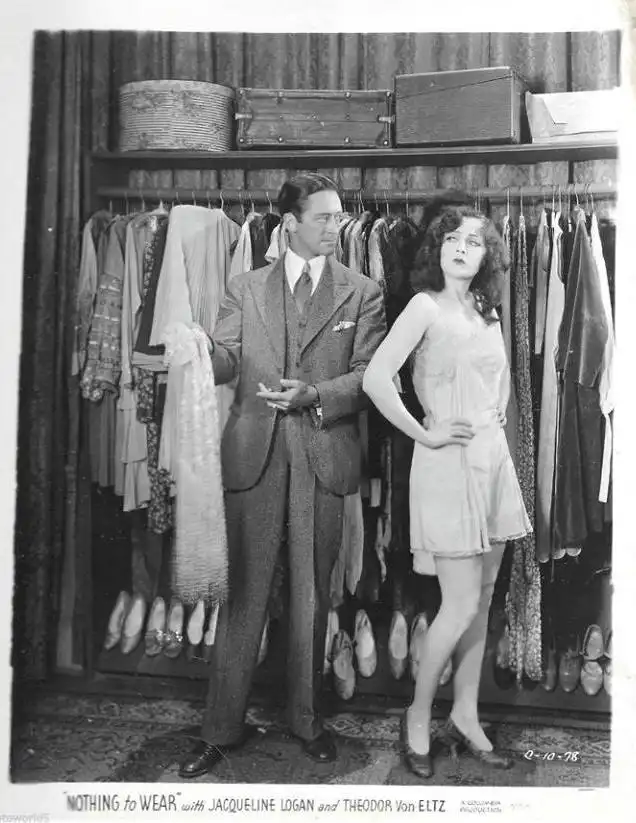
Is Nothing to Wear worth your time today? Only if you have a soft spot for the kind of domestic farces that dominated the late silent era—the ones where a single sentence of honest conversation would end the movie in five minutes. If you enjoy watching attractive people in 1920s evening wear get increasingly stressed about luxury goods, you’ll find it charming. If you’re the type of viewer who gets annoyed by characters making life-ruiningly stupid decisions for the sake of a gag, you should probably skip it.
The whole thing hinges on a fur coat. Jacqueline Logan plays Jackie Standish, and she spends the first ten minutes of the film looking at this coat with the kind of intensity most people reserve for a first-born child. Logan has these incredibly expressive eyes—sometimes too expressive. There’s a moment early on where she’s trying to coax her husband, Phil (Theodore von Eltz), into buying it, and she does this pouting routine that feels like it belongs in a different, much broader cartoon. It’s a bit much, but you can’t look away.
Theodore von Eltz is fine as the husband, though he plays it so straight that he almost feels like he’s in a different movie than everyone else. He’s very stiff, very 'proper businessman.' When he finally decides to buy the coat to make up with Jackie, he writes this note that is the catalyst for the entire mess. The handwriting on the screen is impeccably neat—suspiciously so—and the way the camera lingers on the paper feels like the movie is poking you in the ribs saying, 'Remember this! This is the plot!'
Then we get Tommy, played by Bryant Washburn. Washburn has this breezy, slightly oily energy that works perfectly for an ex-sweetheart who is probably bad news but very fun at a party. The scene where Jackie visits him to complain about her husband is weirdly staged. They’re sitting on a sofa that looks incredibly uncomfortable, and the way they lean toward each other feels rehearsed in a way that saps the tension out of the 'former flame' dynamic. You don't really buy that they were ever a couple; they feel more like two people who met in the lobby of a hotel five minutes before the cameras started rolling.
The middle of the film is a blur of 'who has the coat now?' It reminds me a bit of the frantic energy in Beware of Married Men, but without the sharp edges. There’s a sequence where the coat is being passed around like a hot potato, and the editing gets noticeably choppy. One second Jackie is holding it, the next there’s a jump cut that feels like a few frames were lost to time, and suddenly it’s in Tommy’s hands. It’s not 'experimental' editing; it just feels like the production was in a hurry.
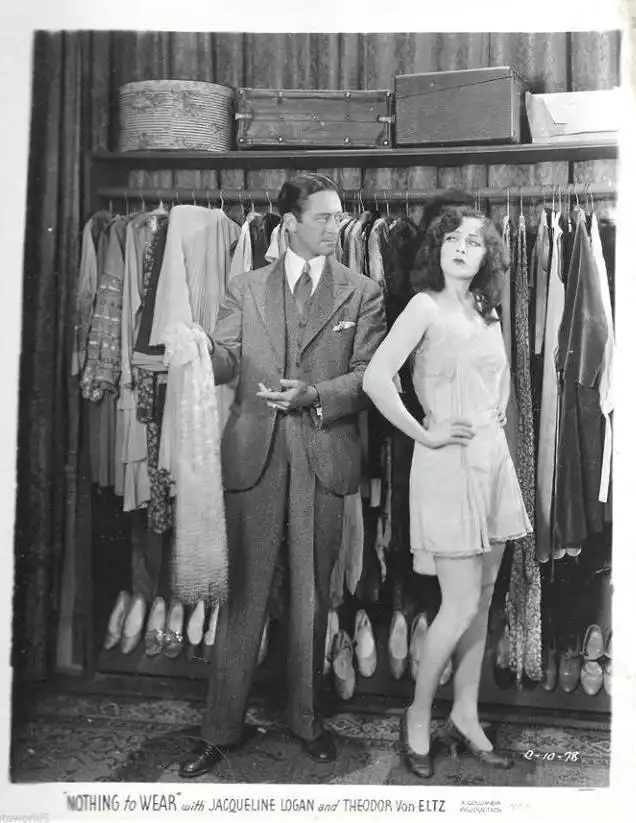
I found myself distracted by the background details. The Standish apartment is filled with the kind of clutter that makes you realize how much 'stuff' people had in 1928. There’s a lamp in the corner of the living room with a fringe so long it looks like it’s trying to escape. And the knitwear! The sweaters in this movie are the real stars. There’s a scene with Tommy’s actual sweetheart, Irene (Edythe Flynn), where she’s wearing a patterned cardigan that I would honestly buy today if I saw it in a shop.
Irene is actually the most sympathetic person in the movie. When she thinks the coat is for her, her joy is actually quite sweet, which makes it feel a bit mean-spirited when the movie treats her as just another obstacle in the plot. Edythe Flynn has a much more naturalistic acting style than Logan. She doesn't do the 'silent movie eyes' as much, and she feels like a real person who just happened to walk into a ridiculous situation. Her reaction when she realizes the coat isn't hers is one of the few moments that actually felt grounded in a real emotion.
The pacing drags in the second act. There’s a long stretch where characters are just walking in and out of rooms, narrowly missing each other. It’s classic farce, but it goes on about three minutes too long. You start to notice the artifice of the set—the doors that don’t quite close right, the way the light from the 'windows' doesn't match the shadows on the floor. It’s not a big deal, but when the comedy isn't hitting high gear, your mind starts to wander to the carpentry.
It’s interesting to compare this to something like Stage Struck. Both movies deal with these heightened, almost frantic desires, but Nothing to Wear feels smaller, more contained. It’s a 'living room' comedy. It doesn't have the visual ambition of some of the bigger silents from that year, but there is one shot near the end—a close-up of the fur texture against Jackie’s face—that is surprisingly beautiful. The way the light catches the individual hairs of the coat makes you understand, just for a second, why she was so obsessed with it.
The resolution is exactly what you expect. Everyone gets back with the person they belong with, the coat is accounted for, and the misunderstandings are cleared up with a few laughs. It’s a very tidy ending. Maybe too tidy. The movie spends sixty minutes building up this web of lies and then untangles it in about sixty seconds. It feels like the director realized they were running out of film and just told everyone to hug and look happy.
In the end, Nothing to Wear is a minor work. It’s not going to change your life, and it’s not a lost masterpiece of the silent era. But it’s a fascinating look at 1928's obsession with status and the weird, performative nature of marriage in these old comedies. It’s a movie that is exactly as heavy as the coat it’s named after—looks expensive, feels soft, but ultimately it’s just something to keep you warm for an hour.
IMDb —
1931
Community
Log in to comment.