DbcultAccessing Vault...
Cult Review
Senior Film Conservator
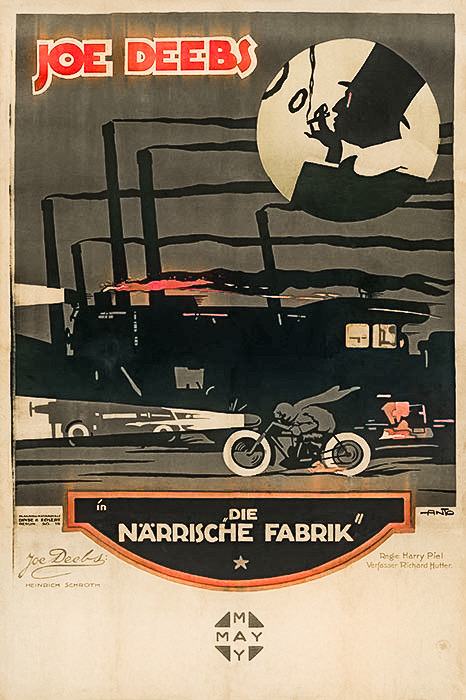
The German silent cinema, a crucible of artistic innovation and technical prowess, frequently offered narratives that transcended mere entertainment, delving into the socio-economic anxieties and technological marvels of its time. Among these cinematic gems, Die närrische Fabrik (The Foolish Factory), a collaborative effort featuring the multifaceted talents of Harry Piel, Heinrich Schroth, Richard Hutter, and Joe May, stands as a fascinating testament to this era. Released during a period of rapid industrial expansion and societal flux, the film is more than just an adventure; it's a vibrant, almost frenetic, exploration of human ambition, mechanical ingenuity, and the often-absurd dance between progress and avarice. It captures a moment when the factory floor was both a symbol of utopian promise and a potential site of dystopian chaos, a sentiment echoed in many artistic endeavors of the Weimar Republic. Piel, known for his audacious stunt work and dynamic screen presence, injects the film with an almost palpable energy, transforming the industrial setting into a playground for peril and daring escapes. This isn't just a story told; it's an experience choreographed amidst the clatter and whir of machinery, a true spectacle that utilizes its environment to its fullest dramatic potential.
At the core of Die närrische Fabrik lies a compelling clash of wills and ideologies. Dr. Max Ingenieur, portrayed with an endearing blend of intellectual fervor and physical agility by Harry Piel, is the quintessential eccentric genius. His mind, a veritable forge of innovation, has conceived an automated factory system so advanced it borders on the fantastical, promising an era of unparalleled efficiency and perhaps, a new social order. Ingenieur is not merely an inventor; he is a dreamer, a man whose creations are born from a genuine belief in progress. His factory, with its intricate network of gears, conveyor belts, and steam-powered contraptions, is less a sterile industrial complex and more a sprawling, mechanical organism, a testament to his unique vision. However, this vision is not without its predators. Enter Herr Direktor Stahl, brought to life with chilling precision by Heinrich Schroth. Schroth, a master of nuanced villainy, imbues Stahl with a cold, calculating ruthlessness that perfectly counterpoints Piel's spirited idealism. Stahl is the embodiment of unchecked capitalist ambition, viewing Ingenieur’s invention not as a tool for societal betterment, but as a means to consolidate power and accrue unimaginable wealth. His methods are as Machiavellian as his motives are transparently self-serving, setting the stage for a dramatic conflict that transcends personal animosity, touching upon deeper philosophical questions about the ethics of industrial power and intellectual property. The film masterfully builds this tension, transforming abstract concepts into tangible, high-stakes drama played out against a backdrop of ceaseless mechanical motion.
What truly elevates Die närrische Fabrik beyond a simple thriller is its ingenious use of its primary setting: the factory itself. Under the directorial guidance of Joe May and the creative input of Piel and Hutter, the industrial complex ceases to be a mere backdrop and becomes an active, almost sentient, character in the unfolding drama. Its towering smokestacks loom ominously, its cavernous halls echo with the rhythmic clang of machinery, and its labyrinthine passages become a deadly maze. Piel, ever the daredevil, utilizes every inch of this environment for his spectacular stunts. He scales precarious ladders, navigates dangerous catwalks suspended over churning vats, and dodges massive pistons with an almost balletic grace. This physical engagement with the environment is reminiscent of the thrilling escapades seen in other early action films, though perhaps with a more pronounced industrial aesthetic. One might draw a thematic parallel to the environmental challenges faced by characters in films like South, where the harsh natural world becomes an antagonist, but here, it is the man-made industrial landscape that presents the most immediate and thrilling dangers. The factory’s machinery, designed for production, is ingeniously repurposed by both Ingenieur and Stahl as instruments of chase and evasion. A conveyor belt might become a rapid escape route, a steam pipe a sudden curtain of obfuscation, or a massive gear an impending threat. This dynamic interplay between human action and mechanical reaction imbues the film with a unique visual language, highlighting the sheer scale and overwhelming power of industrialization. It's a visually stunning and kinetically charged experience that keeps the audience on the edge of their seats, captivated by the sheer ingenuity of its set pieces.
Harry Piel's performance as Dr. Max Ingenieur is nothing short of captivating, a masterclass in physical acting and understated charisma. Piel, who also contributed to the screenplay, clearly understood the unique demands of his character and the visual storytelling inherent in silent cinema. He doesn't just play Ingenieur; he embodies him, infusing the role with a blend of intellectual vulnerability and surprising resilience. His stunts, a hallmark of his career, are not gratuitous displays of bravado but integral components of the narrative, each perilous leap and daring escape serving to advance the plot and heighten the tension. Unlike the more traditional detective work seen in films such as The Hound of the Baskervilles, where cerebral deduction is paramount, Piel's hero relies on a blend of quick thinking, inventive contraptions, and sheer physical prowess. His agility and fearlessness are particularly striking when he is navigating the treacherous innards of the factory, a human counterpoint to the relentless, impersonal machinery. His ability to convey complex emotions and motivations through gesture and expression, without the aid of spoken dialogue, is a testament to his skill as a silent film actor. One might even see elements of the resourceful, quick-witted protagonist found in adventure serials, but with a distinctively German, industrial-age twist. Piel’s Ingenieur is a hero for the modern age, a man whose intellect is matched only by his daring, making him an enduring figure in the pantheon of silent cinema’s action heroes.
The collaborative spirit behind Die närrische Fabrik is evident in its nuanced direction and intricate plotting. Joe May, a prolific director and producer of the era, whose influence stretched across various genres, brings a polished sensibility to the film's overall aesthetic. May was known for his meticulous attention to detail and his ability to craft engaging narratives, often with a strong sense of suspense. His experience in detective films and melodramas, as seen in his earlier works, undoubtedly contributed to the film’s taut pacing and dramatic structure. Alongside May, the contributions of Richard Hutter and Harry Piel to the screenplay are crucial. Hutter, a frequent collaborator with Piel, understood the actor's strengths and tailored the narrative to showcase his unique blend of action and charm. Piel himself, with his hands-on approach to filmmaking, ensured that the action sequences were not only thrilling but also logically integrated into the story, making them feel organic rather than merely tacked on. This synergy between director, writer, and star results in a film that feels remarkably cohesive and well-executed. The decision to frame the narrative around an industrial setting, rife with both promise and peril, speaks to a collective awareness of the era's technological anxieties and aspirations. The visual storytelling, characteristic of German Expressionism which was gaining traction, is subtly woven into the fabric of the film, particularly in the dramatic use of light and shadow within the factory's vast spaces. The interplay of these creative minds forged a film that is both a thrilling adventure and a thoughtful commentary, a testament to the collaborative power of early German filmmaking.
Beyond the thrilling chases and daring escapes, Die närrische Fabrik delves into profound thematic territory, offering a compelling critique of early industrial society. The film’s title itself, "The Foolish Factory," is pregnant with meaning, suggesting a commentary on the inherent absurdities or moral failings that can accompany rapid technological advancement. Is the factory foolish because of its grand, perhaps impractical, automation? Or is it foolish because of the human greed that seeks to exploit such innovation? The film leans towards the latter, portraying Herr Direktor Stahl as the embodiment of this folly. His relentless pursuit of Ingenieur’s invention, devoid of any genuine appreciation for its potential societal benefits, highlights the corrupting influence of unchecked ambition. This thematic exploration sets it apart from simpler adventure narratives, aligning it more with films that dared to question the march of progress. While not as overtly satirical as some later works, it shares a spirit of critical observation with films that explore the human cost of ambition. The film subtly asks: at what point does innovation cease to be a tool for betterment and become a weapon in the hands of the unscrupulous? The contrast between Ingenieur’s idealistic vision and Stahl’s pragmatic avarice forms the moral backbone of the narrative, inviting audiences to ponder the ethical dimensions of technology. It’s a timeless struggle, portrayed vividly through the dynamic performances and the evocative, almost sentient, factory setting. This nuanced approach to its themes ensures that Die närrische Fabrik resonates far beyond its immediate entertainment value, cementing its place as a thought-provoking piece of cinematic history.
The cinematography of Die närrische Fabrik is a marvel, expertly capturing the scale and dynamism of its industrial setting. The film employs a range of visual techniques to convey both the grandeur and the claustrophobia of the factory. Wide shots emphasize the sheer enormity of the machinery, dwarfing the human figures and highlighting their vulnerability. Conversely, tighter shots during the chase sequences create an intense sense of immediacy and peril, drawing the audience into the heart of the action. The use of depth of field, often a challenge in early cinema, is handled with considerable skill, creating a sense of three-dimensionality within the complex industrial landscapes. Lighting, too, plays a crucial role, with shafts of light cutting through the smoky atmosphere, illuminating steam and creating dramatic contrasts between light and shadow. This evocative use of light and shadow, while not full-blown Expressionism, certainly draws from the burgeoning aesthetic trends of German cinema, adding an almost gothic intensity to certain scenes. The editing is brisk and purposeful, particularly during the action sequences, maintaining a relentless pace that propels the narrative forward without sacrificing clarity. This sophisticated visual language ensures that the film is not just a story but a sensory experience, a testament to the growing maturity of cinematic artistry during the silent era. The visual storytelling in Die närrische Fabrik is a masterclass in how to use the medium to its fullest potential, transforming an industrial setting into a canvas for high-stakes drama and thrilling spectacle.
While perhaps not as widely known today as some of its more overtly Expressionistic contemporaries, Die närrische Fabrik holds a significant place in the history of German silent cinema, particularly within Harry Piel's extensive filmography. It showcases Piel at the height of his physical prowess and creative involvement, solidifying his reputation as Germany's answer to the American action heroes of the era. The film's unique blend of industrial thriller, comedic elements, and socio-economic commentary marks it as a distinctive piece, demonstrating the versatility and ambition of early German filmmakers. Its exploration of themes such as technological progress, corporate greed, and the ingenuity of the common individual remains remarkably relevant, echoing anxieties that persist even in our modern, increasingly automated world. The film's influence can be seen in subsequent thrillers that utilize complex environments as integral parts of their action sequences, foreshadowing later cinematic techniques. Comparing it to another Piel film, for instance, or even to the more dramatic narratives of films like Blind Justice, it distinguishes itself through its specific industrial focus and the almost balletic interaction between man and machine. Die närrische Fabrik serves as a valuable historical document, offering insights into the technological landscape and the public's perception of it during the early 20th century. Its enduring charm lies not only in its thrilling plot and dynamic performances but also in its ability to provoke thought and entertain in equal measure. For enthusiasts of silent cinema, particularly those interested in the robust and diverse output of German filmmaking, this picture is an essential viewing experience, a vibrant and energetic piece that continues to captivate and stimulate discussion.
In conclusion, Die närrische Fabrik stands as a vibrant testament to the creative dynamism of German silent cinema. It masterfully blends thrilling action with a thoughtful exploration of industrialization's double-edged sword, offering both spectacle and substance. Harry Piel's audacious performance, Heinrich Schroth's chilling portrayal of avarice, and the ingenious use of the factory setting coalesce into a cinematic experience that is both exhilarating and intellectually stimulating. It is a film that deserves to be rediscovered and celebrated, not merely as a relic of a bygone era, but as a timeless piece of storytelling that continues to resonate with contemporary audiences. Its unique narrative, compelling characters, and innovative visual style ensure its place as a significant contribution to the art of filmmaking, a true gem from the 'foolish' yet utterly brilliant factory of early German cinema.
IMDb 7.6
1919
Community
Log in to comment.