DbcultAccessing Vault...
Cult Review
Senior Film Conservator
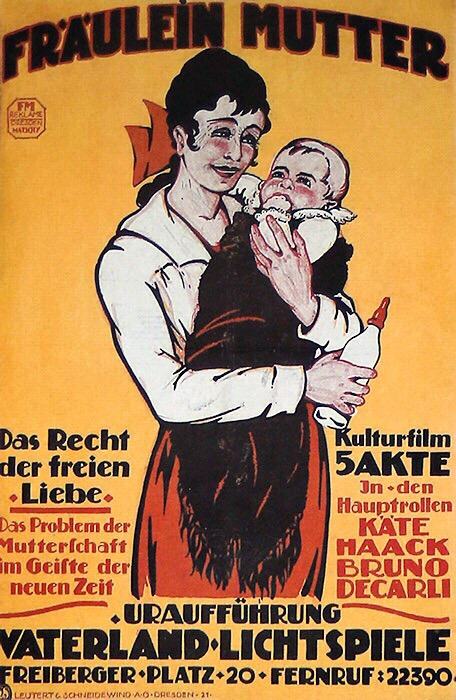
The silent era, often dismissed by modern audiences as a quaint precursor to 'real' cinema, was in fact a crucible of profound emotional storytelling, a testament to the power of visual narrative and the nuanced artistry of its performers. Among its myriad forgotten gems, 'Fräulein Mutter' stands as a searing, almost brutally honest examination of societal hypocrisy and the indomitable spirit of a woman pushed to the precipice. This film, a masterclass in German melodrama, does not merely recount a story; it plunges the viewer into the very heart of its protagonist's anguish, forcing a visceral reckoning with the harsh realities faced by unmarried mothers in a censorious age. It is a work that, even a century later, resonates with a startling immediacy, its themes of judgment, resilience, and unconditional love remaining tragically timeless.
At the core of this compelling drama is Käthe Haack's breathtaking performance as Elsa. Haack, a luminary of the German stage and screen, imbues Elsa with a fragile vulnerability that slowly transmutes into an unyielding fortitude. Her portrayal is a symphony of silent suffering and quiet defiance, communicated through a lexicon of subtle gestures, expressive eyes, and a posture that speaks volumes of both burden and burgeoning strength. We witness Elsa's transformation from a spirited, hopeful young woman, whose dreams are as vivid as the threads she weaves as a seamstress, into a figure burdened by a secret shame that society decrees unforgivable. Haack’s genius lies in her ability to convey the internal maelstrom without a single spoken word, her face a canvas upon which every societal slight, every maternal instinct, and every flicker of hope is etched with a poignant clarity. It is a performance that rivals the emotional heft seen in other contemporary works exploring female plight, perhaps even echoing the quiet despair and eventual resolve found in films like Infidelity, though Haack’s Elsa possesses a unique, grounded dignity that elevates her beyond mere victimhood.
The narrative, penned with incisive psychological depth by Kitty Aschenbach, refuses to offer easy answers or sentimental resolutions. Instead, it meticulously constructs a world where moral rectitude is a commodity often wielded by those least deserving, and where genuine virtue is tested in the crucible of adversity. Aschenbach’s screenplay is a tightly woven tapestry of cause and effect, where each fateful decision reverberates with profound consequences. The initial dalliance between Elsa and Karl, portrayed by the suitably charming yet ultimately callow Bruno Decarli, is not romanticized but presented as a tragic misstep, a moment of youthful indiscretion that spirals into a lifetime of struggle for one, and a mere inconvenience for the other. Decarli’s portrayal of Karl is equally vital, capturing the superficial allure and inherent weakness of a man who prioritizes social standing over personal responsibility. His evolution, or rather, his lack thereof, serves as a stark counterpoint to Elsa’s arduous journey, highlighting the gendered double standards prevalent in the era.
The film’s direction, while uncredited in some records, demonstrates a sophisticated understanding of visual storytelling. The use of stark contrasts – the opulence of Karl's world against the squalor of Elsa's hidden existence, the judgmental gazes of the crowd against the innocent eyes of her child – creates a powerful cinematic language. The camera often lingers on Elsa's face, drawing the audience into her internal world, allowing us to feel the weight of her solitude and the fierce protectiveness she harbors for her daughter, Anna. This intimate framing is particularly effective during scenes of profound emotional intensity, such as Elsa's secret childbirth or her desperate attempts to secure work while concealing her past. Such visual acuity elevates 'Fräulein Mutter' beyond a simple melodrama, transforming it into a compelling social commentary, much like the stark realities depicted in The Weavers of Life, though with a distinct focus on personal rather than industrial hardship.
One of the film's most potent themes is the concept of societal judgment, a relentless, pervasive force that shapes Elsa's every decision. The title itself, 'Fräulein Mutter' (Unmarried Mother), is a label steeped in condemnation, a branding that strips away individual identity and replaces it with a scarlet letter. The film masterfully illustrates how this societal pressure forces Elsa into a life of subterfuge and isolation. Her flight from her provincial hometown, her struggle to maintain anonymity in the bustling city, and her constant fear of exposure are all direct consequences of a society that offers no mercy to those who deviate from its rigid moral code. This relentless external pressure is depicted not through overt villainy but through the insidious nature of gossip, the averted gazes, and the doors slammed shut in her face. It’s a nuanced portrayal of social cruelty, echoing the powerful societal critiques found in films like Mother Love and the Law, which similarly explores the legal and social ramifications of motherhood outside of conventional norms.
The emotional core of 'Fräulein Mutter' is undeniably the bond between Elsa and Anna. This maternal love is presented as an unshakeable force, a beacon of light in Elsa's otherwise desolate existence. It is for Anna that Elsa endures hardship, sacrifices her own desires, and ultimately, confronts her past. The scenes depicting their quiet moments of tenderness, their shared struggles, and Anna's innocent affection for her mother are profoundly moving, providing much-needed moments of respite from the pervasive tension. Haack's portrayal of maternal protectiveness is fierce and believable, her every action driven by the singular goal of securing a better future for her child. This unwavering devotion elevates the film beyond a mere tale of woe, transforming it into an ode to the enduring power of a mother's love, a theme explored with equal passion in works like Heart and Soul.
While 'Fräulein Mutter' is undoubtedly a melodrama, it avoids the pitfalls of excessive sentimentality through its unflinching realism. The struggles Elsa faces are tangible: the constant threat of poverty, the agonizing choices between dignity and destitution, the crushing weight of loneliness. The film does not shy away from depicting the grim realities of her situation, yet it never wallows in misery. Instead, it focuses on Elsa's agency, her quiet determination to survive and to provide for her child, even when all odds are stacked against her. This balance between pathos and resilience is a hallmark of truly great silent cinema, demonstrating how visual storytelling can convey complex emotional landscapes without relying on dialogue. It’s a testament to the era's ability to craft narratives that, despite their dramatic flourishes, remained deeply rooted in human experience, a quality sometimes lost in the more sensationalized offerings like The Iced Bullet.
The film's climax, when Elsa's past inevitably collides with Karl's carefully constructed present, is handled with masterful dramatic tension. The confrontation is not a theatrical outburst but a simmering battle of wills, played out in glances and unspoken accusations. Haack's performance here is particularly powerful, as Elsa must weigh the desire for justice against the potential harm to her daughter. The moral ambiguity of this situation is what truly elevates 'Fräulein Mutter' beyond a simplistic tale of good versus evil. It forces the audience to grapple with the complexities of forgiveness, retribution, and the profound sacrifices inherent in maternal love. The film’s resolution, while providing a degree of closure, leaves a lingering sense of the indelible scars left by societal judgment, a realistic nuance often missing from more overtly triumphant narratives.
From a technical perspective, the cinematography, even in its surviving fragmented forms or restorations, showcases a remarkable understanding of light and shadow to create mood and emphasize emotional states. The stark, almost Expressionistic lighting in certain scenes underscores Elsa's isolation and inner turmoil, while softer, more naturalistic lighting is reserved for moments of quiet tenderness between mother and child. The editing pace, while characteristic of the era, is judiciously employed to build suspense and allow the emotional beats to land with maximum impact. Subtitles, where present, are economical, serving to clarify plot points without distracting from the visual narrative, which remains paramount. This dedication to visual storytelling is a hallmark of the era, seen in other carefully crafted productions, unlike some more rushed features such as National Red Cross Pageant, which prioritized spectacle over narrative depth.
In its broader context, 'Fräulein Mutter' contributes significantly to the canon of early cinema that explored challenging social issues. It joins a lineage of films that dared to shine a light on the plight of marginalized women, challenging societal norms and advocating for empathy in an often-unforgiving world. While not overtly polemical, its very existence and its sympathetic portrayal of Elsa serve as a powerful commentary on the injustices faced by women who transgressed social conventions. It’s a film that asks profound questions about responsibility, forgiveness, and the true meaning of morality, questions that remain relevant even today. The courage to tackle such themes was a hallmark of progressive cinema of the period, setting it apart from lighter fare like Sunshine and Gold.
The performances of the supporting cast, though perhaps less central than Haack’s tour-de-force, are uniformly strong, contributing to the film's immersive atmosphere. The various characters Elsa encounters – from the initially sympathetic but ultimately wary landladies to the harsh, unforgiving employers – paint a vivid picture of the societal landscape through which she navigates. Each interaction, however brief, adds another layer to the film’s exploration of prejudice and compassion. This ensemble work ensures that the world of 'Fräulein Mutter' feels lived-in and authentic, enhancing the dramatic stakes for Elsa. It's a careful balance that distinguishes it from films with a more singular focus, such as Three Strings to Her Bow, which relies heavily on its central trio.
Ultimately, 'Fräulein Mutter' is more than just a historical artifact; it is a vital piece of cinematic heritage that speaks volumes about the human condition. Its powerful storytelling, anchored by Käthe Haack's unforgettable performance, transcends the limitations of its silent medium and its historical context. It is a film that demands to be seen, studied, and appreciated for its artistic merit and its enduring social relevance. For those willing to delve into the depths of silent cinema, 'Fräulein Mutter' offers an emotionally rich and thought-provoking experience, a poignant reminder of the struggles endured and the strength discovered in the face of overwhelming adversity. It stands as a testament to the enduring power of film to provoke empathy and understanding, even across the vast chasm of time. Its emotional resonance is akin to the deep impact of films like The Soul of Broadway, which also explored profound human struggles within a specific cultural context.
The film's impact is not merely confined to its narrative; it also serves as a crucial document of early 20th-century German society, reflecting its moral codes, class divisions, and gender expectations. The challenges faced by Elsa were not isolated incidents but mirrored the experiences of countless women in that era, making the film a socio-cultural commentary as much as a personal drama. This historical lens adds another layer of appreciation for its craft and courage. The detailed depiction of urban life, the struggles for employment, and the pervasive social judgments offer invaluable insights into the period, providing a richer context than many of its contemporaries. This commitment to portraying realistic societal pressures is a hallmark of thoughtful filmmaking, distinguishing it from more fantastical or escapist fare like A Prisoner in the Harem.
In conclusion, 'Fräulein Mutter' is a powerful, deeply moving work of silent cinema that deserves renewed attention. Its exploration of maternal love, societal judgment, and individual resilience is handled with a sensitivity and dramatic force that remains compelling. Käthe Haack's performance alone is worth the price of admission (or the effort of seeking out a restoration), cementing her status as one of the era's most formidable talents. It’s a film that leaves an indelible mark, prompting reflection on the progress made and the battles still fought for women's autonomy and dignity. A true classic of its genre, it stands proudly alongside other significant dramas of its time, such as Retten sejrer, in its profound impact and timeless message.
IMDb —
1929
Community
Log in to comment.