DbcultAccessing Vault...
Cult Review
Senior Film Conservator
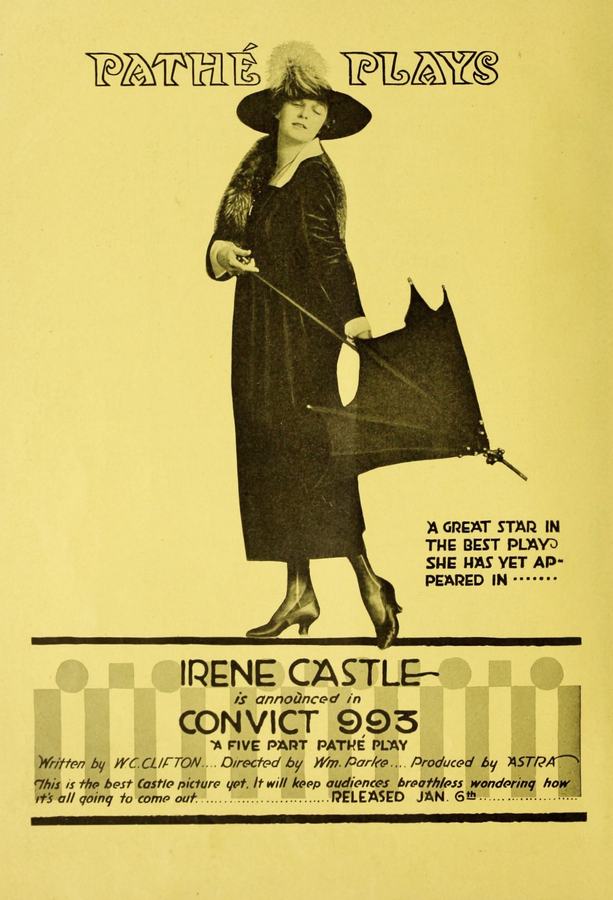
The first time we see Roslyn Ayre—hunched beneath a guttering prison lamp, eyelids inked with exhaustion—she already looks like a woman memorising her own legend. Director Wallace Clifton lets the camera loiter, permitting dust motes to swirl around her like cosmic punctuation. That moment, wordless yet louder than any intertitle, forecasts the film’s governing paradox: freedom can be another kind of cage, and masks often outnumber faces.
Rather than fetishise the mechanics of escape—no filing through bars with a smuggled nail—Clifton stages the breakout like a fevered baptism. The prison’s nocturnal gullet swallows and then regurgitates Roslyn; fog slithers, sirens yelp, yet the emphasis rests on her metamorphic smirk. It is the grin of someone who realises history can be shoplifted. Cinematographer Bert Starkey floods the sequence with undercranked shadows, so that every object seems to quiver with complicity.
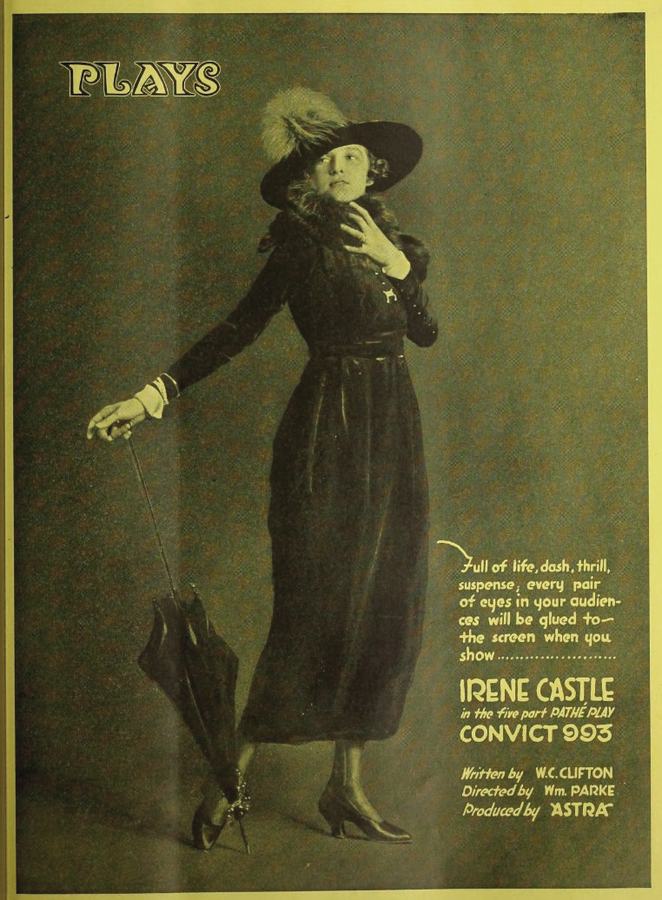
Cut to Roslyn’s new life: marble foyers, orchids wilting in brandy snifters, orchestras sawing away at Gershwin-esque daydreams. The affluent set pieces feel refrigerated, a deliberate counter-note to the prison’s sweat-slick claustrophobia. Here Irene Castle, costumed in liquid satin, glides through soirées like a blade testing for seams. Wealth is rendered not as splendour but as negative space—an echoing absence where conscience should sit.
Harry Benham plays Travers with the languid entitlement of a man who believes hearts have price tags. His courtship of Roslyn is framed like an acquisition merger: roses arrive with the mechanical precision of stock certificates. Watch the micro-moment when he first notices her—Clifton inserts a POV shot through a monocle, literally cropping Roslyn into a collectible circle. It is silent-era Tinder, swipe-right imperialism.
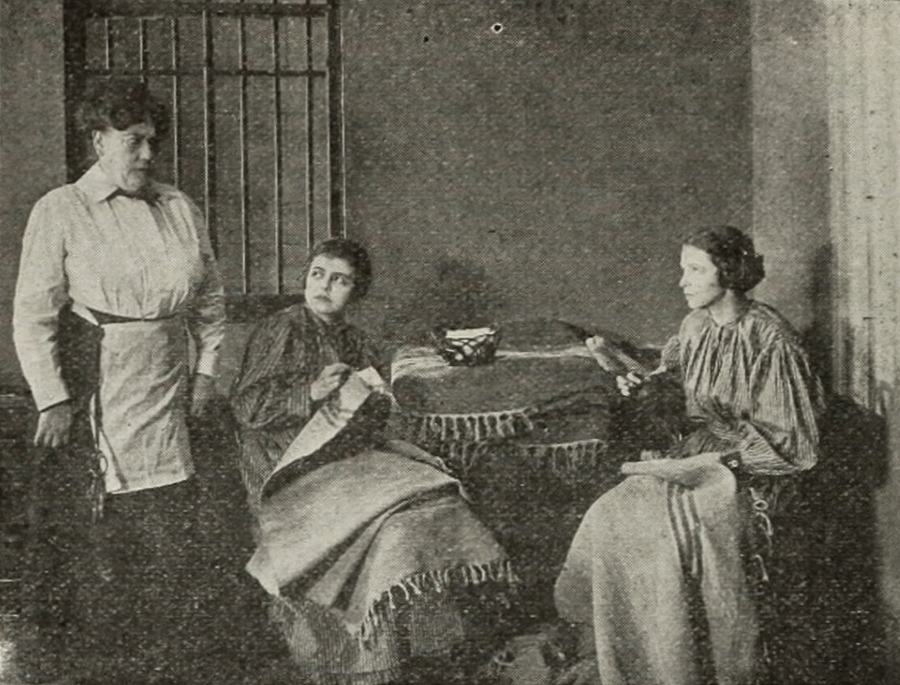
Left behind in the penitentiary, Helene Chadwick’s Neva functions like a ghost tethered to Roslyn’s conscience. Through epistolary voice-overs (letters hurled against the edit like shrapnel) we sense her envy fermenting into strategy. When Neva finally emerges, the film’s colour palette pivots: prison-grisaille gives way to lurid streetlights, suggesting that freedom, for her, is merely a louder prison yard.
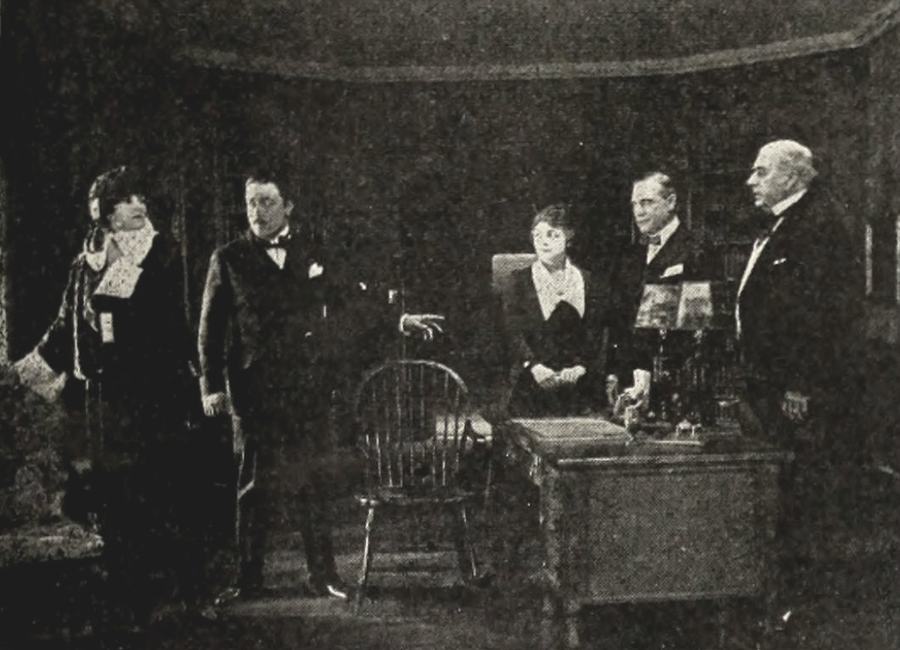
Enter Warner Oland (long before his Charlie Chan fame) as Mallory, a racketeer whose smile arrives a half-second before his threats. Oland weaponises stillness; he stands like a paused metronome, letting other characters overact themselves into his web. The blackmail sequence—shot almost entirely in two-shots to compress coercion into claustrophobic geometry—recalls the parlor menace of The Climbers (review here) yet with a more venal aftertaste.
The heist—set during Roslyn’s own reception—unfurls like a savage ballet. Clifton cross-cuts between chamber music and the furtive unclasping of necklaces, achieving a ricochet effect: every polite applause masks a jewel slipping into velvet pouches. Close-ups of gloved fingers, macro-lensed by 1920 standards, flirt with the kink of possession; the jewels glitter like predatory stars.
Roslyn’s pact to betray the gang and flee with Mallory reads, on the surface, like classic femme-fatale treachery. Yet the film slyly re-channels that trope toward agency: she isn’t trading one man for another, she’s trading visibility for invisibility, a vanishing act that prefigures the final rug-pull. Notice how Clifton frames her silhouette against ship masts and foghorns—imagery that whispers exodus rather than romance.
When Roslyn flashes her badge, the narrative performs an audacious retroactive re-wiring akin to slapping a new lens onto a finished photograph. Every prior theft, flirtation, and tear now refracts through the prism of federal mandate. Some viewers of the era reportedly gasped; others felt hoodwinked. Contemporary critics aligned the twist with the sucker-punch endings of Not Guilty (read analysis) yet Convict 993 dares to complicate the morality: the State itself is shown to be a master criminal, authorising larceny to entrap bigger vermin.
Silent cinema demands physiognomic eloquence, and the ensemble delivers. Ethyle Cooke as a society columnist registers scandal with the flutter of a fan; Paul Everton’s butler exudes complicity through a mere shoulder-set. At the centre, J.H. Gilmour’s Roslyn balances guile and gravitas, letting ambiguity pool in the pause between gestures. Watch the way she removes a glove—three deliberate tugs that feel like peeling back a false identity.
Production design toggles between penitential grays and high-society alabaster, implying that American plutocracy is merely a whitewashed cell. Shadows are etched with Germanic severity—Clifton had studied the UFA output—while the opulent interiors bloom with Rococo excess, creating a visual dialectic: poverty informs luxury, luxury feeds off poverty.
Editorial strategies flirt with modernist montage: a cigarette burns beside a calendar leaf, and months vanish in a single match-cut. Such elasticity makes the 65-minute runtime feel like a lifetime of deceit. Compare this elasticity to From Dusk to Dawn (review), where diurnal compression serves more pastoral ends.
Although released months before the 19th Amendment, the film anticipates suffrage-era power shifts. Roslyn’s ultimate alliance with federal authority suggests that patriarchal institutions can be bent, if not broken, by female cunning. Yet the closing shot—Roslyn alone beneath a streetlamp—implies that such victories purchase solitude, a price patriarchy rarely pays itself. For communal uplift, consult Your Girl and Mine: A Woman Suffrage Play (explore here).
Original exhibition notes recommend a live orchestra toggling between Debussy-esque nocturnes and ragtime razzmatazz. The tonal whiplash mirrors Roslyn’s oscillation between clandestine agent and social butterfly. Contemporary home-viewers often pair the film with experimental jazz, producing an anachronistic frisson that underscores the narrative’s own time-bending ethos.
DNA strands of Convict 993 slither through later woman-on-the-run noirs like Gun Crazy and even Hitchcock’s Stage Fright. The notion of a female protagonist whose criminality is sanctioned by the state re-emerges in Wild Youth (comparison piece) and, in inverted form, in the suffocating domesticity of June Friday (read).
A 4K restoration by a consortium of archives premiered at Pordenone in 2022, revealing textures previously dissolved in dupes: the glint of a Secret Service badge, the bruise-purple under Neva’s eyes. The sole surviving print is French—intertitles replaced—but bilingual scholars have re-integrated the original English cards, restoring the slangy verve of Wallace Clifton’s intertitles.
Convict 993 is less a moral fable than a hall of mirrors where every reflection accuses the viewer of voyeurism. It invites us to root for larceny before revealing that our complicity has been taxed by the state. The result is a silent stiletto of a film: compact, glittering, and dangerous to hold for too long.
IMDb 5
1930
Community
Log in to comment.