DbcultAccessing Vault...
Cult Review
Senior Film Conservator
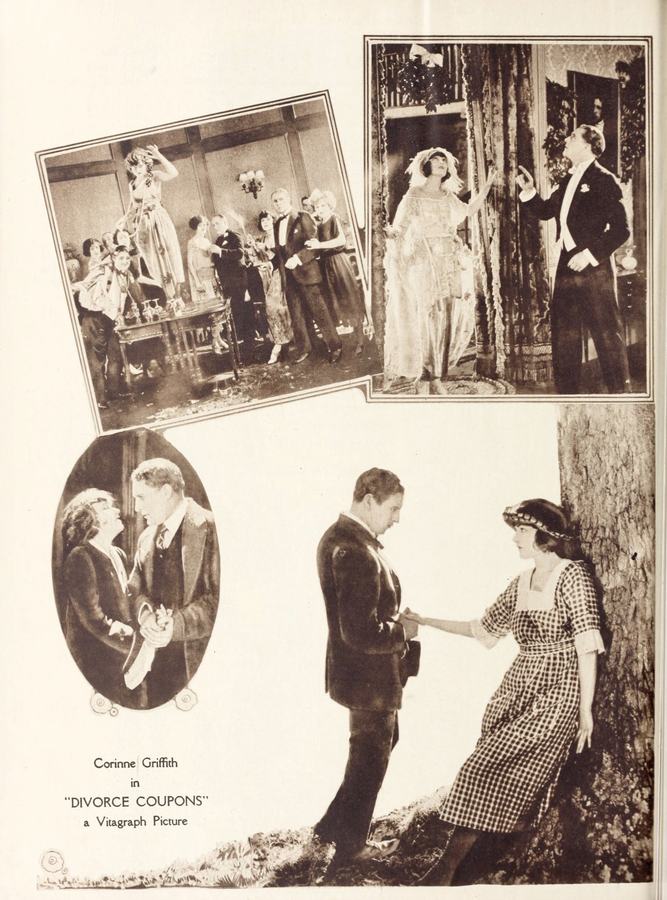
A nickelodeon flicker that feels like velvet gloves slapping your conscience awake—Divorce Coupons is Prohibition-era cynicism distilled into ten reels of nitrate moonshine.
Picture it: 1923, the year America learned to accessorize bathtub gin with pre-nuptial dread. Into this jittery cabaret strides Corinne Griffith’s Linda Catherton, all bee-stung serenity masking ledger-sheet avarice. Griffith, dubbed the “Orchid Lady” by fan mags, weaponizes her porcelain radiance; every close-up is a balance sheet where desire debits virtue and credits porcelain composure. She stalks the wedding of childhood confidante Teddy Beaudine—Diana Allen in flapper frills—like a couture vulture, scouting the buffet of tuxedoed net worth until her gaze snags on Roland Bland.
Vincent Coleman plays Bland with the languid cruelty of a man who’s read his own press clippings and found them too flattering. He lounges in scandal the way lesser mortals lounge in smoking jackets; rumor labels him a rake, a bootlegger’s broker, perhaps even a convenient suspect for jilted dames who disappear between chorus lines. Coleman’s hooded eyes suggest both predator and prey, a combination silent-era audiences found catnip long before Method grime existed. Their meet-cute is a foxtrot of side-eye across a tiered wedding cake: she calculates alimony decimals, he appraises her collarbones like auction lots.
Courtney and Mumford’s screenplay—adapted from a now-lost serial—treats marriage like a futures market: buy low, sell during the inevitable crash. Yet the film’s subversive kicker is how greed short-circuits itself into something perilously close to sincerity.
After the vows, a surreal honeymoon montage—double exposures of trains, champagne mist, and overlapping iris shots—charts the mutation of their sham into affection. Griffith’s face softens frame by frame; Coleman’s smirk fractures, revealing something like terror at the possibility of reciprocated feeling. Cinematographer Jules Cronjager, who would later lens Suspicious Wives, bathes them in lunar key lighting so their silhouettes appear carved from ivory guilt.
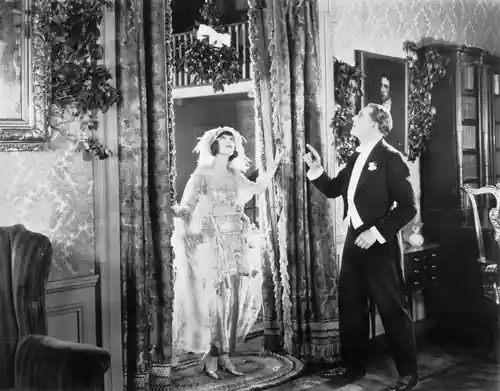
Back in whatever unnamed Eastern metropolis passes for high society, the plot’s gears grind with Hitchcockian clockwork—though Hitch was still in London drawing title cards for Die Ahnfrau knockoffs. Holmes Herbert’s Fontaine, equal parts dandy and debtor, intercepts Linda’s incriminating letter. Think of it as the silent era’s equivalent of a hacked cloud drive: one scrap of candor detonating a marriage. Fontaine’s motivation is less malice than liquidity; he needs Roland’s IOUs forgiven. Mailing the letter is a mic-drop he never lives long enough to regret.
What follows is a masterclass in gaslighting via intertitle. Roland confronts Linda not with fury but with icy courtliness, flourishing the letter like a magician producing the ace of spades. Griffith’s reaction shot—eyes widening, gloved fingers fluttering to throat—earned spontaneous applause at the Rivoli according to Variety, 1923. She demands divorce; he counters with a vendetta against the informant. The marital contract morphs into a blood oath.
Fontaine’s subsequent murder—staged in a fog-choked boathouse straight out of The Lifted Veil—is the film’s bravura sequence. Directors William B. Courtney and Ethel Watts Mumford (a rare female scribe in the boys’ club) intercut the killing with a church bell tolling, each clang a metronome of damnation. We never see the blade, only Ishtar Lane’s eyes reflected in the dagger’s polished flank—a visual rhyme that anticipates the Expressionist games of Die Frau mit den Karfunkelsteinen.
Cyril Ring plays Ishtar with a combustible cocktail of longing and self-loathing. His character’s name—mythic, gender-bending—hints at orientalist excess, yet the performance is grounded in the ache of someone who recognizes love as an asset he failed to acquire. Ishtar’s motive: if Fontaine’s corpse sours Roland on marriage, the widower might ricochet back into bachelor arms. Homoerotic subtext simmers beneath the censorship radar, encoded in lingering handshakes and cigarillo passes.
Then comes the twist that turns the picture from drawing-room noir into metaphysical tragedy: Ishtar, cornered, confesses not through dialogue but via a single handwritten coupon—‘Good for one divorce from your lies’—pressed into Roland’s palm before expiring from a gut-shot he may, in fact, have administered to himself.
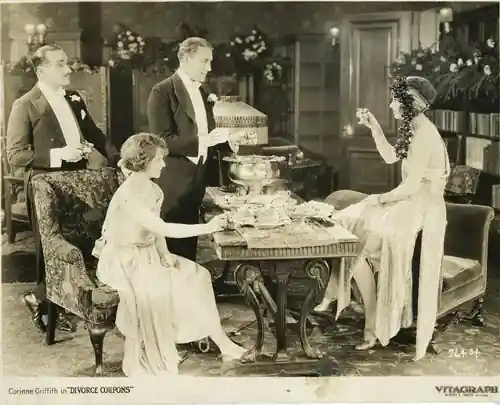
Reconciliation arrives blood-spattered and trembling. Linda and Roland stagger from the boathouse, dawn gnawing the horizon, their silhouettes entwined like trees grafted by lightning. Griffith delivers a closing close-up—half smile, half scar—that wordlessly concedes both victory and defeat: she has secured the fortune, forfeited the exit clause, and discovered, too late, that the cost of liquidity is the soul’s solvency.
Griffith’s acting style—minimalist brows, calibrated breath—feels eerily modern beside contemporaries who mime every adjective. Watch the sequence where she burns the incriminating letter after Roland forgives her: she holds the match until the flame kisses her glove, a stigmata of remorse. Coleman matches her restraint; instead of theatrical gnashing, his Roland deflates, shoulders sinking as though the thorax itself were a bank vault emptied.
Mona Lisa (yes, the Italian ingenue saddled with that nom de screen) cameos as a cabaret chanteuse who croons phonetically in French, injecting continental dissonance into the WASPy intrigue. Her song, subtitled ‘Love is a counterfeit coin,’ is the film’s thesis distilled into jazz-time lament.
Art director William Cameron Menzies—years before Gone With the Wind—sketches art-deco interiors that look lacquered in obsidian. The Catherton-Bland townhouse features a grand staircase whose banister is a chrome serpent; characters descend as though swallowed by their own ambition. Costumer Alice O’Neill dresses Linda in dove-grey silk that photographs lunar white, a walking metaphor for moral camouflage.
The boathouse finale, all glistening planks and nautical shadows, borrows from Germanic horror cycles yet prefigures the waterfront showdowns in Torchy and Orange Blossoms. Cinematographer Cronjager’s use of handheld shots—audacious for ’23—shoves us inside the panic, water slapping pylons like an arrhythmic heart.
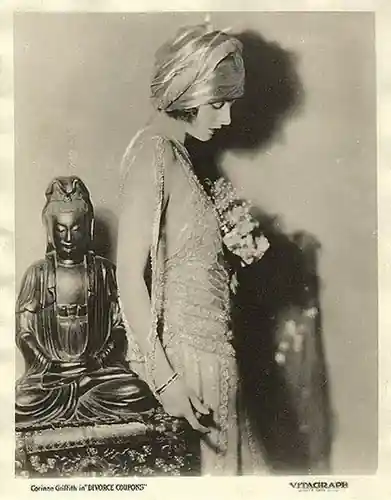
Surviving prints retain the original cue sheets: Saint-Saëns’ Danse Macabre for the murder, Satie’s Gymnopédie for the honeymoon’s afterglow. Modern festival screenings with live accompanists reveal how the film weaponizes negative space—long stretches of ambient hush punctuated by organ stabs, mirroring the characters’ emotional whiplash.
Divorce Coupons anticipates post-war dramas like The Red Woman by framing marriage as speculative bubble. Linda’s coupons—literal chits she collects for ‘emotional damages’—prefigure today’s social-media prenups and revenge-spend influencers. Yet the film’s most unnerving prophecy lies in its depiction of privacy’s extinction: one intercepted letter, and identity itself becomes negotiable.
Gender politics cut both ways. Roland’s vow to ‘kill the informer’ is toxic chivalry; Linda’s gold-digging is survival art in a rigged market. Their mutual culpability feels startlingly equitable for a 1923 release, eclipsing the moral absolutism of The Family Honor.
Where Rafaela wallows in Catholic guilt and Spooks plays spousal murder for macabre laughs, Divorce Coupons occupies a liminal sweet-spot: too sardonic for melodrama, too sincere for farce. Its closest DNA cousin is Lend Me Your Name, another tale of transactional wedlock, but that film flinches from the abyss this one pirouettes upon.
For decades the picture languished in the Library of Congress’s paper-print vault until a 4K restoration—funded by an anonymous tech mogul with a penchant for pre-code fatalism—premiered at Pordenone 2019. Kino’s Blu-ray offers two scores: a jazzy trio rendition and a chamber-orchestra arrangement that channels late-romantic gloom. Streaming rights are fractured, but cine-insiders whisper of an upcoming Criterion Channel drop tied to a Corinne Griffith retrospective.
Scholars cite the movie as ground zero for the ‘marriage noir’ micro-cycle that peaked with The Postman Always Rings Twice. Its DNA also snakes into neo-noirs like Side Effects and Gone Girl, where spouses weaponize intimacy and the audience’s complicity is the final twist.
Divorce Coupons is a time-capsule that refuses to stay quaint. Its cinematographic daring, gendered chess match, and existential punch land with a sting modern prestige pictures strain to achieve. Watch it once for the historical frisson; re-watch to study how silence can scream louder than Dolby surround ever could.
9/10
A brittle orchid of a film—exquisite, venomous, and wilting only under the heat of your own reflected gaze.
IMDb —
1920
Community
Log in to comment.