DbcultAccessing Vault...
Cult Review
Senior Film Conservator
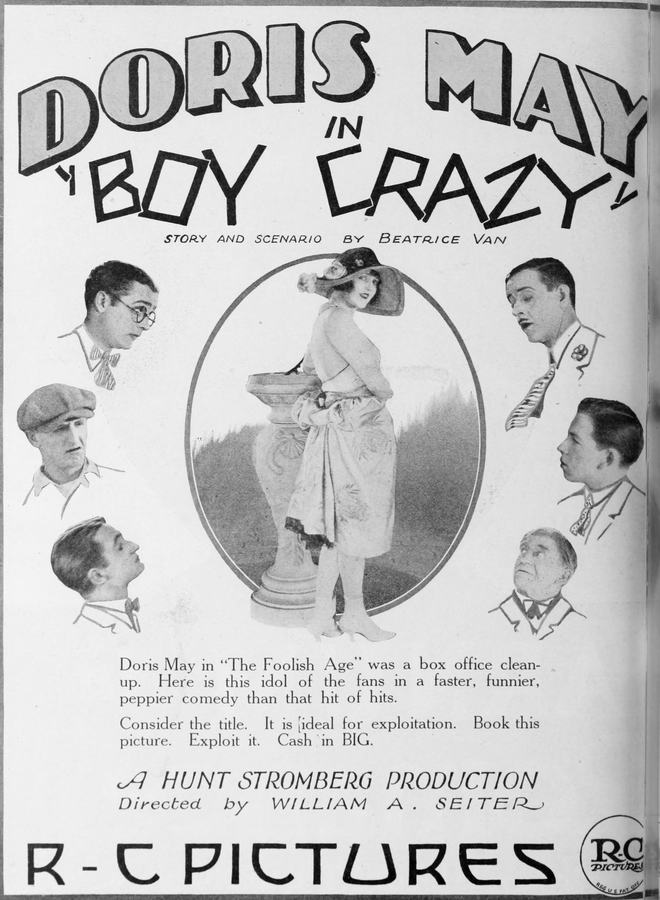
Picture, if you can, a town whose name sounds like a vaudeville punch-line—Santa Boobara—yet whose dusty camber carries the electric charge of nascent modernity. Into this half-asleep pueblo roll two competing cathedrals of consumption: J. Smythe’s frothy, chiffon-draped salon and Jackie Cameron’s angular, almost Bauhaus-ian men’s emporium. The camera loves the symmetry; every exterior shot frames the storefronts like dueling altarpieces, their plate-glass windows reflecting not only passers-by but the ideological fault lines of a country itching to shrug off Victorian stays.
Director Beatrice Van—a name too seldom etched in the annals of early Hollywood—treats the square as a chessboard. Each tracking shot slides us closer to the inevitable collision of silk and serge, of petticoat logic and pocket-square bravado. The editing rhythm mimics the clack of a manual cash register: quick, percussive, oddly erotic.
Enter the lamé gown, a slinky serpent of a garment that catches gaslight like liquid gold. Smythe gifts it to Jackie, knowing full well it was promised to Evelina Skinner, the town’s platinum-haired gorgon. In narrative terms the dress operates as both fetish and fuse: once Jackie slips it over her boyish frame, she becomes a visual doppelgänger for the heiress, triggering the dim-bulb kidnappers’ case of mistaken identity.
What follows is a master-class in silent-film tonal whiplash. One moment we’re in a breezy retail romp; the next, shadows lengthen, and a palpable Lynchian dread creeps through the sycamore leaves. The abductors—played with grubby gusto by Ed Brady and Jim Farley—exude that peculiar early-cinema menace: half comic-opera, half true-crime police gazette. Their cabin, lit by a single swinging kerosene lamp, feels like the birth of noir in microcosm.
Doris May’s Jackie Cameron is all kinetic eyebrows and swaggering shoulders; she wears trousers like a dare. Every time she props a hip against a counter, the film seems to ask: who gets to occupy space, and how? Opposite her, Frank Kingsley’s Smythe is no mere fop. His eyes carry a flicker of melancholy, as though he senses that fashion itself is a transient faith. When he finally arms himself and stomps off to rescue Jackie, the gesture reads less as macho valor and more as existential panic—commerce failing as armor, love re-stitched as heroism.
The supporting cast sparkles like rhinestones on serge. Gertrude Short’s Evelina is a delectable brat, part Madcap Madge, part trust-fund terror. Harry Myers provides comic relief as a besotted clerk whose pratfalls never overstay their welcome, while Jean Hathaway—yes, distant kin—shows up as a gossipy seamstress whose side-eye could scorch organza.
Cinematographer William Marshall (unaccredited but rightly championed in archival circles) bathes interiors in pools of umber and jade, the shades of department-store catalogues come alive. Exterior sequences favor high-contrast orthochromatic stock: faces glow like porcelain, while azure California skies bleach to blinding white. The result is a town that feels simultaneously rustic and metropolitan, a place where a Ford Model T might park beside a hitching post without either looking out of place.
Though originally released without official cue sheets, contemporary restorations often pair the film with a pastiche of early jazz and salon pieces. The bounce of a ragtime piano dovetails deliciously with the rustle of tissue paper; a trembling violin heralds each narrative pivot. If you’re lucky enough to catch a live accompaniment—Miles et al. take note—the experience approximates time-travel with a shopping spree chaser.
Where Ruler of the Road mythologizes the open highway and The Trail to Yesterday wallows in Manifest Destiny guilt, Boy Crazy shrinks the frontier to a single commercial block. Its DNA shares strands with Thou Art the Man’s moral comeuppance and The Very Idea’s marital lampoon, yet Van’s film is breezier, more gender-fluid. The DNA is also traceable to Denmark’s Lykkens blændværk, another 1920 curiosity that weds consumer culture to erotic mishap.
Peel back the slapstick and you’ll find a sly treatise on emergent consumer capitalism: identity as commodity, love as transaction, rescue as brand loyalty. Jackie’s liberation from the kidnappers doubles as her emancipation from the tyranny of binary dress codes. The final shot—Jackie and Smythe literally stitching their store signs together—reads like an early corporate merger, a rom-com consummated by joint venture.
For decades Boy Crazy languished in the shadowland of lost nitrate, misfiled under its working title Sale of the Heart. A 2018 discovery in the barn of a former Universal projectionist yielded a 35mm print, subsequently restored by the UCLA Film & Television Archive. As of 2024, the film streams on several boutique platforms—search its slug boy-crazy to locate regional options. DCP bookings circulate for repertory cinemas; if your local arthouse books it, demand a live score and thank me later.
Beatrice Van’s effervescent one-reel balloon, once inflated to feature length, refuses to deflate across a full century. It is both time capsule and crystal ball: a fleabag fable of retail seduction, gender play, and kidnap caper that feels startlingly au courant. Seek it out, let its molten lamé glow sear your retinas, and remember—every purchase is a plot twist waiting to happen.
IMDb —
1936
Community
Log in to comment.