DbcultAccessing Vault...
Cult Review
Senior Film Conservator
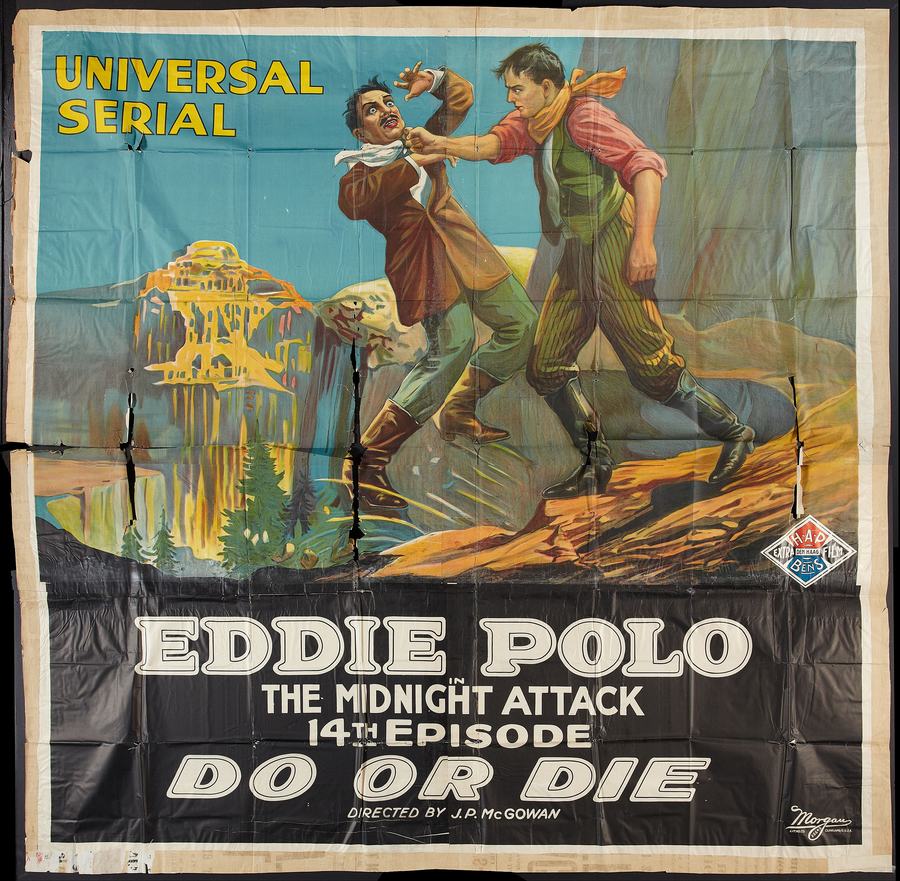
Stepping back into the hallowed halls of silent cinema, one occasionally unearths a gem whose brilliance, though perhaps dimmed by the passage of time, still possesses the power to captivate. Such is the case with the 1921 adventure serial, Do or Die. Penned by the prolific Anthony Coldeway, a wordsmith renowned for his contributions to the burgeoning genres of Westerns and action serials, this film is a vibrant testament to the era's storytelling prowess. It's a narrative that, even without the luxury of synchronized sound, pulses with an almost tactile energy, drawing viewers into a world of high stakes, dastardly villains, and an unforgettable heroine whose resolve is as unyielding as tempered steel.
The intricate machinations of Do or Die commence with a scene of domestic tranquility shattered by insidious malevolence. Professor Lane, portrayed with gravitas by the veteran J.P. McGowan, stands on the precipice of a scientific breakthrough, his innovative energy device poised to revolutionize the world. His daughter, Evelyn Lane, brought to life with astonishing vivacity by Magda Lane, is not merely an assistant but an intellectual partner, her bright eyes reflecting both an inherited brilliance and an independent spirit. This idyllic setup, however, is but the calm before a storm of treachery. Enter Silas Thorne, a character of chilling avarice embodied by the formidable Eddie Polo, whose very presence on screen radiates a palpable menace. Thorne, aided by the cunning and equally ruthless Lila Vance (Jean Perkins), orchestrates a labyrinthine plot to purloin the professor's invention. Their scheme is not merely theft; it’s a calculated destruction of reputation, culminating in Professor Lane's wrongful incarceration on trumped-up charges of espionage. His laboratory, once a beacon of progress, is ransacked, its secrets seized by Thorne's shadowy syndicate.
Evelyn's initial despair swiftly transmutes into a fierce, unwavering determination. Her mission is twofold: to exonerate her father and to reclaim the stolen blueprints. Her path intersects with Jack Morgan, a cynical yet ultimately honorable investigative journalist played by Jay Marchant. Morgan's initial skepticism, a natural byproduct of his profession, slowly erodes under the weight of Evelyn's compelling narrative and the sheer injustice of her plight. His transformation from a detached observer to a committed ally is one of the film's more subtle, yet effective, character arcs. Together, they embark on a dizzying odyssey that plunges them into the murky depths of the underworld. The film masterfully employs a series of thrilling set pieces: breakneck car chases through bustling city streets, clandestine meetings in dimly lit back alleys, and harrowing escapes from Thorne's relentless henchmen, led by the impressively tough Spike, a role subversively portrayed by Inez McDonald, challenging the gender norms of cinematic villainy for the period. Evelyn's resourcefulness is repeatedly put to the test, and she emerges as a true action heroine, navigating booby-trapped corridors, scaling treacherous rooftops, and engaging in a breathtaking struggle aboard a speeding locomotive. These sequences, while perhaps appearing quaint by modern standards, were groundbreaking for their time, demonstrating a nascent understanding of cinematic tension and spectacle. In this regard, one might draw a parallel to the daring escapades found in earlier serials like The Accomplice, where each chapter ended on a cliffhanger designed to lure audiences back for more. Similarly, the relentless pace and escalating dangers in Do or Die kept audiences on the edge of their seats.
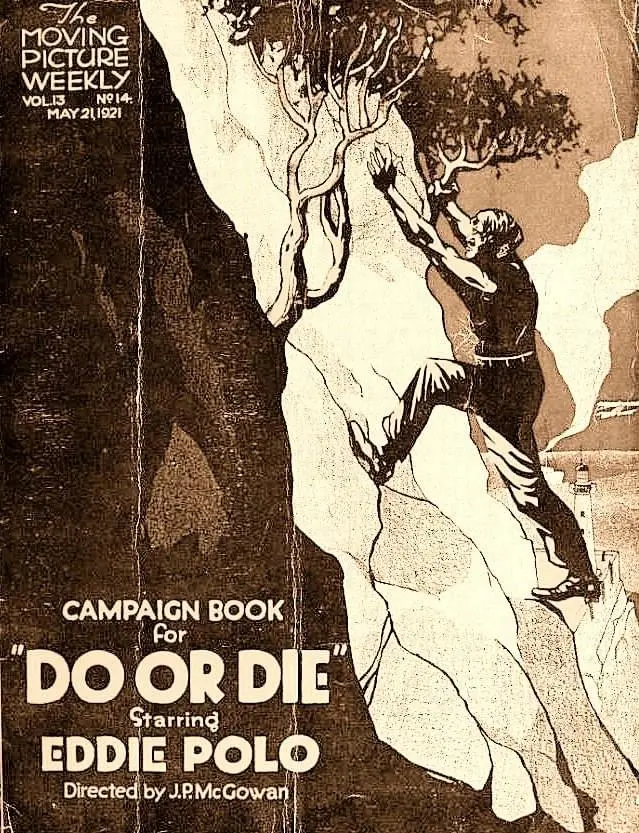
The success of a silent film rests squarely on the shoulders of its performers, who must convey a spectrum of emotions and intentions through gesture, facial expression, and physical presence alone. Magda Lane, as Evelyn, delivers a truly magnetic performance. Her eyes, wide with fear one moment and blazing with defiance the next, are a window into Evelyn's soul. She doesn't merely react to events; she actively drives the narrative forward with an almost audacious confidence. Lane's physicality is remarkable, lending credibility to the numerous stunts and daring feats Evelyn undertakes. It's a performance that evokes the spirit of strong female leads found in other films of the era, though perhaps with a more pronounced sense of proactive agency, distinguishing her from more passive heroines often depicted. One might even compare her screen presence to figures like those in Her Great Price or even the more dramatic turns in Cross Currents, where female characters, despite societal constraints, find inner strength. Jay Marchant, as Jack Morgan, provides a grounded counterpoint to Evelyn's fiery energy. His portrayal of a cynical journalist whose moral compass is recalibrated by Evelyn's plight is nuanced, evolving from skepticism to steadfast loyalty without resorting to exaggerated melodrama. Eddie Polo, a name synonymous with silent film villainy, is absolutely chilling as Silas Thorne. His sneering expressions, sharp gestures, and imposing physicality create a truly memorable antagonist, a man whose ambition knows no bounds. Jean Perkins as Lila Vance offers a compelling portrayal of a femme fatale, her calculating gaze and subtle movements conveying a dangerous intellect that complements Thorne's brute force. J.P. McGowan, though with limited screen time, imbues Professor Lane with a quiet dignity that makes his unjust suffering all the more poignant. Even Inez McDonald, in her unconventional role as Spike, leaves an impression, embodying a formidable and ruthless enforcer whose presence heightens the stakes in every confrontation.
Anthony Coldeway's script for Do or Die is a masterclass in silent film serial construction. His writing demonstrates an acute understanding of pacing, suspense, and the visual language necessary to sustain audience engagement without dialogue. Each chapter, though building on the previous, feels like a miniature adventure in itself, replete with new challenges and escalating stakes. Coldeway's ability to weave together intricate plot threads, introduce compelling characters, and craft thrilling action sequences is evident throughout. He doesn't merely present a series of events; he constructs a world where every decision carries weight, and every peril feels genuinely threatening. His influence on the serial format is undeniable, and Do or Die stands as a prime example of his craftsmanship. His work here can be seen as a precursor to the sustained narrative tension found in later, more complex serials, and perhaps even early action blockbusters. The episodic nature, with its inherent cliffhangers, is reminiscent of other popular serials of the era like The Double Event, which also relied on a succession of thrilling predicaments to keep audiences returning week after week. Coldeway's narrative choices often push Evelyn into situations where her ingenuity, rather than sheer strength, becomes her primary weapon, a refreshing deviation from more simplistic action tropes.
Beyond its thrilling surface, Do or Die resonates with several compelling themes. The most prominent, of course, is the unwavering power of familial love and loyalty. Evelyn's tireless pursuit of justice for her father serves as the emotional core of the film, providing a relatable human anchor amidst the fantastical escapades. There's also a strong undercurrent of justice prevailing over corruption, a perennial theme that continues to captivate audiences. The film subtly critiques unchecked industrial ambition and the moral compromises made in the pursuit of power, themes that were particularly relevant in the rapidly industrializing early 20th century. Furthermore, Evelyn herself is a fascinating study in early cinematic feminism. She is not a damsel in distress awaiting rescue; she is the architect of her own destiny, a proactive agent who frequently outsmarts and outmaneuvers her male adversaries. Her character embodies a burgeoning spirit of female independence and capability, offering a refreshing counter-narrative to more conventional gender roles often depicted in films like Social Briars or even the more melodramatic East Lynne with Variations, where women's roles were often confined to domestic struggles or tragic romantic entanglements. Evelyn's journey, by contrast, is one of self-discovery through action and resilience, a testament to the strength of the human spirit when faced with overwhelming odds. This proactive portrayal of a woman in a male-dominated action sphere was quite progressive for its time, cementing Evelyn Lane as an early prototype for future action heroines. The film also touches upon the precariousness of truth in the face of powerful, manipulative forces, a timeless concern that remains resonant even today. The narrative emphasizes the importance of investigative journalism, as Jack Morgan's skills prove crucial in unraveling the deeper conspiracy, elevating his role beyond that of a mere love interest to a vital partner in the quest for truth.
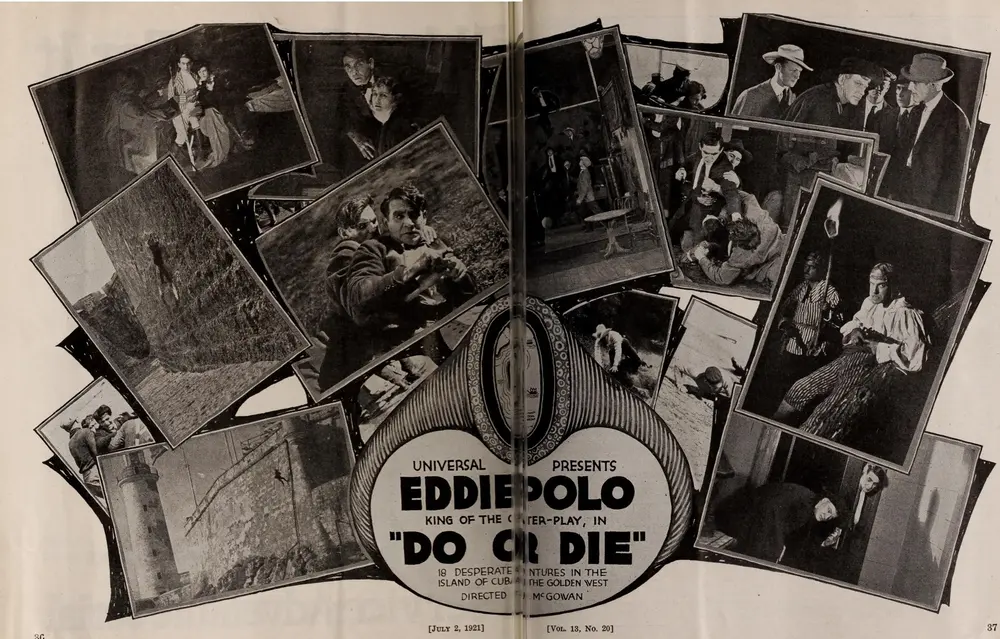
For a film of its vintage, Do or Die exhibits a surprising degree of sophistication in its visual storytelling. The cinematography, though lacking the elaborate camera movements of later eras, is remarkably effective in conveying mood and action. Close-ups are employed judiciously to highlight character emotions, particularly Magda Lane's expressive face, drawing the audience into her internal struggles and triumphs. The use of dramatic lighting, especially in the villains' lair, creates an atmosphere of sinister foreboding. The editing maintains a brisk pace, crucial for an action serial, ensuring that the narrative never stagnates. The intertitles, while serving their primary function of conveying dialogue and exposition, are often pithy and impactful, adding to the film's overall dramatic flair. The film's stunt work, a hallmark of the serial genre, is genuinely impressive, executed with a raw physicality that predates the sophisticated special effects of later decades. These practical stunts, from rooftop leaps to train sequences, contribute significantly to the film's gritty realism and exhilarating sense of danger. The visual ingenuity in staging these elaborate action pieces, often with limited resources, speaks volumes about the creative spirit of early filmmakers. One can see echoes of this commitment to practical, thrilling action in other films where physical daring was paramount, such as Stolen Honor, which also relied heavily on its stars' athletic prowess to drive the narrative. The film's ability to evoke such strong reactions and maintain suspense through purely visual means is a testament to the power of silent cinema, a form of artistry that demanded a different kind of engagement from its audience.
The crescendo of Do or Die is a masterclass in escalating tension and climactic resolution. The narrative meticulously builds towards a daring infiltration of Thorne's heavily fortified stronghold, a veritable industrial fortress where Professor Lane is held captive, forced under duress to complete his revolutionary device for Thorne's nefarious global schemes. The stakes could not be higher; not only is Professor Lane's life hanging in the balance, but the fate of his invention, capable of immense good or catastrophic destruction, teeters precariously. Evelyn and Jack, their bond forged in the crucible of shared peril, must execute a meticulously planned assault, knowing full well that failure means not only their own demise but the triumph of injustice. This final confrontation is a tour de force of silent film action, featuring a thrilling hand-to-hand combat sequence between Evelyn and Lila Vance, a clash of wits and physical prowess that is both visceral and emotionally charged. Simultaneously, Jack confronts Thorne, leading to a tense standoff that underscores the moral struggle at the heart of the film. The resolution is both explosive and satisfying, culminating in the spectacular destruction of the device, or its secure recovery, ensuring it never falls into the wrong hands. Professor Lane's triumphant exoneration is a moment of profound relief, bringing the narrative full circle. The film's conclusion is not merely a wrapping up of plot points; it is a powerful affirmation of courage, resilience, and the enduring human spirit in the face of overwhelming adversity. This sense of ultimate triumph, often hard-won through immense struggle, is a common thread in many enduring tales of the era, from the moral clarity of When My Ship Comes In to the dramatic resolutions in Devotion.
Do or Die, while perhaps not as widely recognized today as some of its more celebrated contemporaries, remains a significant piece of silent film history. It exemplifies the strengths of the serial format: its capacity for sustained suspense, its reliance on compelling character dynamics, and its ability to deliver consistent thrills. Magda Lane's performance, in particular, deserves renewed appreciation for its pioneering portrayal of a strong, intelligent, and fiercely independent female protagonist. Her Evelyn Lane is a character who transcends the limitations of her era, embodying qualities that resonate with modern audiences. The film's enduring appeal lies in its timeless themes of justice, courage, and the fight against corruption. It's a reminder of a bygone era of filmmaking, where narrative ingenuity and the sheer power of performance were paramount. For enthusiasts of silent cinema, or anyone curious about the roots of the action-adventure genre, Do or Die offers a compelling and thoroughly entertaining viewing experience. It invites us to appreciate the artistry of a medium that, despite its lack of spoken dialogue, could evoke profound emotions and deliver exhilarating narratives with remarkable effectiveness. In its own right, it stands proudly alongside other notable silent works, perhaps not with the dramatic heft of East Lynne, but certainly with the adventurous spirit and engaging storytelling found in films like The Feast of Life or even the lighter fare of Tom's Little Star. It’s a film that demands engagement, rewarding the patient viewer with a journey into a world where every flicker of emotion, every daring stunt, and every twist of fate is meticulously crafted to tell a story that truly lives up to its evocative title.
IMDb 5.5
1912
Community
Log in to comment.