DbcultAccessing Vault...
Cult Review
Senior Film Conservator
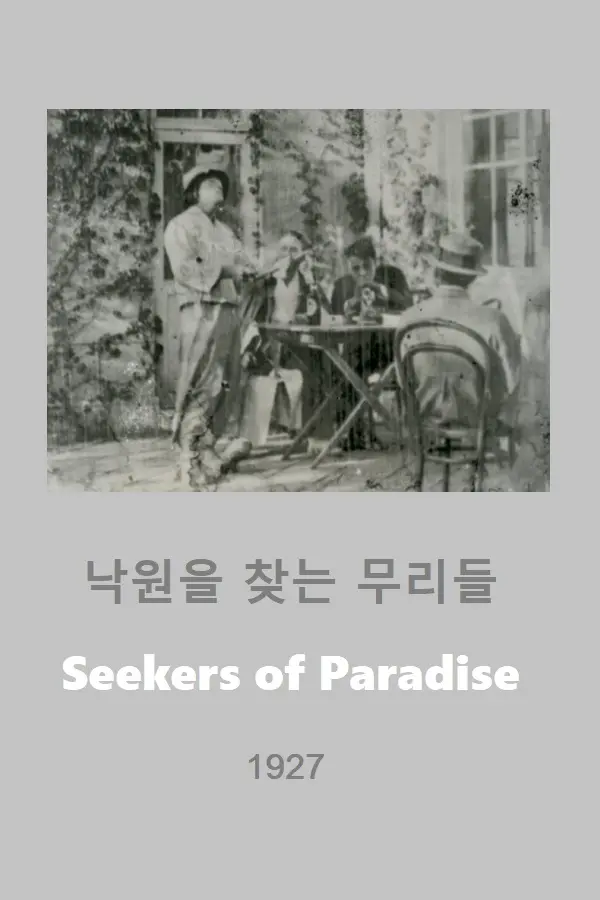
Is 'Nag-won-eul chajneun mulideul' a film worth unearthing from the annals of cinematic history today? Short answer: yes, but with significant caveats that demand a specific palate. This film is an acquired taste, a peculiar blend of tragic irony and stark human folly that will resonate deeply with viewers who appreciate minimalist storytelling focused on the domino effect of a single, seemingly insignificant event, but it will undoubtedly alienate those seeking conventional narratives or clear-cut character arcs.
It's a film for the patient, for those who enjoy dissecting the motivations behind absurd human actions and the brutal simplicity of fate. It is decidedly not for anyone looking for a feel-good story, complex world-building, or a redemptive journey.
The film opens with a premise so simple it borders on parable, and it’s this very simplicity that gives it a strange, unsettling power. The loss of a document, the chance encounter, the misguided devotion – these elements coalesce into a narrative that feels both inevitable and utterly avoidable. It’s a narrative engine fueled by human error and the cruel hand of chance.
This film works because it distills human desire and desperation to their rawest, most irrational forms, showcasing how easily external circumstances can unravel lives. It fails because its minimalist approach, while intentional, often sacrifices emotional depth for thematic starkness, leaving some characters feeling more like plot devices than fully realized individuals. You should watch it if you are fascinated by the destructive potential of misplaced love and the arbitrary nature of tragedy, presented through a lens that eschews sentimentality for a more observational, almost detached, critical gaze.
At its core, 'Nag-won-eul chajneun mulideul' ('The Crowd Seeking Paradise,' though the title itself is an ironic misnomer given the outcome) is a study in escalating misfortune. The heroine, whose name remains curiously unstated, finds her world tilting precariously after misplacing vital property documents. This isn't just a bureaucratic mishap; it's the erosion of her last shred of stability, a material tether to a world that seems increasingly indifferent to her plight.
The narrative's pacing is deliberately measured, almost languid, in its setup. We are given just enough time to understand the gravity of the heroine's situation, but never enough to fully delve into her emotional landscape. This creates a sense of detachment, a critical distance that allows the audience to observe the unfolding tragedy with an almost clinical eye.
The critical turn comes with the discovery of these documents by a street bum. This isn't presented as a moment of hope, but rather as the catalyst for the inevitable. It’s a narrative choice that underscores the film's fatalistic outlook. The documents, instead of being a source of salvation, become an object of fatal contention.
The climax, involving the two men in love with the heroine, is sudden and brutal. The scuffle, the fall, the deaths – it all happens with a shocking swiftness that belies the slow burn of the preceding events. This abruptness feels intentional, a jolt to remind us of life's inherent unpredictability. It’s a narrative punch that lands hard, leaving a lingering sense of bleakness.
Unlike more melodramatic Korean cinema of the era, this film avoids lingering on the emotional aftermath. The focus is on the event itself, the stark consequence of a series of unfortunate choices and coincidences. It’s a narrative structure that prioritizes theme over sentiment, much like early European realist dramas, or even the stark fatalism found in something like Ingeborg Holm, though far more condensed.
The cast, including In-gyu Ju, Cheolsan Kim, Ok Jeon, and Woon-hak Yim, deliver performances that are less about nuanced character development and more about embodying archetypes of desperation and misguided affection. Ok Jeon, as the heroine, conveys a quiet, almost resigned despair that is palpable, even if her character's inner life remains largely unexplored. Her presence is one of vulnerability, a silent witness to the chaos her predicament unwittingly unleashes.
In-gyu Ju and Cheolsan Kim, portraying the two ill-fated lovers, lean into the impulsive, almost primal nature of their characters. Their rivalry isn't painted with broad strokes of romantic jealousy, but rather as a more elemental struggle for dominance and perceived worth. The scene of their final confrontation is less a display of acting prowess and more a visceral, almost animalistic struggle for a symbolic prize. It’s brutal. It’s effective.
Woon-hak Yim's role, presumably the street bum, is pivotal despite its likely brevity. The character acts as a silent, almost accidental, agent of fate. The performance, therefore, relies on embodying a certain anonymity and detachment, a stark contrast to the passionate, yet ultimately foolish, actions of the other men. It's a testament to the film's style that even minor roles carry significant weight in driving the narrative's tragic momentum.
The acting style feels rooted in a theatricality that prioritizes clear emotional beats over subtle psychological realism. This isn't a flaw, but a stylistic choice that aligns with the film's almost allegorical nature. It's less about 'being' the character and more about 'representing' a facet of the human condition under duress.
Un Hwang’s direction in 'Nag-won-eul chajneun mulideul' is characterized by a stark, unembellished approach. There are no grand sweeping shots or elaborate set pieces. Instead, the camera often feels like an impartial observer, documenting the unfolding events with a detached realism. This choice reinforces the film's fatalistic tone, suggesting that these events are simply occurring, unadorned by dramatic flourish.
The cinematography, while likely constrained by the technology and budget of its time, serves the narrative effectively. It's functional, focusing on clarity and composition that highlights the isolation of the characters and the starkness of their environment. Consider the scene where the documents are lost; it’s not a moment of high drama, but rather a quiet, almost mundane slip, yet the framing ensures its significance is immediately understood.
The choice of location for the final confrontation, a cliff, is overtly symbolic but powerfully effective. It’s a literal edge, a precipice mirroring the emotional and social brink the characters find themselves on. The way Hwang frames this scene, emphasizing the height and the vulnerability, is crucial to its impact. It’s direct, almost blunt, in its symbolism, but it works.
The film's tone is consistently bleak, tinged with a dark irony. The pursuit of 'paradise' (as implied by the title) leads only to destruction. Hwang doesn't shy away from this grim outlook, instead embracing it as the core message. This unflinching gaze at human folly and its devastating consequences sets it apart from more conventional melodramas. It reminds me of the uncompromising narrative of The Mother of His Children in its raw, unfiltered depiction of human struggle, though 'Nag-won-eul chajneun mulideul' manages to inject an almost darkly comedic element into its tragedy.
For cinephiles and students of early Korean cinema, 'Nag-won-eul chajneun mulideul' is absolutely worth watching. It offers a fascinating glimpse into a period of filmmaking that often gets overshadowed. Its unique blend of stark realism and allegorical storytelling provides a rich ground for discussion and analysis.
However, for the casual viewer, it might prove a challenging watch. The pacing is slow, the themes are grim, and the character development is intentionally sparse. It doesn't offer easy answers or emotional catharsis. It is a film that demands engagement on an intellectual, rather than purely emotional, level.
The central theme is undoubtedly the illusion of security, both material and emotional. The property documents represent not just wealth, but the heroine's very stability. Their loss immediately plunges her into precarity. This resonates strongly even today, as material possessions often define our perceived safety and future.
Equally prominent is the destructive power of possessive love. The two men, driven by their affection for the heroine, ironically destroy themselves in a misguided attempt to 'win' her or save her. Their love isn't redemptive; it's a catalyst for tragedy. This offers a bleak, yet compelling, counter-narrative to romantic ideals often portrayed in cinema. It’s an observation that feels surprisingly modern in its cynicism.
The film also subtly critiques societal indifference. The street bum, a figure on the fringes of society, becomes an unwitting fulcrum of fate. His presence highlights the vast chasm between the heroine's struggle for property and his own struggle for basic survival, suggesting a broader societal backdrop of inequality and neglect.
Nag-won-eul chajneun mulideul is a stark, almost brutal, exploration of human folly and the unforgiving hand of fate. It’s a film that demands to be seen not as a piece of light entertainment, but as a somber, critical reflection on the fragility of life and the destructive nature of misguided desire. It works. But it’s flawed. Its strengths lie in its uncompromising vision and its ability to distill complex themes into a tragically simple narrative. It will not appeal to everyone, and indeed, it shouldn't. Its value isn't in universal appeal, but in its singular, unsettling voice. It is a testament to the power of early Korean cinema to provoke and challenge, rather than merely entertain. A strong recommendation for the discerning cinephile, but approach with an open mind and a readiness for its unyielding bleakness.
IMDb 6.2
1913
Community
Log in to comment.