DbcultAccessing Vault...
5.5/10
Senior Film Conservator

A definitive 5.5/10 rating for a film that redefined the boundaries of cult cinema. East of Borneo remains a cornerstone of transgressive art.
So, you’re scrolling, looking for something different, maybe something old? Then pull up a chair for East of Borneo. It’s a 1931 jungle trek, pure and simple. If you love classic adventure films, especially ones from the early talkie era, this is absolutely worth a peek. You get a real sense of raw, untamed nature. But if you need fast cuts and modern sensibilities, you’ll probably find it a bit of a slog. This isn't for everyone, for sure. 🤷♀️
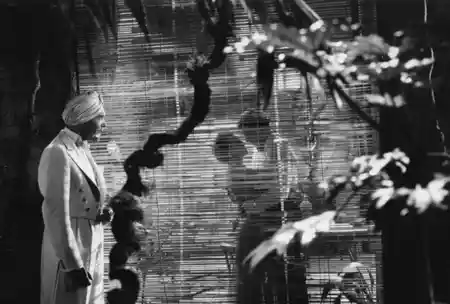
The whole thing kicks off with Linda (Lupita Tovar) heading deep into the Borneo jungle. Her husband, Allan, vanished. And she’s just… going to find him. It’s that simple. No big search party, just her and a couple of guides. That kind of bold, almost reckless determination sets the tone right away. You feel her desperation.
What really sticks with me are the animals. Not just any animals, but *real* ones. The film really leans into the danger of the wild. There’s a scene with a tiger, for instance. It’s pretty clear they used a real tiger, maybe on a leash or something, but still. The way it stalks, the close-ups of its eyes? Pure tension. You can almost smell jungle heat from the screen.
Then there are the crocodiles. Oh my goodness, the crocodiles! There’s this one shot, very quick, of them snapping. It’s not fancy CGI, obviously. It's just raw, old-school filmmaking. It reminds you how filmmakers had to get creative back then. They couldn't just "add it in post."
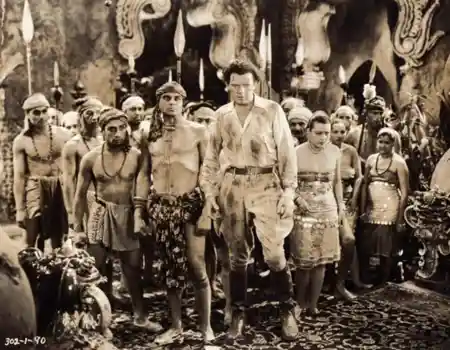
Lupita Tovar, as Linda, carries a lot of the film. She’s not some screaming damsel in distress, not entirely. She’s scared, yeah, who wouldn't be? But she keeps pushing. Her face often looks genuinely exhausted. You can *feel* her journey, the sweat, the fear, the mosquitoes.
The pacing is… deliberate. This isn't a thrill-a-minute ride. It builds. Slowly. You spend a lot of time just watching Linda travel, pushing through dense foliage. The silence, broken only by jungle sounds, becomes a character itself. It gives the film a certain moody atmosphere, almost hypnotic at times.
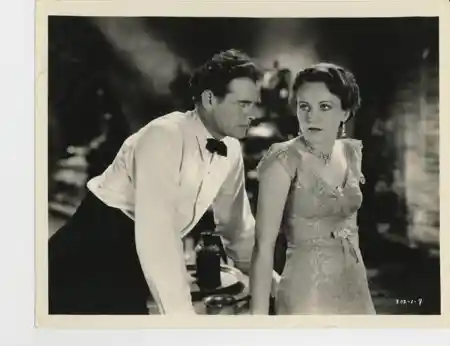
There's also this local chief, played by Tetsu Komai. He's... a character, alright. He's got this strange fascination with Linda. His presence adds a whole other layer of unease. It’s one of those parts where you have to remember the era it was made. It can feel a little uncomfortable now, how he's portrayed.
One detail I found pretty wild: the village scene. It feels so lived-in, even if it's clearly a set. There are so many little background details. Kids running around, people doing daily tasks. It adds to the feeling of being somewhere truly remote.
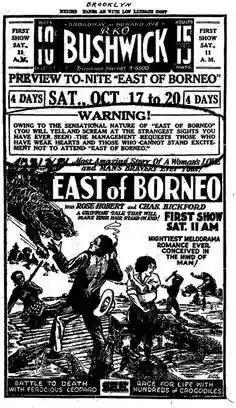
And the sound! For an early talkie, they do a decent job with the jungle noises. The distant cries, the buzzing insects. It’s not perfect, but it really tries to immerse you. Sometimes the dialogue feels a little stiff, almost like they're reading it for the first time. But then a tiger roars, and you forget about it.
The whole mystery of Allan’s disappearance is almost secondary to Linda’s journey. He’s the reason she’s there, but the real story is her grit against the wilderness. Her determination. She doesn’t give up easily, even when things get really grim. There's a moment near the end, a really *rough* bit with a fall, and she just keeps going. You gotta respect that.
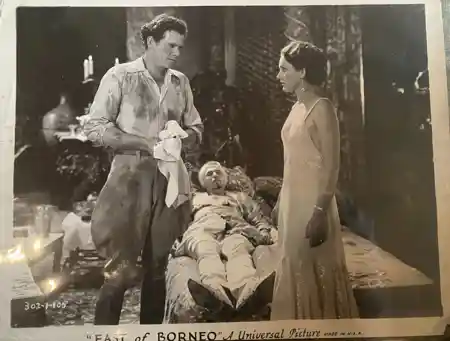
It’s a bit of a slow burn, as I said. There are moments that drag a little, where you wish they'd just *get to it*. But then something happens. A snake slithers by. A tribal drum beats in the distance. And you're pulled back in. It’s those small, unsettling moments that really work.
East of Borneo isn't a masterpiece, not by a long shot. It's a product of its time, with all the good and sometimes less-good that comes with that. But it's an honest adventure. It tries hard to show you a dangerous, beautiful world. And for that, it earns its stripes. Definitely a curio for film buffs. 🐯
IMDb —
1932
Community
Log in to comment.