DbcultAccessing Vault...
Cult Review
Senior Film Conservator
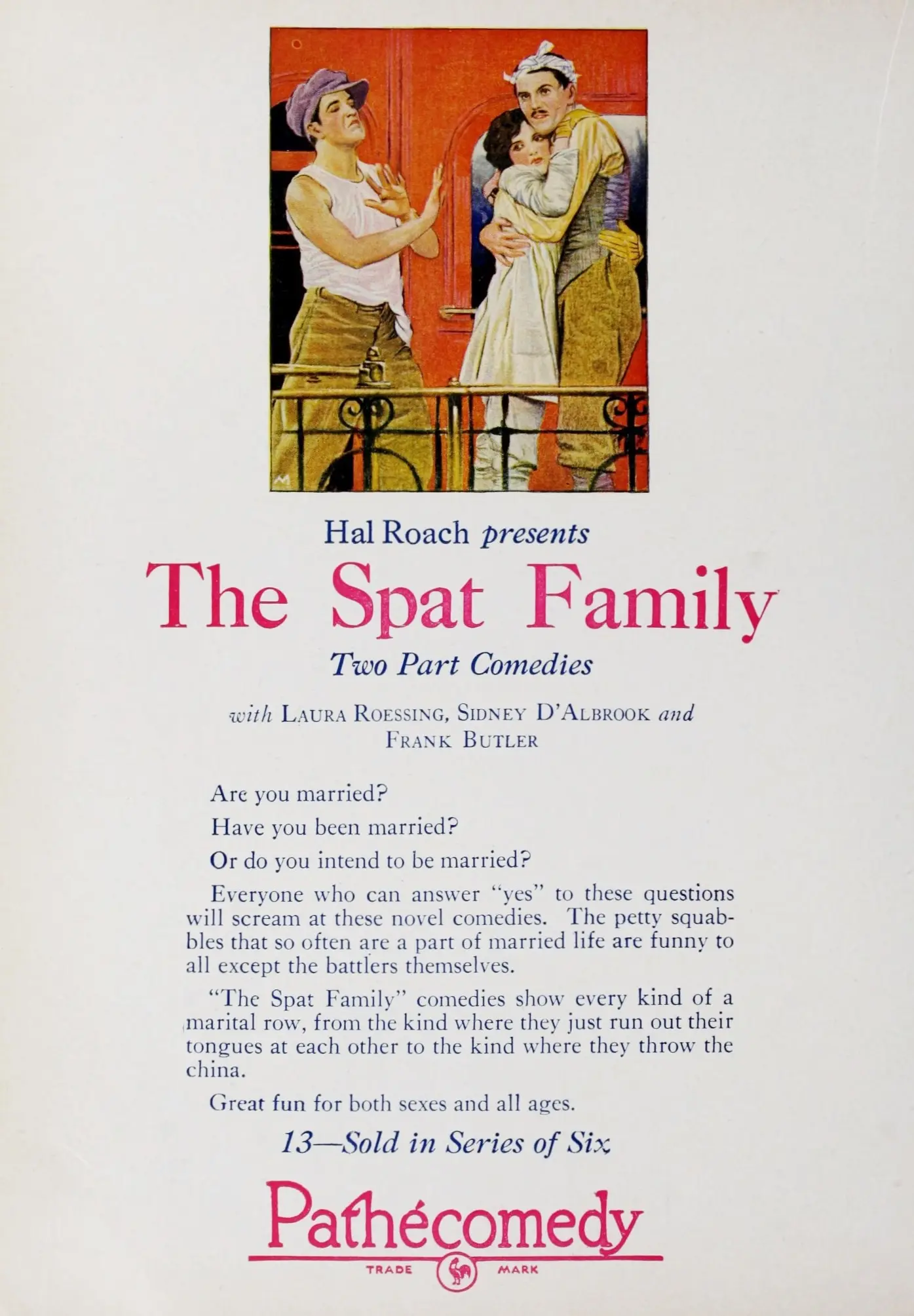
Is Laugh That Off worth watching today? Short answer: yes, but primarily as a fascinating mechanical artifact rather than a comedic powerhouse. This film is for those who find joy in the Rube Goldberg-esque ingenuity of early cinema; it is not for viewers who require a fast-paced narrative or high-stakes emotional investment.
The film serves as a time capsule of an era when the American road trip was still a wild, unpredictable frontier. While modern audiences might take their Winnebagos for granted, the Spat family's contraption represents the raw, unpolished birth of mobile living. It is clunky. It is cramped. But it is undeniably creative.
1) This film works because the 'house-car' set design is a brilliant piece of practical stagecraft that creates a constant sense of visual curiosity.
2) This film fails because it relies too heavily on the novelty of its gadgets, often letting the comedic timing sag in favor of showing off a folding table.
3) You should watch it if you are a fan of silent-era slapstick like His Wooden Wedding and want to see how early filmmakers handled extremely confined spaces.
Long before Instagram influencers were romanticizing 'van life,' the Spat family was living the nightmare version of it. Laugh That Off is a 1924 short that understands a fundamental truth: putting your entire life into a vehicle is a recipe for disaster. The film doesn't just show a road trip; it documents the struggle of human beings trying to maintain dignity in a space the size of a closet.
The van itself is the true protagonist of the film. It’s a character in the same way the house in Buster Keaton’s One Week is a character. Every time Frank Butler’s character pulls a lever, there is a genuine sense of dread. Will a bed come out of the wall, or will the stove explode? This mechanical tension drives the first half of the film with surprising effectiveness.
Contrast this with the more traditional melodrama found in The Midnight Girl, and you see how Laugh That Off was trying to push the boundaries of 'gadget comedy.' It’s less about the people and more about the things they own. That is a very modern theme for a film that is a hundred years old.
Frank Butler brings a frantic energy to the role of the family patriarch. He isn't as physically gifted as Keaton or as charming as Lloyd, but he has a specific brand of 'frustrated inventor' energy that fits the material perfectly. Watching him navigate the 'kitchen' while trying to avoid the 'bathroom'—which are essentially the same square foot of space—is a masterclass in low-budget physical comedy.
Sidney D'Albrook provides a necessary foil, though his role is admittedly less defined than Butler's. The chemistry between the family members is functional, but it lacks the spark seen in contemporary shorts like Cold Turkey. In many ways, the actors feel like they are just there to facilitate the gags involving the van's interior.
The pacing is where the film shows its age. There is a sequence involving the preparation of a meal that goes on for about three minutes too long. In 1924, perhaps the sight of a folding stove was enough to keep an audience enthralled. Today, we want the stove to catch fire or hit someone in the face. Laugh That Off is often too polite with its props.
From a technical standpoint, the cinematography is surprisingly ambitious. Shooting inside a cramped, mock-up van required creative lighting and camera placement. The director manages to make the interior feel both expansive enough to house a family and small enough to be funny. It avoids the 'flat stage' look that plagued many lesser shorts of the era.
There are moments where the camera captures the passing landscape through the van's windows, creating a proto-rear-projection effect that adds to the immersion. It isn't as visually sweeping as The Alaskan, but for a comedy short, the production value is respectable. It’s a blue-collar film with high-concept aspirations.
If you are looking for a laugh-a-minute riot, you might be disappointed. However, if you appreciate the history of set design and the evolution of the American 'dream' of mobility, it is a goldmine. It captures a specific moment in time when the automobile was changing from a luxury item to a lifestyle. It’s a weird, clunky, and occasionally brilliant piece of celluloid.
Pros:
Cons:
One thing most critics miss about Laugh That Off is its subtle critique of consumerism. The Spat family isn't traveling to see the world; they are traveling to show off their stuff. The van is a rolling monument to 'having it all' in a space that clearly can't hold it. In that sense, it’s a more cynical film than it appears on the surface. It’s not just a comedy; it’s a warning about the clutter of modern life.
Compare this to the supernatural themes of The Golem or the industrial grit of Mania. While those films deal with monsters or labor, Laugh That Off deals with the monster of the 'convenience' we create for ourselves. It’s a different kind of horror, played for laughs.
"Laugh That Off is a fascinating, if slightly repetitive, look at the early American obsession with the road. It’s not a masterpiece, but the van is a marvel."
Ultimately, the film succeeds because it leans into its gimmick with total commitment. It doesn't try to be a sweeping epic like The Dancer of the Nile. It knows it’s a movie about a van. It stays in its lane, even when the wheels are falling off. It works. But it’s flawed. And that’s exactly why it’s worth a look for any serious cinephile.
IMDb —
1915
Community
Log in to comment.