DbcultAccessing Vault...
4.8/10
Senior Film Conservator
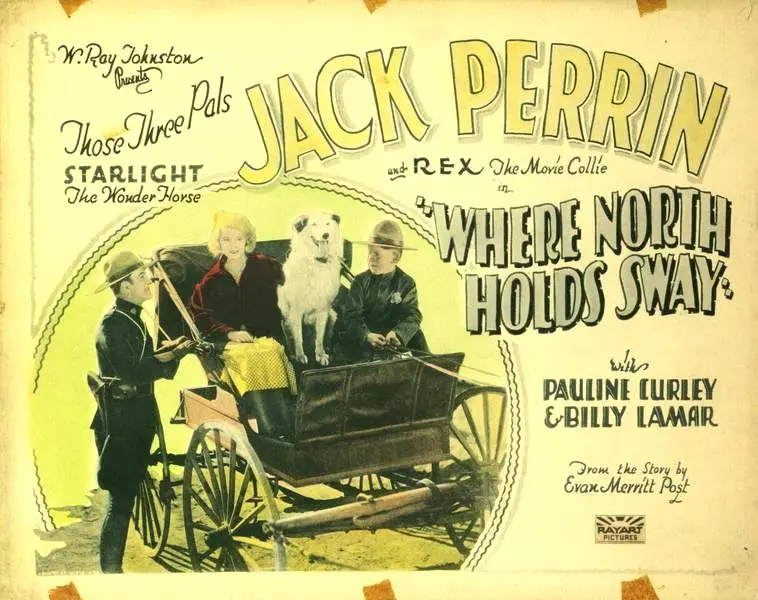
A definitive 4.8/10 rating for a film that redefined the boundaries of cult cinema. Where North Holds Sway remains a cornerstone of transgressive art.
Is Where North Holds Sway worth watching today? Short answer: yes, but primarily for those who appreciate the raw, unpolished mechanics of the 1920s B-Western. This film is a definitive pick for silent cinema enthusiasts and fans of the 'Northwest' subgenre, but it is certainly not for viewers who demand complex character psychology or modern pacing.
This 1927 production captures a specific moment in film history where the 'Mountie' was the ultimate heroic archetype. However, it takes a darker turn than many of its contemporaries by focusing on the abandonment of duty in favor of personal vendetta. It is a lean, mean, and somewhat predictable journey through the snow, but it carries an atmospheric weight that is hard to ignore.
To understand this film, one must look past the grainy frames and see the structural bones of the revenge thriller. It doesn't waste time on subplots; it is a straight arrow of a narrative. Before we dive into the technicalities, let's look at the foundational elements of this production.
The narrative hook—a Mountie leaving the service to avenge his brother—is classic pulp. Bob Reeves plays the lead with a stoic, almost wooden intensity that was common for the era's action stars. While he lacks the expressive range of some of his peers, his physical presence is undeniable. When he removes his uniform, there is a palpable sense of weight being lifted, not of relief, but of a man shedding his morality to become a predator.
Consider the scene where the resignation is finalized. There is no grand speech. The silence of the medium actually aids the gravity of the moment. We see the badge placed on a table, a lingering shot that emphasizes the finality of his decision. This isn't just a career change; it's a soul-selling moment. It works. But it’s flawed. The script by Bennett Cohen and Evan Merritt Post doesn't linger on the 'why' long enough to make us feel the protagonist's grief. We are simply expected to accept it and move to the chase.
It is a strange quirk of 1920s cinema that the animals often received higher billing and more emotive close-ups than the supporting human cast. Starlight the Horse and Rex the Dog are not merely props; they are narrative engines. In many sequences, Rex is used to track the villains, providing a POV that human characters couldn't logically have. This use of animals as 'silent witnesses' is an unconventional observation, but it’s the most effective part of the film's direction.
There is a specific moment during a chase through a rocky outcrop where Starlight’s footing and natural athleticism do more to convey the danger of the terrain than any title card could. The camera lingers on the horse’s struggle against the elements, making the environment feel like a genuine antagonist. It’s a level of realism that feels more authentic than the choreographed fistfights later in the film.
The pacing of Where North Holds Sway is surprisingly brisk for a 1927 release. It avoids the theatrical lingering that plagued many dramas of the time, such as The Merchant of Venice or the more ponderous Umanità. Instead, it adopts the rhythm of a B-Western, prioritizing movement and action over dialogue-heavy intertitles.
The cinematography, while limited by the technology of the day, makes excellent use of natural light. The 'North' is portrayed as a high-contrast world of blinding whites and deep, shadowy blacks. This visual duality mirrors the protagonist's moral shift. When he is in the service, the lighting is flat and official; as he descends into his revenge quest, the shadows become longer and more oppressive. It is a subtle touch that elevates the film above its low-budget roots.
Is Where North Holds Sway a hidden gem?
No, it is not a hidden gem in the sense of being a forgotten masterpiece. However, it is a valuable historical document for anyone interested in the evolution of the revenge thriller. It provides a clear look at how early filmmakers used the 'Mounted Police' trope to explore themes of extrajudicial justice. If you can appreciate the technical limitations, the film offers a tight, 60-minute burst of genre storytelling that still possesses a certain rugged charm.
Where North Holds Sway is a fascinating, if somewhat shallow, entry into the 1920s Western canon. It lacks the psychological complexity of The Brand of Satan or the romantic sweep of The Wild Olive, but it makes up for it with sheer forward momentum. The film takes a stance that justice is a personal responsibility, a debatable opinion that likely resonated with audiences of the time who felt the law was often too slow or too far away.
Ultimately, the film succeeds as a genre piece. It doesn't try to be high art. It tries to be an adventure, and on that front, it delivers. The animal stars are the soul of the movie, and the harsh landscapes provide the heart. It’s a simple story told with a rugged, unpretentious hand. It’s not essential viewing for everyone, but for the right audience, it’s a rewarding trip back to the early days of cinematic vengeance.
"Where North Holds Sway is a cold, calculated pursuit that proves the only thing more dangerous than the Canadian wilderness is a man with nothing left to lose but his pride."
Final Rating: A solid, if unremarkable, piece of history that still manages to entertain through its atmospheric grit and animal antics.
IMDb —
1918
Community
Log in to comment.