DbcultAccessing Vault...
5.7/10
Senior Film Conservator
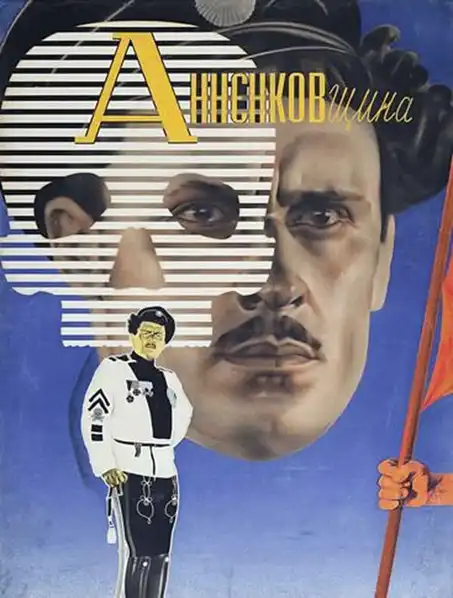
A definitive 5.7/10 rating for a film that redefined the boundaries of cult cinema. Enemies of Progress remains a cornerstone of transgressive art.
If you're into historical dramas that really take their time, or just curious about early Soviet cinema, Enemies of Progress might be a quiet discovery for you. It’s definitely not for everyone. If you need fast pacing or explosions, you’ll probably be checking your watch every five minutes. But if you’re patient and enjoy seeing a slice of life from a different era, it offers something. 🤔
The film, written by Nikolai Beresnyov, centers on Alexei, a young, eager engineer (played with a certain youthful earnestness by Boris Livanov). He's got these grand ideas for modernizing a factory.
Of course, not everyone shares his enthusiasm. This is where the "enemies" come in. It’s mostly the older, more entrenched managers and workers who are pretty comfortable with how things are. They don't want to rock the boat. 🚢
There's this one scene where Alexei tries to explain a new machine, all excited. The older foreman, played by Vladimir Taskin, just kinda stares at him. No real anger, just this heavy skepticism. It’s less a shouting match and more a quiet, stubborn resistance. Like, "we've always done it this way, why change now?" It really gets under your skin, that slow burn. 🔥
The camera often lingers on faces. You can see the doubt, the weariness, even a bit of fear in the older workers’ eyes. They're not villains, not really. They just represent a different kind of progress, or maybe a fear of losing their place.
Sometimes the dialogue feels a little stilted. It's a product of its time, no doubt. But then there are these moments. Like when Alexei is sketching out his plans late at night, fueled by tea. You see his dedication, his almost naive belief in the future. It’s quite touching. ✍️
The factory itself feels like a character. All the gears and smoke. It’s a very real place. The way the light catches the dust motes in the air, you almost feel the grime.
One of the more memorable interactions is between Alexei and Ivan Yudin’s character, who plays a higher-up official. He’s supportive, but also pragmatic. He understands Alexei’s vision but knows the political hurdles. Their conversations often feel like a gentle push and pull, not a dramatic confrontation. It’s quite subtle.
Andrei Kostrichkin, as another one of the older managers, really captures that bureaucratic inertia. He’s not overtly malicious. He’s just… tired. And set in his ways. He’s the guy who nods along but then goes back to doing things exactly as he always has. You know that guy. 😉
The film has a peculiar rhythm. It slows down for a long shot of workers doing something mundane, then quickens slightly when Alexei makes a breakthrough. It’s almost like the film itself is mirroring the pace of industrial change it depicts. It's The Ball Game, but with factories instead of fields.
The ending isn't some big, triumphant victory parade. It’s more understated. A small step forward, a hint of potential. It leaves you thinking about how hard it is to shift big systems, even with good intentions. It feels real in that sense.
I kept wondering about Lidiya Traktina's character. She's in a few scenes, mostly supportive, but you don't get much of her story. It's a small detail, but it stood out. Like she was there to provide a contrast to all the male-dominated industrial talk.
It’s a specific kind of film for a specific kind of viewer. If you appreciate the quiet battles and the slow march of progress, this is a film that will resonate. If you're looking for something with a modern pace, you might find it a bit of a slog. But for what it is, it's an honest piece of work. There's a certain charm to its dedication, even if it feels a little stiff sometimes.
IMDb 6.8
1931
Community
Log in to comment.