DbcultAccessing Vault...
6.7/10
Senior Film Conservator
A definitive 6.7/10 rating for a film that redefined the boundaries of cult cinema. Finlandia remains a cornerstone of transgressive art.
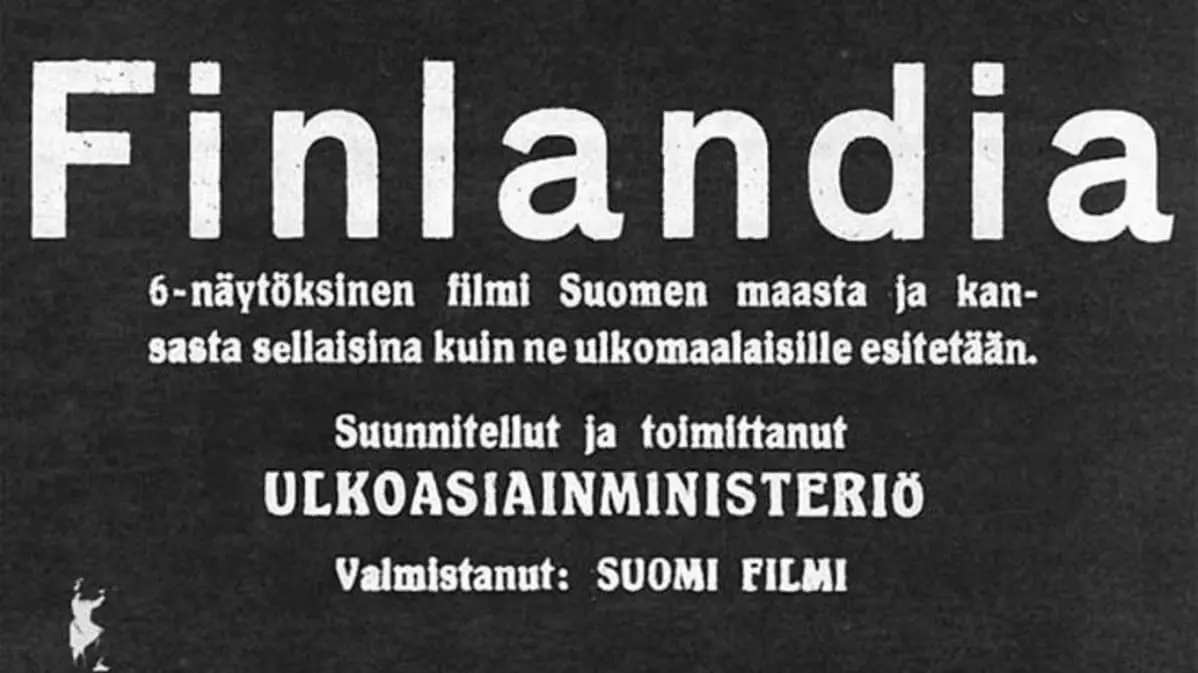
To watch Finlandia in the modern era is to witness the very scaffolding of a national myth being erected in real-time. This 1922 production, spearheaded by the formidable Erkki Karu, is frequently dismissed under the reductive label of 'propaganda,' yet such a categorization fails to acknowledge the sheer cinematic audacity required to condense a nation's soul into six reels of silver halide. Unlike the agrarian mysticism found in Markens grøde, which seeks the eternal in the furrows of the earth, Finlandia is a forward-looking document, a kinetic passport issued to a world still reeling from the Great War.
The film does not merely document; it constructs. It utilizes the camera as a tool of architectural precision, carving out a space for Finland within the European consciousness. The collaboration between Karu and writer Georg Theslöf resulted in a work that balances the pastoral with the political, ensuring that every frame of a swaying pine forest or a churning butter churn serves a specific ideological purpose. It is a curated hallucination of stability, prosperity, and cultural maturity.
One cannot discuss Finlandia without acknowledging its obsession with the tactile. The sequences involving the timber industry are perhaps the most visually arresting examples of early 20th-century documentary filmmaking. There is a primal, almost terrifying beauty in the sight of thousands of logs clogging the arteries of the Finnish waterways. The men who navigate these wooden floes perform a dance with death that Karu captures with a gritty, unembellished realism. While a film like The Shadow of Lightning Ridge uses the wilderness as a backdrop for adventure, Finlandia treats the landscape as a primary protagonist—a source of wealth, identity, and existential challenge.
"The forest is not merely a resource here; it is the cathedral where the Finnish spirit is forged, a green expanse that Karu transforms into a temple of industry."
The cinematography utilizes natural light to emphasize the crystalline clarity of the northern atmosphere. The water doesn't just flow; it glitters with a cold, unforgiving brilliance. This visual sharpness reinforces the film’s underlying message: this is a nation of clarity, hard work, and transparency. It lacks the murky moral ambiguity of contemporary dramas like An Alien Enemy, opting instead for a bright, uncompromising didacticism.
The transition from the wild forests to the streets of Helsinki marks a shift in the film’s tempo. Here, the 'White City of the North' is presented as a pinnacle of neoclassical order. The camera lingers on the Senate Square, the Lutheran Cathedral, and the bustling harbor with a sense of pride that borders on the religious. We see the military—the White Guard—drilling with a synchronization that suggests a clockwork society. In these scenes, Karu moves away from the organic chaos of the woods and into the rigid structures of the state.
The military sequences are particularly revealing when compared to the chaotic energy of Willard-Dempsey Boxing Contest. Where the latter celebrates the individualistic struggle and the raw power of the singular athlete, Finlandia celebrates the collective. The soldiers are not individuals; they are the living walls of the republic. This emphasis on the hive mind over the individual is a hallmark of the era’s state-sponsored cinema, yet Karu infuses it with a stylistic grace that prevents it from feeling oppressive. There is a rhythmic beauty to the marching, a visual percussion that mirrors the heartbeat of a nation finding its stride.
The inclusion of sports—specifically gymnastics and winter athletics—serves as a vital bridge between the military and the civilian. The Finnish body is presented as a temple of health and endurance. We see athletes performing synchronized movements that echo the industrial machinery shown earlier in the film. This bio-political focus suggests that the strength of the nation is literally built from the muscle and bone of its citizens. It is a fascinating precursor to the more controversial aesthetics of the 1930s, yet in 1922, it feels more like an exuberant celebration of physical liberation after years of imperial suppression.
Agriculture, too, is given its due. We see the modernizing farm, the introduction of machinery, and the bountiful harvests. It lacks the melodrama of The Woman Pays or the domestic intimacy of Meet Betty's Husband. Instead, the farm is viewed through the lens of a macro-economist. The cows are healthy, the grain is golden, and the people are content. It is a vision of a self-sustaining utopia, a necessary counter-narrative to the famine and strife that had plagued the region only years prior.
Technically, Finlandia is a marvel of its time. The editing, though largely linear, uses pacing to create a sense of mounting momentum. The transition between the silence of the nature scenes and the implied noise of the factories and parades creates a psychological landscape for the viewer. Karu understands the power of the long shot to establish scale, and the close-up to establish intimacy with the laboring class. While it doesn't possess the whimsical charm of Old Dutch, its gravitas is its greatest asset.
The film’s writing, credited to Georg Theslöf, is evident in the thematic cohesion of the segments. It isn't just a collection of random clips; it is a structured argument. The film posits that Finland is not a backwater province but a sophisticated, modern, and disciplined European power. It uses the visual language of the time to engage in a form of soft power, long before the term was even coined. It shares a certain earnestness with Are They Born or Made?, questioning the nature of national character and concluding that it is forged through both heritage and hard work.
Looking back, Finlandia is a haunting artifact. It represents a moment of pure, unadulterated optimism that would soon be tested by the geopolitical storms of the mid-20th century. It lacks the irony of modern documentaries, and its sincerity can sometimes feel overwhelming. However, as a piece of film history, it is indispensable. It shows us how a nation chooses to see itself when the world is watching. It is a mirror held up to a collective face, reflecting not just what is there, but what the nation aspires to be.
In the context of 1920s cinema, Karu’s work stands alongside the greats of the documentary tradition. It has the scale of an epic and the precision of a scientific study. While it may not offer the narrative twists of The Evil Eye or the atmospheric dread of Shadows of Her Pest, its impact is far more enduring. It is the visual foundation of a country's modern identity.
Ultimately, Finlandia is a film of textures—the rough bark of a pine, the cold steel of a bayonet, the soft wool of a peasant's shawl, and the hard stone of the capital's architecture. It is a sensory experience that transcends its propaganda roots to become a piece of living history. For anyone interested in the intersection of film and nation-building, this is not just a viewing requirement; it is a revelation. It reminds us that cinema, at its most potent, is the art of making the invisible—the 'spirit' of a place—visible and undeniable.
IMDb 6.3
1926
Community
Log in to comment.