DbcultAccessing Vault...
Cult Review
Senior Film Conservator
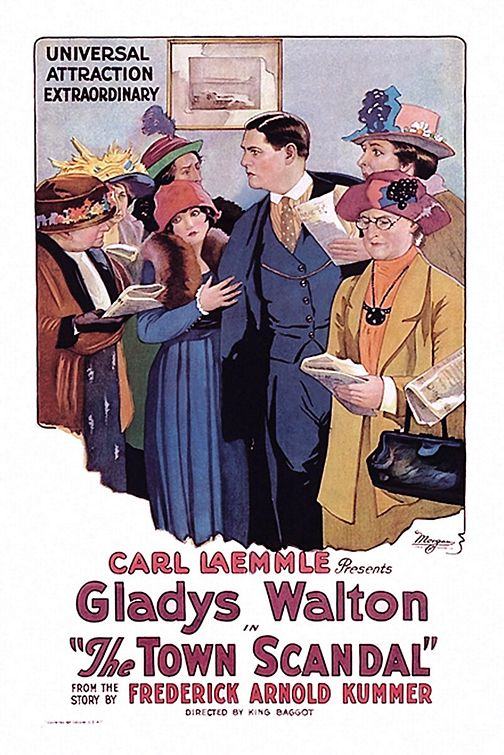
Stepping back into the annals of early cinematic history, one encounters films that, despite their age, resonate with an astonishing contemporary relevance. The Town Scandal, a compelling silent drama from an era grappling with rapid social shifts, stands as a potent testament to this enduring power. It's a narrative that peels back the veneer of small-town respectability to expose the raw, often hypocritical, underbelly of moral crusades. At its heart lies Jean Crosby, a character vivaciously brought to life by the incandescent Gladys Walton, whose journey from the glittering stages of Broadway to the staid streets of Murphysburg forms the axis of this insightful social commentary. This isn't merely a story of personal grievances; it's a microcosm of a larger societal struggle, a battle between genuine virtue and performative piety, between individual liberty and collective oppression.
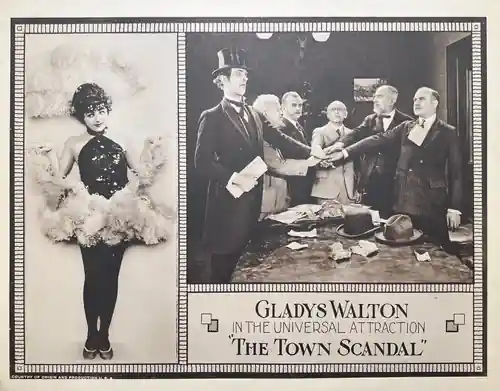
Jean Crosby's arrival in Murphysburg is less a homecoming and more an invasion of metropolitan vivacity into a landscape choked by provincial prudery. She isn't just visiting her sister; she's inadvertently challenging the established order simply by existing, by carrying the scent of a freer, more honest world. Her initial discovery – that her brother-in-law, Lysander Sprowl, has squandered her financial support – is a personal betrayal, certainly, but it quickly morphs into a symbol of the town's deeper rot. Sprowl, a man presumably of some standing, embodies the casual irresponsibility that often hides behind a façade of respectability. This financial treachery sets the stage, but it's the subsequent social snub that truly ignites Jean's resolve.
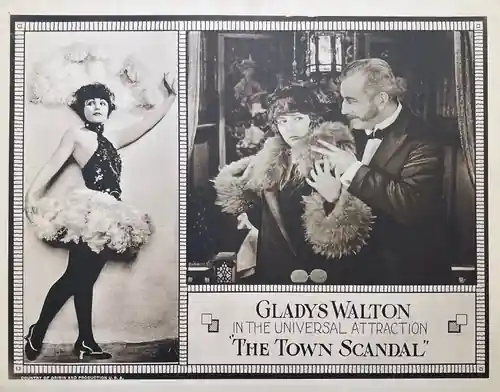
The male citizens of Murphysburg, prominent members of the self-styled "Purity League," present a particularly egregious display of moral elasticity. These are the very men who, in the less judgmental atmosphere of New York, might have eagerly sought Jean's company, perhaps even admired her spirit. Yet, within the confines of their hometown, under the watchful eyes of their peers and wives, they perform an abrupt and chilling volte-face. Their feigned ignorance, their deliberate avoidance of eye contact, their swift retreat into a manufactured sanctity, speaks volumes. It's a masterclass in performative morality, a stark reminder that virtue, for many, is a costume donned for public consumption rather than an inherent quality. This immediate rejection, born of hypocrisy, is the catalyst for Jean's ingenious counterattack. It highlights a recurring theme in cinema of the era, where the "fallen woman" or the independent spirit from the city often faced similar ostracization in smaller communities, a trope explored with different nuances in films like The Woman Michael Married, which also delves into societal judgment of unconventional women.
Gladys Walton, a star often lauded for her vivacious screen presence, imbues Jean Crosby with an irresistible blend of vulnerability and steely determination. Her Jean is not a victim; she is a strategist. Walton's performance is a masterclass in silent film acting, conveying complex emotions through subtle gestures, expressive eyes, and a commanding physicality. We see her initial shock and hurt, quickly replaced by a simmering indignation that boils over into a calculated plan for retribution. She's not seeking revenge out of malice, but out of a profound sense of justice, a desire to expose the fraudulence that permeates Murphysburg's social fabric. Walton's portrayal elevates Jean beyond a simple wronged woman, transforming her into an agent of change, a symbol of female resilience in a world often designed to diminish it. Her magnetic screen presence ensures that Jean's plight, and her eventual triumph, feel earned and deeply satisfying.
The evolution of Jean's character, from
IMDb —
1919
Community
Log in to comment.