DbcultAccessing Vault...
Cult Review
Senior Film Conservator
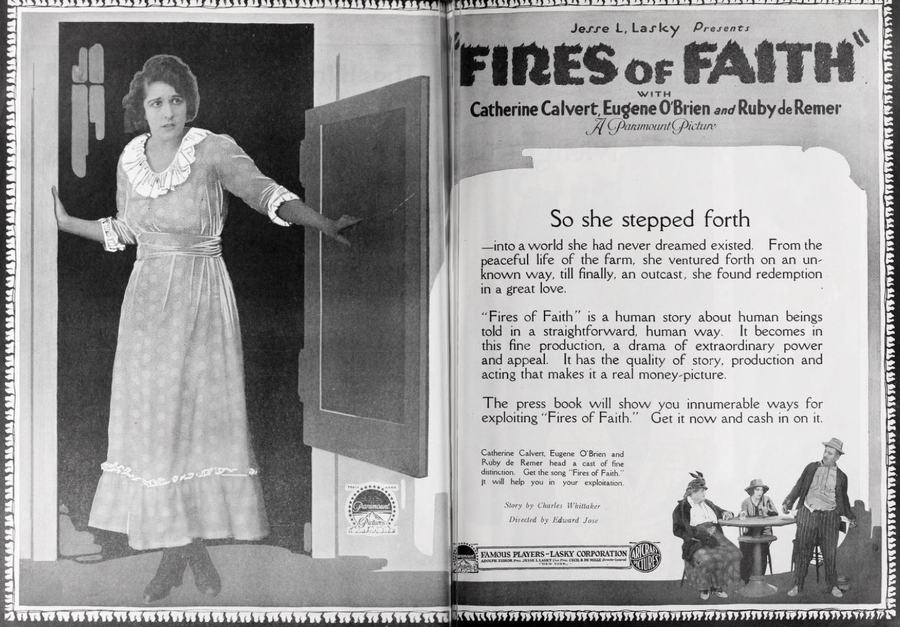
Stepping back into the cinematic landscape of 1919, one encounters a profound and often overlooked gem: Fires of Faith. This silent era drama, a product of Beulah Marie Dix and Charles E. Whittaker's thoughtful screenplay, offers far more than a simple historical recounting. It's a deeply felt exploration of human resilience, spiritual conviction, and the stark realities of war, all filtered through the lens of the Salvation Army's remarkable service during the First World War. While many films of the period focused on combat heroism or romantic escapism, Fires of Faith carves out a unique niche, celebrating the quieter, yet equally vital, bravery of those who ministered to the souls and bodies of the fighting men. Its narrative, woven around the experiences of two men and two women, provides a microcosm of the larger humanitarian effort, painting a picture that remains surprisingly poignant and relevant even a century later. The film doesn't shy away from the brutality of war, but rather uses it as a backdrop against which the unwavering light of compassion shines brightest.
The genius of Fires of Faith lies in its ability to humanize the massive, impersonal scale of global conflict. Instead of focusing solely on the grand strategies or the trench warfare itself, Dix and Whittaker bring us into the less-glamorous, yet utterly essential, sphere of support. The film skillfully navigates the various roles undertaken by the Salvation Army, from providing hot meals and clean clothes to offering spiritual comfort and a listening ear. This wasn't merely about physical sustenance; it was about preserving the very spirit of the soldiers, reminding them of the humanity that still existed beyond the mud and the gunfire. The portrayal of these efforts is meticulous, demonstrating a clear understanding of the Army's operational philosophy and its impact on the morale of the troops. It reminds us that heroism manifests in myriad forms, not least in the quiet, steadfast dedication of those who tend to the wounded and the weary, both physically and psychologically. This nuanced approach sets it apart from more conventional war films, offering a perspective that prioritizes empathy over spectacle.
The ensemble cast, featuring names like Pat Moore, Clarence Geldert, Kathleen O'Regan, and Lucille Ward, delivers performances that, for the silent era, convey a remarkable depth of emotion. Pat Moore, often seen in a stoic or heroic light, here embodies a different kind of strength, one rooted in spiritual conviction rather than physical prowess. His portrayal of a Salvationist officer is imbued with a quiet dignity, a man whose faith is his armor against the horrors surrounding him. Kathleen O'Regan brings a luminous sincerity to her role, capturing the compassionate essence of a woman dedicated to service. Her expressions, often subtle, speak volumes about the emotional toll and the profound satisfaction of her work. Lucille Ward, too, navigates a complex character arc, demonstrating a transformation that feels earned and authentic. Even in an era of broad gestures, these actors manage to convey internal struggles and triumphs with impressive nuance, making their characters relatable and deeply human. Their interactions, often wordless, build a powerful sense of camaraderie and shared purpose that underpins the film's central message.
The narrative structure of Fires of Faith is particularly compelling because it grounds the overarching story of the Salvation Army in individual journeys of transformation. We observe how the war, with its unimaginable pressures, acts as a crucible for these characters. One of the male protagonists might begin with a certain world-weariness or skepticism, only to find his cynicism gradually chipped away by the relentless selflessness of the Salvationists. This arc is crucial; it demonstrates that faith and compassion are not always inherent but can be forged in the fires of adversity. Similarly, the women's narratives are not merely supportive but central to the film's thematic exploration. One might initially join out of a sense of duty or perhaps even a personal crisis, discovering a deeper, more profound calling through the act of serving others. These personal evolutions are depicted with an earnestness that transcends the limitations of silent film, relying heavily on visual storytelling and the expressive capabilities of the actors. The film understands that true drama often lies in the internal battles as much as the external ones.

The contributions of Charles Ogle and Eugene O'Brien further enrich this tapestry of human experience. Ogle often portrays characters grappling with moral dilemmas, and here, he brings a gravitas to a role that likely embodies the everyman soldier, confronted daily with existential questions. Eugene O'Brien, known for his romantic leads, might here portray a man whose journey involves a spiritual awakening or a profound re-evaluation of his values, a testament to the war's transformative power. The supporting cast, including Theodore Roberts, Robert Anderson, Rubye De Remer, Catherine Calvert, Fred Huntley, Mowbray Berkeley, James Neill, Helen Dunbar, and Edythe Chapman, collectively build a believable world, each face adding another layer to the grim but ultimately hopeful tableau. Their collective presence creates a robust sense of community, highlighting that the Salvation Army's work was a collaborative endeavor, a symphony of individual efforts harmonized for a greater good. The film, in this aspect, functions as a powerful ensemble piece, each character's story contributing to the larger narrative of service and sacrifice.
At its core, Fires of Faith is a powerful testament to the enduring human spirit and the profound impact of organized compassion. The Salvation Army, often seen as a religious institution, is presented here as an indispensable humanitarian force, providing solace and practical aid in a time of unprecedented global catastrophe. The film subtly argues that true faith is not merely adherence to doctrine but active, selfless service to fellow human beings. This message resonates deeply, especially when contrasted with the destructive forces unleashed by the war. It reminds us that even in the darkest hours, there are always individuals and organizations dedicated to alleviating suffering and restoring dignity. The historical context is crucial; the Great War fundamentally reshaped societies, and the role of voluntary organizations like the Salvation Army became more prominent than ever. The film captures this moment, illustrating how the Army adapted its mission to meet the unique challenges of modern warfare, extending its reach from urban slums to the battlefields of Europe.
Comparing it to other films of its era, one might consider The Romance of Elaine, which, while focusing on a different genre (mystery serial), shares a similar drive for moral clarity and protagonists grappling with external threats. However, Fires of Faith distinguishes itself by anchoring its moral compass firmly in altruistic service rather than personal justice or adventure. Another relevant comparison might be The Venturers, a film that might also explore themes of enterprise and community building, yet Fires of Faith elevates these concepts to a spiritual plane, emphasizing the profound human connection forged through shared hardship and selfless giving. The film's portrayal of women in active, impactful roles also stands out, contrasting with some contemporary narratives where female characters might be more passive. Here, the women are front and center, embodying strength, resilience, and unwavering dedication, challenging traditional gender roles even within the context of a faith-based organization. This progressive aspect adds another layer of historical intrigue and makes the film feel remarkably forward-thinking for its time.
The technical aspects of Fires of Faith are also noteworthy for a film of its period. The cinematography, while perhaps not groundbreaking in the way of a Griffith epic, is effective in conveying the vastness of the war zones and the intimacy of the personal moments. The use of intertitles is skillful, providing necessary exposition and character dialogue without overwhelming the visual narrative. The direction, though uncredited in some records, clearly aimed for a sense of authenticity and emotional impact, successfully balancing the grand sweep of history with the individual human stories. The film's ability to evoke strong emotions without spoken dialogue is a testament to the power of visual storytelling and the expressive capabilities of the actors. It reminds us of the artistry inherent in silent cinema, an art form that relied on nuanced gestures, facial expressions, and carefully constructed mise-en-scène to communicate complex ideas and feelings. The pacing, too, is deliberate, allowing the audience to absorb the gravity of the situations and the quiet heroism unfolding on screen.

In an era where films like God's Country and the Woman might explore wilder, more untamed landscapes and human passions, Fires of Faith finds its drama in the inner landscapes of the human soul, tested and refined by the crucible of war. It's a film that doesn't rely on sensationalism but on the quiet power of conviction and compassion. The screenplay by Beulah Marie Dix and Charles E. Whittaker is a masterclass in concise yet impactful storytelling, crafting characters whose journeys feel genuine and whose struggles resonate. They avoid simplistic portrayals, instead presenting a nuanced view of faith in action, acknowledging the challenges without succumbing to cynicism. The film's enduring appeal lies in its timeless message: that even in the face of unimaginable destruction, humanity's capacity for kindness and selfless service can prevail. It's a powerful reminder that the 'fires of faith' are not just about religious belief, but about the unwavering commitment to humanity itself.
Ultimately, Fires of Faith transcends its historical setting to deliver a universal message about the importance of service and empathy. It’s a film that asks us to consider where true strength lies – not necessarily in military might, but in the steadfast resolve to alleviate suffering and uplift spirits. The depiction of the Salvation Army’s work is not hagiographic; rather, it’s a realistic portrayal of arduous labor, often thankless, performed under the most extreme conditions. The film captures the essence of their motto, 'Heart to God and Hand to Man,' demonstrating how spiritual conviction translated into tangible, life-saving, and morale-boosting actions on the front lines and in the bustling relief stations behind them. It’s a compelling narrative that champions the unsung heroes, those who brought a measure of comfort and hope to soldiers facing unimaginable horrors, and in doing so, forged a legacy of compassion that continues to inspire.
The film's impact, even today, is significant. It serves as a historical document, offering insight into the public's perception and appreciation of the Salvation Army's efforts during WWI. But more than that, it's a testament to the power of cinema to convey profound human truths. Much like how The Wicked Darling might explore moral ambiguity in a different urban setting, Fires of Faith explores moral clarity and purpose in the chaos of war. It challenges viewers to consider their own capacity for selfless action and the enduring power of collective good. It stands as a powerful argument for the enduring relevance of humanitarian work, reminding us that even when the world descends into chaos, there are always those who stand ready to bring light and healing. This film is a crucial piece of early cinema, not just for its historical context, but for its timeless exploration of faith, courage, and the unwavering human spirit in the face of overwhelming adversity. It urges us to remember the 'doughnut girls' and the 'Sally Anns' whose quiet bravery profoundly impacted countless lives, creating a narrative of hope that truly burned with the 'fires of faith' on the battlefields of a world at war.
In conclusion, Fires of Faith is far more than a simple period piece. It's a deeply moving and historically significant film that deserves renewed attention. Its portrayal of the Salvation Army's work during WWI, through the eyes of its dedicated individuals, offers a powerful and inspiring narrative of resilience, compassion, and unwavering hope. It reminds us that even in the darkest of times, the light of human kindness can cut through the deepest shadows, leaving an indelible mark on history and on the hearts of those it touches. This is a film that speaks to the best of humanity, a quiet masterpiece that continues to resonate with its profound message of service and spiritual fortitude.

IMDb —
1924
Community
Log in to comment.